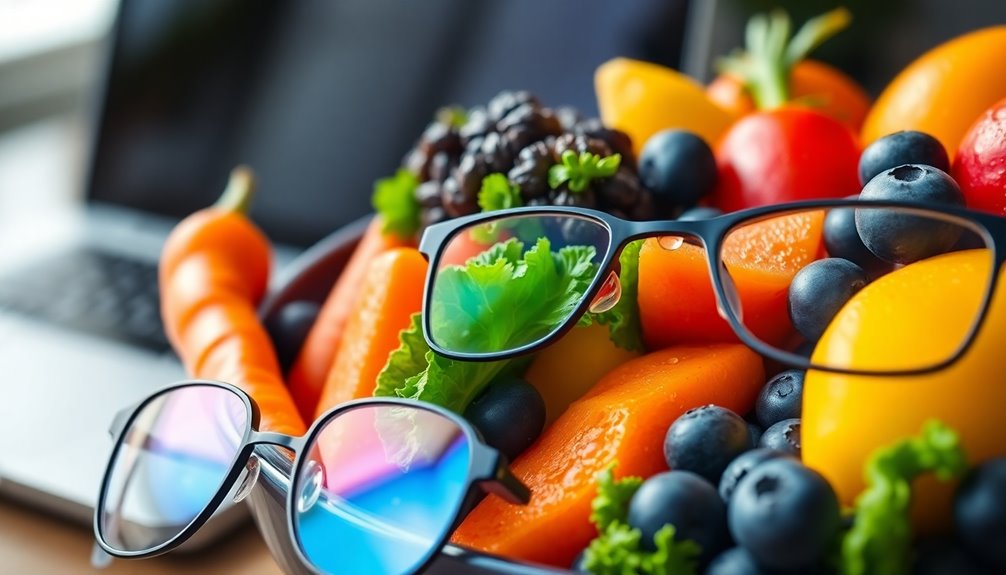
To protect your eye health in the digital age, focus on nutrients like vitamins A, C, and E, as well as antioxidants like lutein and zeaxanthin. Omega-3 fatty acids are essential for maintaining moisture and reducing dryness. Colorful fruits, leafy greens, and fatty fish are great food sources. Incorporate these into your diet along with healthy fats for better absorption. There’s more to discover about eye health and how to keep your vision sharp during screen time.
The Role of Vitamins in Eye Health

When it comes to maintaining good vision, vitamins play a crucial role in supporting eye health. You should focus on incorporating rich vitamin sources into your diet, like leafy greens, carrots, and citrus fruits.
These foods not only provide essential vitamins like A, C, and E but also help improve vitamin absorption in your body. For instance, pairing vitamin-rich foods with healthy fats can enhance the absorption of fat-soluble vitamins.
Furthermore, consider taking supplements if you struggle to get enough vitamins from your diet. Just remember, the best way to support your eye health is through a balanced diet that emphasizes whole foods.
Prioritizing vitamins will help keep your eyes functioning effectively as you navigate daily life.
Key Nutrients for Combating Digital Eye Strain

As you spend more time in front of screens, it’s essential to focus on the key nutrients that can help combat digital eye strain.
These nutrients can protect your eyes from the harmful effects of blue light and reduce digital fatigue. Here are three key nutrients to evaluate:
- Lutein and Zeaxanthin: These carotenoids filter out blue light and reduce eye strain.
- Omega-3 Fatty Acids: They help maintain moisture in the eyes, preventing dryness and discomfort.
- Vitamin C: An antioxidant that supports overall eye health and may protect against damage from prolonged screen exposure.
Incorporating these nutrients into your diet can make a significant difference in how your eyes feel during those long hours in front of screens.
How Do Antioxidants Protect Your Vision?
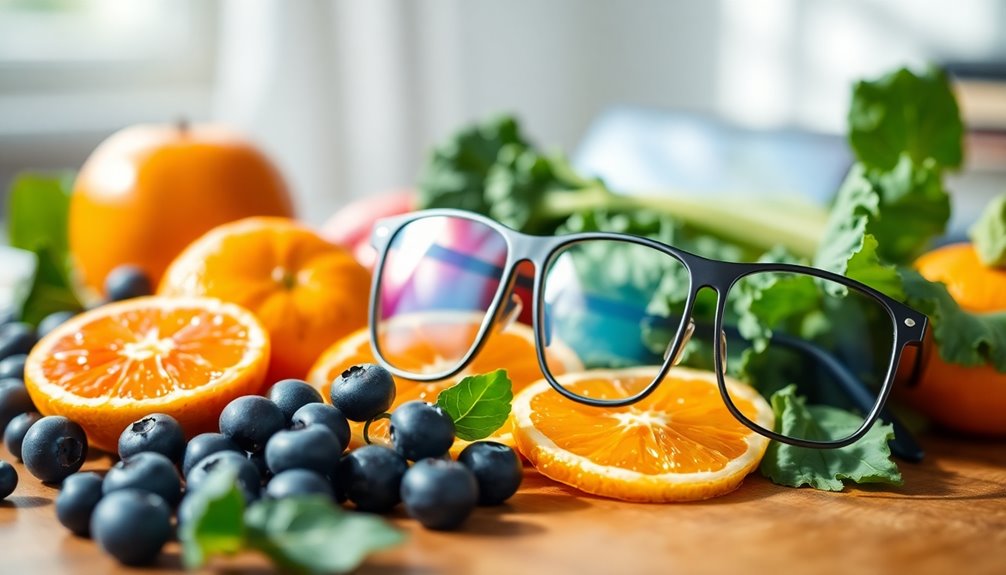
How do antioxidants play a role in protecting your vision? Antioxidants are essential for vision preservation, as they combat oxidative stress caused by free radicals.
These harmful molecules can damage your eye cells, leading to conditions like macular degeneration and cataracts. By consuming antioxidant sources such as colorful fruits, vegetables, and nuts, you can strengthen your eye health.
Vitamins C and E, lutein, and zeaxanthin are powerful antioxidants that specifically target eye tissues. Incorporating these nutrients into your diet helps neutralize free radicals and reduces the risk of vision-related issues.
The Importance of Omega-3 Fatty Acids
While many people focus on vitamins for eye health, omega-3 fatty acids are equally essential for maintaining ideal vision.
These healthy fats play an important role in protecting your eyes from digital strain and age-related issues. Here are some key omega-3 benefits:
- Reduces Dry Eye Symptoms: Omega-3s help maintain moisture in your eyes, preventing dryness.
- Supports Retina Health: They contribute to the structure and function of the retina, essential for clear vision.
- Lowers Inflammation: Omega-3s can reduce inflammation, which is linked to various eye diseases.
You can find omega-3 sources in fatty fish like salmon, walnuts, and flaxseeds.
Incorporating these into your diet can greatly enhance your eye health in today’s digital age.
Foods Rich in Eye-Healthy Nutrients
To support your eye health, you’ll want to include plenty of leafy greens in your diet.
These greens are packed with nutrients like lutein and zeaxanthin, which can help protect your vision.
Don’t forget about omega-3 fatty acids, too; they’re essential for maintaining healthy eyes.
Leafy Greens Benefits
Leafy greens, packed with essential nutrients, play an essential role in maintaining eye health and preventing vision-related issues.
By incorporating these foods into your diet, you can enjoy numerous vision benefits, including:
- Lutein and Zeaxanthin: These antioxidants protect your eyes from harmful blue light and reduce the risk of age-related macular degeneration.
- Vitamin C: Found abundantly in leafy greens, vitamin C supports eye tissue health and may lower the risk of cataracts.
- Beta-Carotene: This nutrient converts to vitamin A in your body, which is fundamental for maintaining good vision, especially in low light.
Omega-3 Fatty Acids
Omega-3 fatty acids are essential for eye health, as they help reduce inflammation and support the structure of cell membranes in your eyes. Incorporating omega-3 sources into your diet can greatly enhance your visual well-being.
Fatty fish like salmon, mackerel, and sardines are rich in omega-3s, making them excellent choices. If you prefer plant-based options, flaxseeds, chia seeds, and walnuts are great alternatives.
The omega-3 benefits extend beyond just eye health; they also promote brain function and heart health. By including these nutrient-packed foods in your meals, you’re not only nourishing your eyes but also supporting overall wellness.
Lifestyle Tips for Enhancing Eye Health
Although you may not think about it often, your daily habits play an essential role in maintaining eye health. Here are three lifestyle tips to enhance your vision:
- Take Digital Breaks: Reduce screen time by following the 20-20-20 rule—every 20 minutes, look at something 20 feet away for 20 seconds.
- Optimize Your Setup: Guarantee proper lighting and consider an ergonomic setup to minimize strain. Using anti-reflective lenses can also help.
- Stay Hydrated: Good hydration habits support eye moisture, while quality sleep improves overall eye function.
Incorporating eye exercises, practicing stress management, and giving yourself an occasional eye massage can further boost your eye health.
Prioritize these habits for better vision in our digital age!
When to Consider Supplements for Eye Care?
If you’re experiencing signs of eye strain, like fatigue or dryness, it might be time to reflect on supplements.
Nutrient deficiencies can impact your eye health, leading to more serious issues down the line.
Paying attention to your body’s signals can help you make informed choices for better vision.
Signs Of Eye Strain
Eye strain can sneak up on you, often manifesting through subtle signs that shouldn’t be ignored.
Recognizing these symptoms is essential for maintaining your eye health in today’s digital age. Here are three key indicators of eye strain and visual fatigue:
- Blurred Vision: If your vision seems hazy or out of focus after extended screen time, it’s a major red flag.
- Headaches: Frequent headaches, especially around the forehead or temples, can signal that your eyes are overworked.
- Dry or Irritated Eyes: Feeling like your eyes are gritty or dry can indicate that they’re struggling to keep up with visual demands.
If you notice these signs, it might be time to reflect on supplements to support your eye care routine.
Nutrient Deficiency Risks
When you’re experiencing signs of eye strain, like blurred vision or headaches, it’s essential to evaluate whether nutrient deficiencies might be contributing to the problem.
Common deficiency symptoms, such as dry eyes or difficulty focusing, can signal a lack of significant nutrients. You mightn’t be getting enough vitamins A, C, or E, as well as omega-3 fatty acids, all important for eye health.
Check your diet for nutrient sources like leafy greens, fatty fish, and colorful fruits. If you’re not meeting your nutritional needs through food, consider supplements.
They can help bridge the gap and support your eye health, especially when you spend long hours in front of screens.
Prioritize your vision by staying informed about your nutrient intake.
Conclusion
To keep your eyes healthy in our digital world, make sure you’re getting the right nutrients. For instance, consider Sarah, who often experienced eye strain from long hours at her computer. After incorporating more omega-3s and antioxidants into her diet, she noticed a significant improvement in her comfort and focus. By prioritizing these nutrients and adopting healthy habits, you can protect your vision and enjoy a clearer, more vibrant view of the world around you.