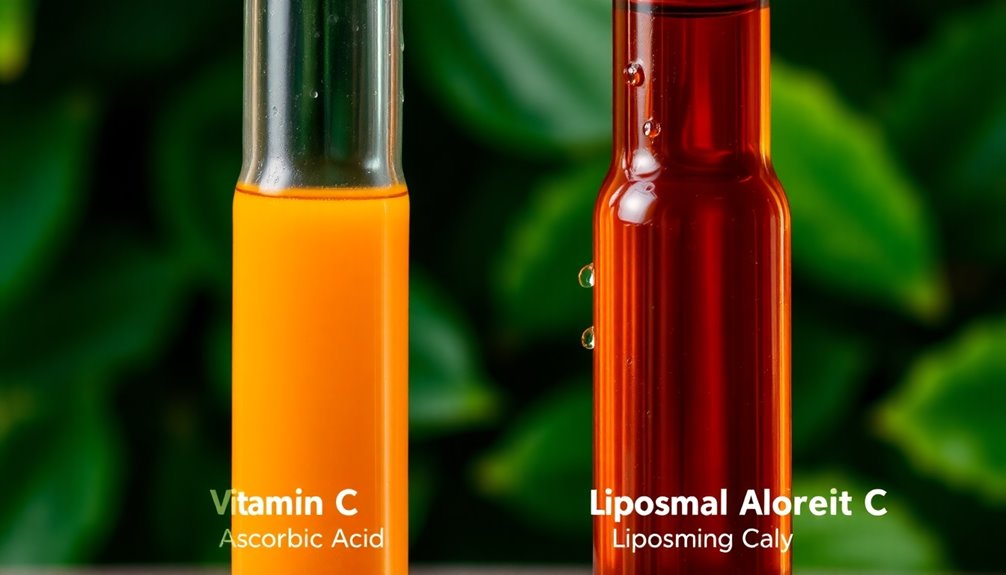
When choosing between ascorbic acid and liposomal vitamin C, consider their differences in absorption and effectiveness. Ascorbic acid is quickly absorbed but may cause digestive discomfort in high doses. On the other hand, liposomal vitamin C enhances absorption and requires lower doses for similar effects. It’s also gentler on sensitive skin and offers sustained benefits. If you’re weighing your options, there’s much more to discover about which form suits your health needs best.
Understanding Vitamin C: Ascorbic Acid vs. Liposomal Forms

When it comes to Vitamin C, understanding the difference between ascorbic acid and liposomal forms can greatly impact how your body absorbs this essential nutrient.
Ascorbic acid is a common form found in various vitamin sources, including citrus fruits and supplements. It’s water-soluble, meaning it’s quickly absorbed but can be flushed out if your body doesn’t need it.
On the other hand, liposomal Vitamin C encapsulates the nutrient in a lipid layer, enhancing absorption mechanisms. This method protects the vitamin from degradation, allowing more of it to reach your cells effectively.
How Absorption Rates Differ Between Ascorbic Acid and Liposomal Vitamin C
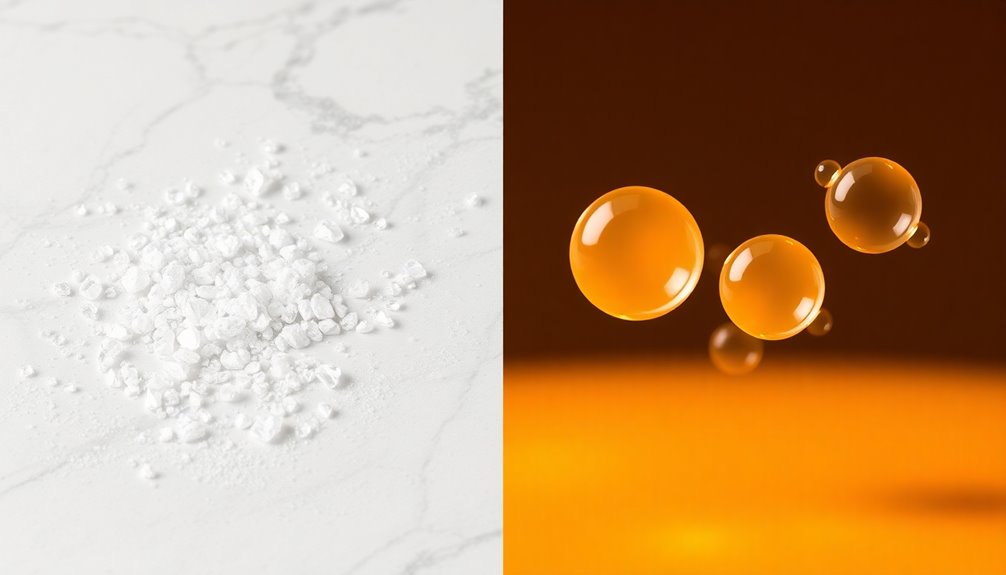
While both ascorbic acid and liposomal Vitamin C offer benefits, their absorption rates can differ markedly, influencing how effectively your body utilizes them.
Ascorbic acid and liposomal Vitamin C differ in absorption rates, impacting your body’s utilization of these essential nutrients.
Here’s a quick absorption comparison:
- Ascorbic Acid: Rapid absorption but can lead to gastrointestinal discomfort at high doses.
- Liposomal Vitamin C: Encapsulated in liposomes, enhancing bioavailability factors and minimizing digestive issues.
- Bioavailability: Liposomal forms often deliver higher concentrations to cells.
- Timing: Liposomal Vitamin C may provide sustained release, supporting longer-lasting effects.
- Dosage: Lower doses of liposomal Vitamin C may achieve similar effects as higher doses of ascorbic acid.
Understanding these differences can help you choose the right form for your needs, ensuring you get the most out of your Vitamin C intake.
Unique Health Benefits of Ascorbic Acid and Liposomal Vitamin C

As you explore the unique health benefits of ascorbic acid and liposomal Vitamin C, you’ll find that each form plays a distinct role in supporting your well-being.
Ascorbic acid is well-known for its potent antioxidant properties, helping to neutralize free radicals and reduce oxidative stress. This can enhance your immune support, making it easier for your body to fend off illnesses.
On the other hand, liposomal Vitamin C offers enhanced absorption, allowing for sustained benefits. It also provides powerful antioxidant effects while ensuring that your body receives a higher concentration over time.
Which Form of Vitamin C Is More Effective for Your Skin Health?
How can you choose the right form of Vitamin C for your skin health? Both ascorbic acid and liposomal Vitamin C offer unique benefits, but their effectiveness can vary. Here are some key points to evaluate:
- Skin Hydration: Liposomal Vitamin C is known for better absorption, enhancing skin hydration.
- Antioxidant Properties: Ascorbic acid provides strong antioxidant protection against environmental damage.
- Stability: Liposomal Vitamin C tends to be more stable, maintaining its potency longer.
- Irritation Potential: Ascorbic acid might cause irritation for sensitive skin types.
- Formulation Versatility: Ascorbic acid is commonly found in various skincare products.
Ultimately, the choice depends on your skin type and specific needs, so choose wisely for ideal skin health!
Practical Tips for Choosing Between Ascorbic Acid and Liposomal Vitamin C
When deciding between ascorbic acid and liposomal Vitamin C, it’s important to evaluate your skin’s unique needs and sensitivities.
If you have sensitive skin, liposomal Vitamin C might be gentler and less irritating, making it a better choice. For those on a budget, ascorbic acid usually comes at a lower price point, so consider a cost comparison before purchasing.
For sensitive skin, liposomal Vitamin C is gentler, while ascorbic acid is budget-friendly. Consider both options before deciding.
Also, pay attention to dosage recommendations; ascorbic acid generally requires higher concentrations for effectiveness, while liposomal formulations may allow for lower dosages with better absorption.
Ultimately, testing both forms can help you determine which one works best for your skin. Don’t hesitate to consult with a dermatologist for personalized advice tailored to your specific needs.
Conclusion
In the grand garden of health, both ascorbic acid and liposomal vitamin C bloom with unique benefits. As you tend to your wellness, consider each flower’s strengths. Ascorbic acid stands tall for immunity, while liposomal vitamin C wraps its petals around deeper absorption. Choose wisely, like a gardener selecting seeds, to cultivate vibrant skin and robust health. By understanding these forms, you’re not just watering your garden, you’re nurturing a thriving ecosystem within!