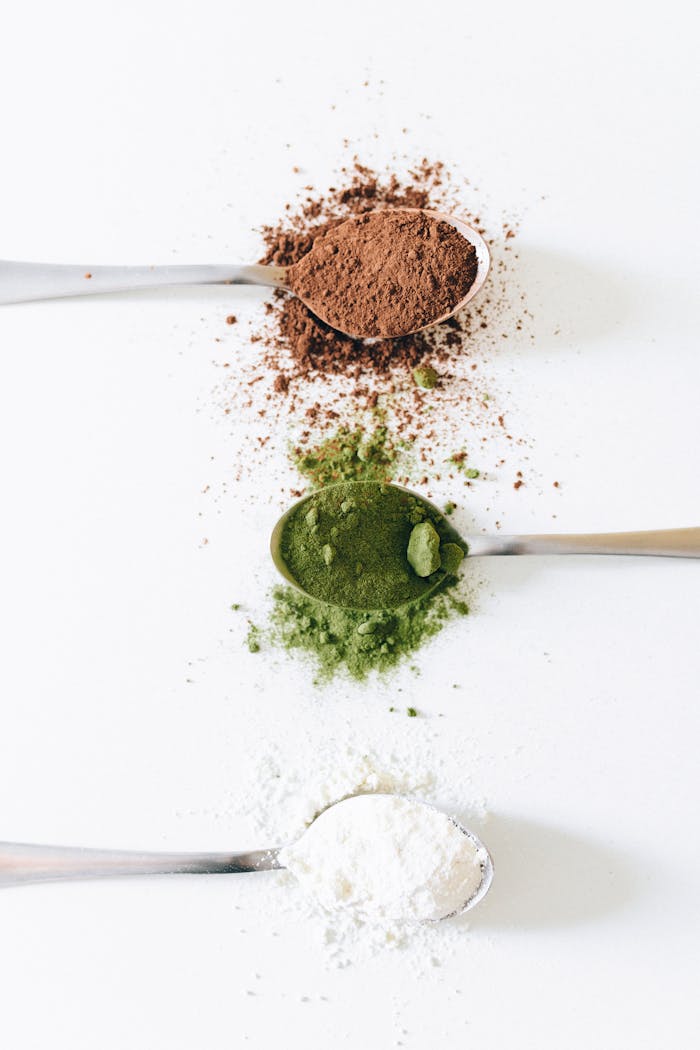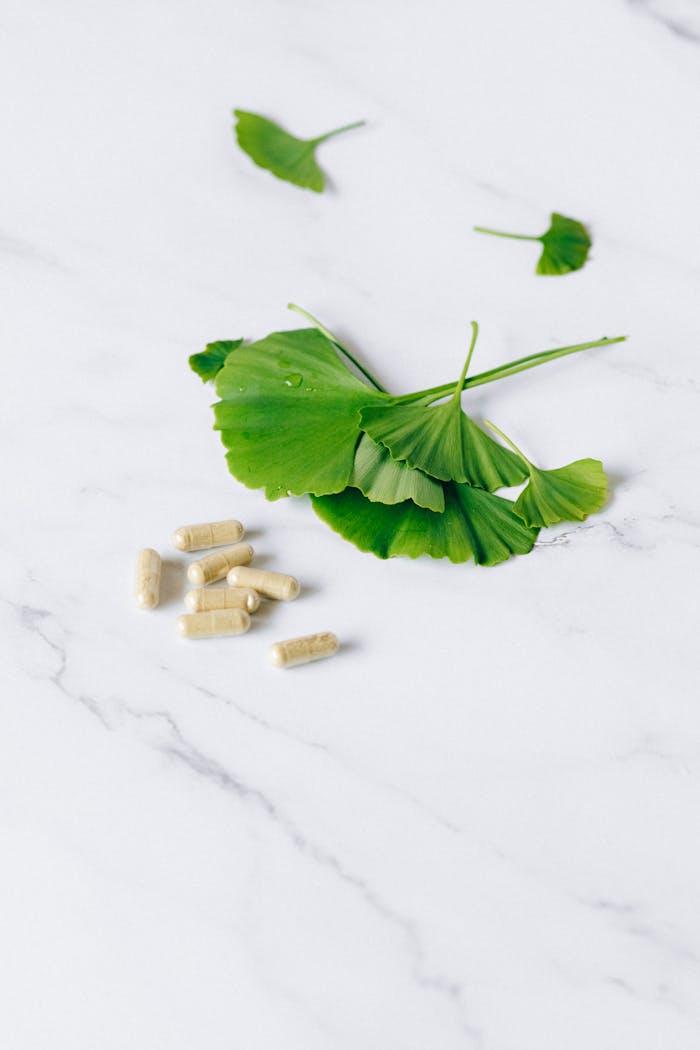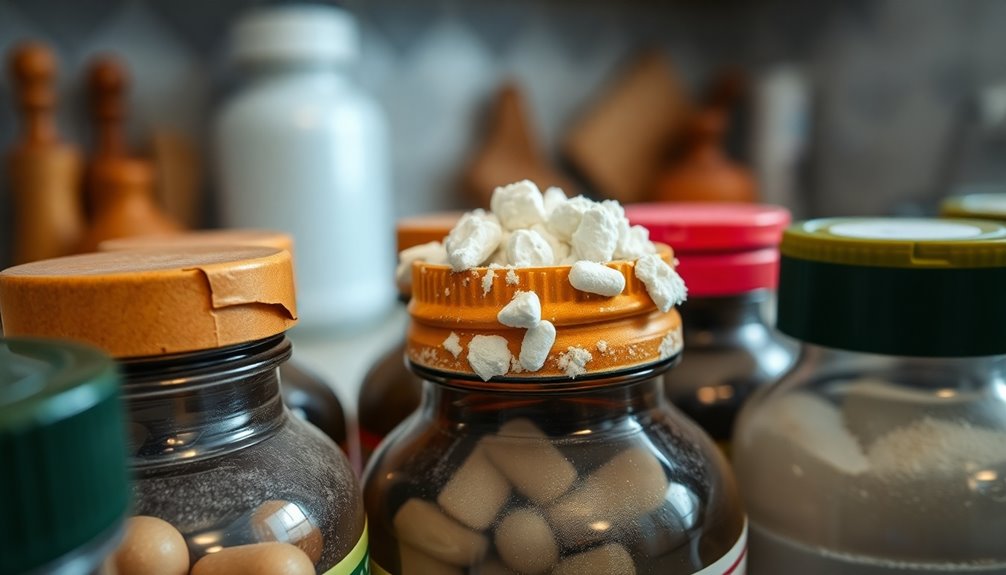
To tell if your supplements have gone bad, check for several signs. Look for unusual color changes, clumping, or darkening hues, which indicate degradation. Trust your nose; off or rancid smells can signal spoilage. If they feel sticky or grainy, that’s a red flag too. Finally, monitor their effectiveness—if they seem less potent, it’s time to dispose of them safely. There are more tips on proper storage and disposal practices that you won’t want to miss.
Recognizing Expired Supplements: Key Signs to Look For
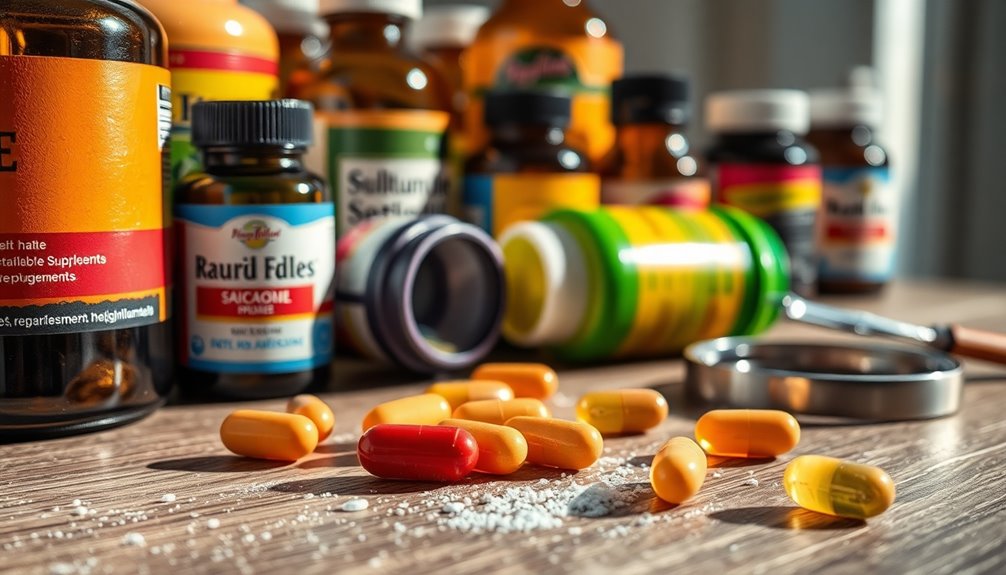
When you’re trying to maintain your health, it’s essential to recognize when your supplements have expired. Each supplement has a specific shelf life, and using them beyond this period can compromise their quality.
First, check the expiration date on the label; if it’s past, toss it out. It’s also important to take into account how you’ve stored your supplements. Exposure to heat, light, or moisture can shorten their shelf life, even if the expiration date hasn’t passed.
Make certain you’re buying from reputable sources, as poor storage or handling can affect supplement quality right from the start. Staying informed and diligent about your supplements can help you avoid potential health risks and make sure you’re getting the best benefits from your health regimen.
Changes in Appearance: Color, Shape, and Clumping
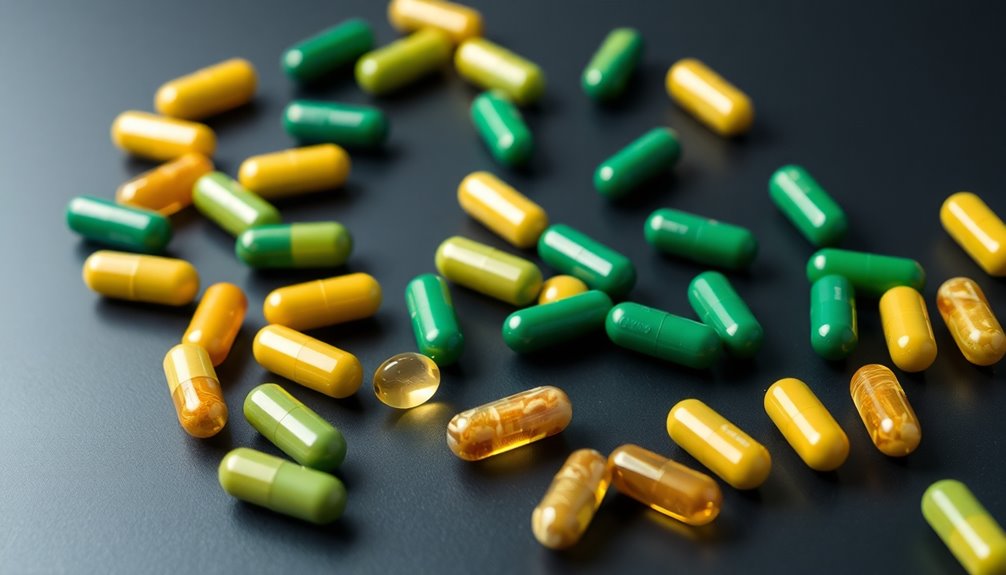
When checking your supplements, pay close attention to any unusual color changes or noticeable clumping.
These signs can indicate that your product has gone bad and may not be safe to consume.
If you see anything off, it’s best to err on the side of caution and discard them.
Unusual Color Changes
Have you ever noticed your supplements looking different than when you first bought them? Unusual color changes can be significant color indicators of compromised supplement integrity.
If you spot any of the following changes, it’s time to reconsider their safety:
- Fading: If vibrant colors have dulled, it might indicate degradation of active ingredients.
- Darkening: A shift to a darker hue can suggest oxidation or spoilage.
- Unexpected Shades: If you see colors that weren’t present before, it’s a red flag that something’s off.
Always inspect your supplements closely.
When in doubt, it’s better to toss them than risk your health. Keeping an eye on color changes helps guarantee you’re getting the benefits you expect from your supplements.
Noticeable Clumping Issues
Noticing unusual clumping in your supplements is another sign they might be past their prime. Clumping can occur due to moisture exposure or improper storage, affecting the supplement textures you expect.
When you see clusters instead of loose powders, it’s a red flag. These clumping causes indicate that the ingredients may have degraded, losing their potency and effectiveness.
If you shake the container and hear a solid thump instead of the usual light sound, it’s time to evaluate further. Trust your instincts—if the appearance seems off, it’s better to err on the side of caution.
Tossing out clumped supplements could save you from potential health risks and guarantee you’re getting the quality nutrition you deserve.
Smell Matters: Identifying Off Odors in Supplements

When it comes to supplements, smell can be a telltale sign of spoilage.
If you notice any unpleasant or off odors, it’s time to take a closer look.
Common indicators include sour, rancid, or musty smells that signal your supplements may not be safe to use.
Recognizing Unpleasant Smells
How can you tell if your supplements have gone bad just by using your nose? Your sense of smell plays an essential role in scent detection, helping you identify any off odors.
Here’s what to look for when evaluating odor profiles:
- Rancid Smell: If your supplement smells like old oil or has an acrid odor, it’s likely gone bad.
- Chemical Odor: A harsh, artificial scent could indicate contamination or degradation of ingredients.
- Musty or Moldy Smell: This suggests moisture exposure, which can spoil your supplements and lead to harmful bacteria growth.
Trust your nose; if something smells off, it’s best to discard the supplement to avoid any potential health risks.
Always prioritize your safety!
Common Odor Indicators
A few common odor indicators can help you quickly assess whether your supplements are still safe to use.
First, pay attention to any unusual scent changes—if your supplement suddenly smells rancid, musty, or overly strong, it’s time to reconsider its safety. Fresh supplements typically have specific odor profiles, and any drastic alteration suggests degradation.
For example, fish oil supplements should smell like the ocean, not fishy or sour. Additionally, if you notice a chemical or plastic-like odor, it’s a red flag.
Always trust your nose; if something seems off, it’s better to err on the side of caution. Your health is worth more than a questionable bottle of vitamins.
Texture Changes: What a Shift in Feel Can Indicate
While you mightn’t think much about the texture of your supplements, changes in feel can signal that they’ve gone bad.
Texture indicators are essential for evaluating supplement consistency. Here are three signs to watch for:
- Clumping: If your powder supplements form clumps, moisture might’ve compromised their integrity.
- Graininess: A gritty texture instead of a smooth one can indicate that the ingredients have degraded or separated.
- Stickiness: If capsules or tablets feel unusually sticky, this could mean they’ve absorbed moisture, leading to spoilage.
Always pay attention to these texture changes. They can be the first warning signs that your supplements may no longer be safe or effective.
Potency Loss: How to Assess Effectiveness Over Time
As time passes, you might notice that your supplements aren’t delivering the same effects they once did, which can indicate potency loss.
To assess their effectiveness, consider conducting potency testing. This involves checking the active ingredients to verify they’re still at effective levels.
Keep in mind that different supplements have varying shelf stability; some may degrade faster than others. Factors like exposure to heat, moisture, and light can accelerate this process.
If you’re unsure about their potency, it might be worth consulting with a professional or using third-party testing services.
Regularly evaluating your supplements can help you maintain their efficacy and make informed choices about your health regimen.
Don’t overlook the importance of potency in achieving your wellness goals.
The Role of Expiration Dates: Understanding Labels and Timelines
Understanding expiration dates on your supplements is essential for ensuring their safety and effectiveness. These dates indicate the period in which the product maintains its potency and quality. Here’s what you need to know about expiration significance and label comprehension:
- Check the Date: Always look for the expiration date on the label. Using supplements past this date can lead to diminished effectiveness.
- Understand “Best By” vs. “Expiration”: “Best By” suggests peak quality, while “Expiration” indicates the last day for safety and potency.
- Manufacturer Guidelines: Follow any specific guidelines provided by the manufacturer regarding storage and usage, as these can affect the supplement’s longevity.
Storage Conditions: How Environment Affects Supplement Longevity
Proper storage conditions play an essential role in maintaining your supplements’ potency and safety.
Keep your supplements in a cool, dry place, away from direct sunlight. High humidity can greatly impact their longevity, leading to clumping or even mold growth.
Avoid storing them in the bathroom or kitchen, where moisture levels can fluctuate. Temperature fluctuations can also degrade your supplements over time; extreme heat or cold can alter their chemical composition.
Instead, opt for a consistent environment, ideally between 60°F and 75°F (15°C to 24°C).
Manufacturer Recommendations: Following Guidelines for Best Use
When it comes to your supplements, following manufacturer recommendations is essential for ensuring their effectiveness.
Pay close attention to the recommended storage conditions and always check expiration dates.
Recommended Storage Conditions
To keep your supplements effective and safe, follow the manufacturer’s recommended storage guidelines. Proper storage is essential, as it helps maintain the potency and quality of your supplements.
Here are three key factors to take into account:
- Ideal Temperatures: Store supplements in a cool, dry place, ideally between 60°F and 75°F (15°C to 24°C).
- Humidity Levels: Avoid areas with high humidity, such as bathrooms or kitchens, as moisture can degrade supplements.
- Light Exposure: Keep your supplements away from direct sunlight to prevent chemical breakdown.
Expiration Dates Importance
Even with ideal storage conditions, supplements can lose their effectiveness over time, which is why understanding expiration dates is essential.
The expiration date significance can’t be overstated; it indicates the manufacturer’s guarantee for potency and safety. By adhering to these dates, you’re ensuring you get the full benefits of your supplements.
Shelf life awareness also helps you avoid potential adverse effects from expired products. Always check the labels and follow the manufacturer’s recommendations for best use.
If you find supplements past their expiration date, it’s wise to dispose of them properly. Staying informed about these guidelines not only enhances your health regimen but also protects you from consuming ineffective or potentially harmful products.
When to Discard: Safe Disposal Practices for Supplements
Knowing when to discard supplements is essential for your health, as expired or improperly stored products can lose potency or even become harmful.
To guarantee safe disposal and protect the environment, follow these guidelines:
- Check Expiration Dates: Discard any supplements past their expiration dates to avoid consuming ineffective or harmful products.
- Inspect for Changes: If supplements show signs of moisture, unusual odors, or color changes, it’s best to throw them away.
- Use Safe Disposal Methods: Dispose of supplements through environmentally friendly methods, like taking them to a pharmacy take-back program or mixing them with unpalatable substances before placing them in the trash.
Common Myths About Supplement Shelf Life
While many people believe that all supplements last indefinitely, the truth is far more nuanced. One common myth is that if a supplement hasn’t expired, it’s still effective.
Myth busting reveals that factors like storage conditions can greatly impact shelf life. Another misconception is that natural supplements never go bad. In reality, even natural products can lose potency over time.
You might also think that supplements in sealed bottles are immune to degradation, but exposure to light and humidity can still shorten their shelf life.
Finally, some believe that all supplements have the same shelf life, which isn’t true—different types vary widely. Understanding these myths helps you make informed decisions about your health.
Enhancing Shelf Life: Tips for Proper Storage and Preservation
To maximize the shelf life of your supplements, proper storage and preservation are key. Follow these tips to keep your supplements fresh and effective:
Maximize the shelf life of your supplements with proper storage and preservation techniques to keep them fresh and effective.
- Optimal Temperature: Store your supplements in a cool, dry place. Aim for a temperature between 60°F and 75°F. Avoid heat sources like stoves or direct sunlight.
- Humidity Control: Keep your supplements in a humidity-controlled environment. High humidity can lead to clumping or degradation, so consider using silica gel packets in your storage container.
- Tight Sealing: Always seal your supplement containers tightly after each use. This protects them from air exposure, which can cause oxidation and spoilage.
Conclusion
In the world of supplements, it’s easy to overlook their shelf life, but ignoring the signs can lead to wasted money and ineffective health support. By staying vigilant for changes in appearance, smell, and texture, you can guarantee you’re getting the most out of your supplements. Remember, a little care in storage goes a long way! So, why gamble with your health? Regularly check your supplements and toss the ones that don’t meet the mark.