To optimize your supplement intake while intermittent fasting, time your supplements wisely and choose high-quality products. Take fat-soluble vitamins with meals that include healthy fats and water-soluble vitamins during meals or on an empty stomach. Hydration’s key for nutrient absorption, so drink plenty of water. Watch for common mistakes, like taking supplements at the wrong time or neglecting to adjust based on your fasting goals. There’s more to discover about enhancing your supplement routine effectively.
Understanding Intermittent Fasting and Its Benefits

Intermittent fasting (IF) isn’t just a diet; it’s a powerful approach to eating that can transform your health. By alternating between eating and fasting periods, you’re giving your body a chance to rest and repair.
This method can lead to numerous health benefits, including weight loss, improved metabolic health, and enhanced brain function. When you restrict your eating window, your body taps into its fat stores for energy, which can help you shed unwanted pounds.
Additionally, IF may reduce inflammation and lower the risk of chronic diseases. You’ll also find that your energy levels stabilize, making it easier to focus and stay productive.
Embracing intermittent fasting could be the key to revealing a healthier, more vibrant you.
Key Supplements to Consider During Fasting

While fasting can offer numerous health benefits, it’s vital to make certain you’re getting the right nutrients to support your body during this time.
Consider a multivitamin for its benefits in covering essential vitamins and minerals that aid in mineral absorption and maintain electrolyte balance. Probiotic support can enhance gut health, while omega 3 sources contribute anti-inflammatory properties.
Don’t forget about vitamin D, especially if you’re fasting longer. Timing your amino acids can optimize muscle preservation, and incorporating herbal supplements may provide adaptogen effects that help manage stress.
When to Take Supplements for Maximum Effectiveness?
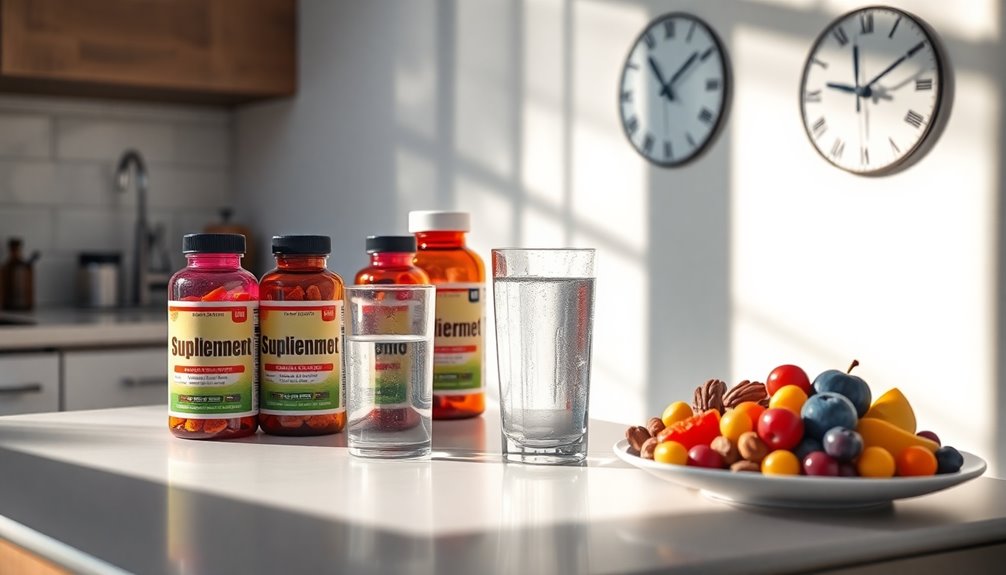
Timing your supplement intake can greatly enhance their effectiveness, especially during fasting. To achieve ideal timing, consider taking supplements during your eating window, as this can improve nutrient absorption.
For instance, fat-soluble vitamins like A, D, E, and K should be taken with meals containing healthy fats to maximize their benefits. On the other hand, water-soluble vitamins, such as B and C, can be taken either during meals or on an empty stomach, depending on your comfort.
If you’re using amino acids or pre-workout supplements, take them about 30 minutes before your workout for the best results.
How to Choose Supplements That Support Your Goals
How do you determine which supplements align with your personal health and fitness goals? Start by identifying your specific objectives, whether it’s weight loss, muscle gain, or improved energy.
Once you know your goals, look for goal-oriented supplements that directly support them. For example, if you’re aiming to build muscle, focus on protein powders or creatine. If you’re seeking fat loss, consider thermogenics or metabolism boosters.
Next, develop personalized nutrient strategies based on your dietary habits and lifestyle. This might involve consulting a nutritionist or doing research on the best supplements for your needs.
The Role of Hydration in Your Supplement Routine
Staying properly hydrated is vital for maximizing the benefits of your supplement routine, especially when you’re intermittent fasting. Dehydration can hinder nutrient absorption and affect your overall performance.
To guarantee you’re on track, implement effective hydration strategies throughout your fasting window. Aim to drink plenty of water, and consider adding electrolytes to maintain your electrolyte balance. This is particularly important during longer fasts, as your body may lose essential minerals.
Implement effective hydration strategies during fasting by drinking water and adding electrolytes to maintain balance and support your health goals.
You can also hydrate with herbal teas or infuse your water with fruits for added flavor. Remember, ideal hydration supports your supplements’ effectiveness, helping you achieve your health goals while intermittent fasting.
Prioritize water intake to keep your body functioning at its best!
Common Mistakes to Avoid With Supplements and Fasting
Hydration plays a key role in optimizing your supplement intake, but it’s equally important to recognize common pitfalls when combining supplements with intermittent fasting.
One major mistake is taking your supplements at the wrong time. For instance, consuming fat-soluble vitamins during your fasting window can lead to poor absorption. Instead, align your supplement timing with your eating periods for maximum effectiveness.
Another pitfall is neglecting to adjust your supplements based on your fasting schedule. As your eating window changes, so should your supplement regimen.
Finally, don’t overlook the importance of quality. Not all supplements are created equal—invest in high-quality products to guarantee you’re getting the nutrients you need during your fasting journey.
Avoid these mistakes to enhance your results.
Monitoring Your Progress: Adjusting Supplement Intake
As you commence your intermittent fasting journey, it’s crucial to monitor your progress and adjust your supplement intake accordingly.
Effective progress tracking helps guarantee you’re getting the most out of your regimen. Here are three key areas to focus on for supplement adjustments:
- Energy Levels: Assess how your energy fluctuates throughout the fasting period. If you’re feeling drained, consider adding a B-vitamin complex.
- Mood Stability: Notice any changes in your mood. Omega-3 fatty acids might help if you’re feeling irritable.
- Physical Performance: Evaluate your workout performance. If you’re struggling, you may need to tweak your protein intake or add electrolytes.
Integrating Supplements Into Your Fasting Lifestyle
When you’re integrating supplements into your fasting lifestyle, timing is key.
You’ll want to know the best times to take them and which essential nutrients to focus on without disrupting your fast.
Let’s explore how to make your supplement routine work seamlessly with your fasting schedule.
Best Times To Supplement
How can you effectively integrate supplements into your intermittent fasting routine? Timing strategies play a vital role in maximizing absorption rates.
Here are three key times to take into account for supplementing:
- Before Breaking Your Fast: Taking supplements like vitamins or minerals can enhance their absorption when your stomach is relatively empty.
- During Your Eating Window: Pairing supplements with food can improve absorption for fat-soluble vitamins, making this a prime time for those.
- Before Fasting Begins Again: Some supplements, especially electrolytes, can help sustain energy and hydration levels as you shift back into fasting.
Essential Nutrients To Consider
While intermittent fasting can enhance your body’s ability to burn fat and improve metabolic health, it’s essential to confirm you’re getting necessary nutrients during this time.
Focus on incorporating essential fatty acids, which play a significant role in your overall health. Omega-3 and omega-6 fatty acids support brain function and reduce inflammation.
Additionally, consider how your supplement choices affect micronutrient absorption. For instance, fat-soluble vitamins like A, D, E, and K are better absorbed with dietary fats.
To optimize your fasting experience, make sure you’re consuming nutrient-dense foods during eating windows and choose high-quality supplements that complement your diet. This way, you can maintain balanced nutrition and support your fasting lifestyle effectively.
Avoiding Interference With Fasting
To maintain the benefits of intermittent fasting, you need to be strategic about your supplement intake.
You want to avoid anything that could interfere with the fasting effects. Here are three key tips for optimizing nutrient timing:
- Choose Water-Soluble Supplements: Vitamins B and C are great options as they don’t require food for absorption.
- Avoid Sugary or Caloric Supplements: Stick to clean options like electrolytes or amino acids that won’t break your fast.
- Timing Matters: Take your supplements during your eating window to maximize nutrient absorption without disrupting fasting.
Conclusion
By optimizing your supplement intake while intermittent fasting, you can amplify the benefits of your fasting routine. Imagine feeling energized and focused, with every nutrient working in harmony to support your goals. Don’t let the fear of conflicting supplements hold you back; when timed and chosen wisely, they can enhance your experience instead of hindering it. Embrace the journey, stay hydrated, and watch how your body transforms as you integrate these practices into your lifestyle.