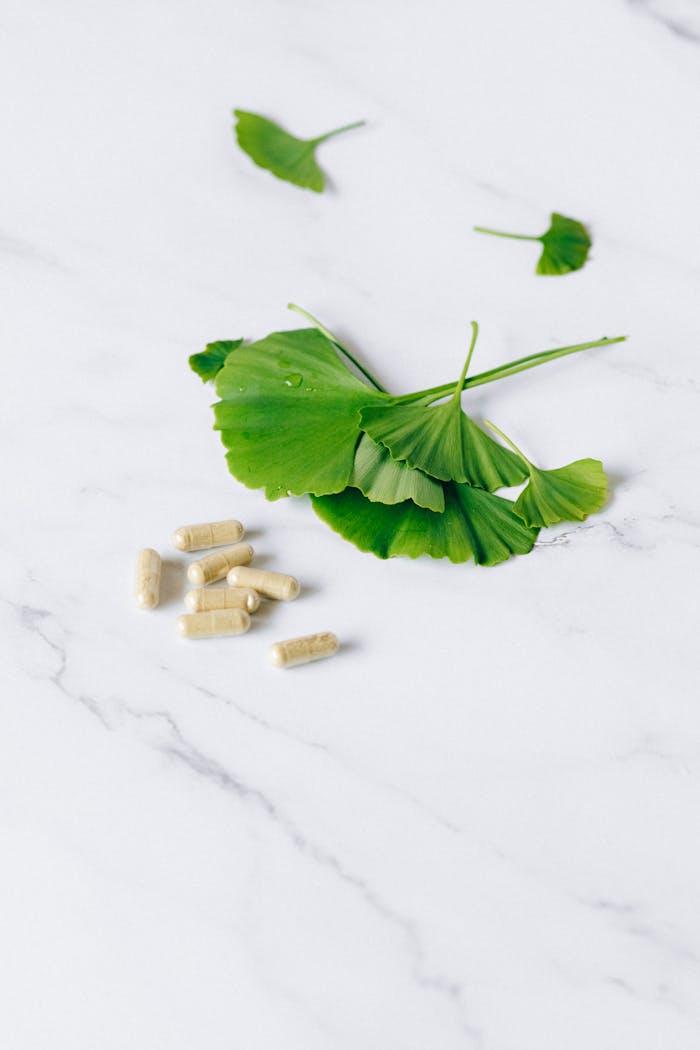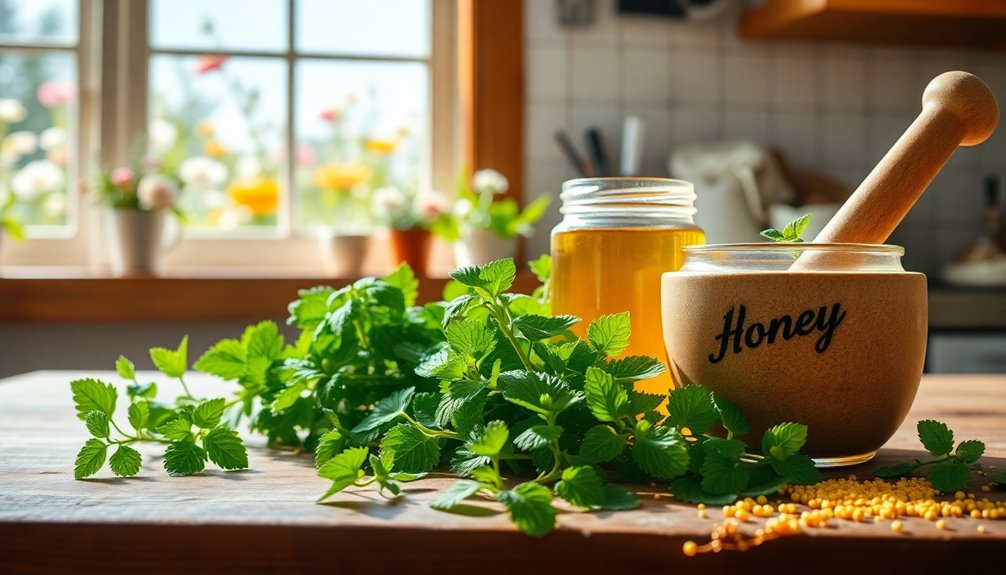
To prep your body for spring allergies naturally, start by strengthening your immune system with a diet rich in lean proteins, vegetables, and antioxidant-packed foods. Incorporate herbal remedies like peppermint tea and stinging nettle for relief. Keep your home allergy-friendly—use air purifiers and clean regularly. Don’t forget mindfulness breathing techniques to ease symptoms and consider probiotics for gut health. If you want to discover more ways to boost your defense against allergies, keep exploring!
Understand the Causes of Spring Allergies

As spring arrives, many people find themselves sneezing and experiencing itchy eyes due to pollen from trees, grasses, and flowers. Understanding the different pollen types is essential, as they act as allergy triggers that can provoke your immune response.
Seasonal factors, like warm temperatures and increased sunlight, contribute to higher pollen counts, making you more susceptible to allergies. Environmental changes, such as urbanization and climate shifts, also play a role in pollen distribution and intensity.
Additionally, lifestyle influences, like spending more time outdoors or having pets, can further expose you to allergens. By recognizing these factors, you can better prepare yourself for the allergy season and take proactive steps to minimize your symptoms.
Strengthen Your Immune System With Nutrition

While you can’t control the pollen count, you can boost your immune system through proper nutrition. Focus on incorporating immune-boosting recipes into your meals. Think of dishes packed with lean proteins, healthy fats, and plenty of vegetables. These ingredients fuel your body and help it fend off allergens.
Don’t forget about nutrient-dense snacks! Fresh fruits, nuts, and yogurt are excellent choices that provide essential vitamins and minerals.
Try making a smoothie with spinach, bananas, and almond milk for a quick nutrient boost.
Incorporate Antioxidant-Rich Foods Into Your Diet

To effectively combat spring allergies, you should include antioxidant-rich foods in your diet, since these powerful nutrients help reduce inflammation and strengthen your body’s defenses.
Start your day with antioxidant smoothies packed with berries, spinach, and a splash of citrus for an energizing boost. These ingredients not only taste great but also fight off free radicals.
For lunch or dinner, whip up colorful salads filled with kale, carrots, bell peppers, and tomatoes. Each vibrant hue indicates a wealth of antioxidants that can help soothe your body during allergy season.
Incorporating these foods into your meals makes a delicious difference, helping you feel more energized and less congested as you tackle seasonal challenges.
Explore Herbal Remedies for Allergy Relief
In addition to boosting your diet with antioxidant-rich foods, exploring herbal remedies can offer natural relief from allergy symptoms.
Herbal teas like peppermint and chamomile not only soothe your throat but also act as natural antihistamines. Drinking these teas regularly can help reduce inflammation and ease congestion.
Additionally, stinging nettle is known for its ability to alleviate allergy symptoms; it’s often found in supplement form or as a tea.
Another option is butterbur, which has shown promise in studies for its anti-inflammatory properties.
Incorporating these herbal remedies into your daily routine can provide you with relief without the side effects commonly associated with traditional medications.
Embrace these natural alternatives as you prep your body for the allergy season ahead.
Utilize Essential Oils to Combat Allergies
Many people find that essential oils can be a powerful ally in combating allergy symptoms. You can create your own essential oil blends to promote allergy relief.
Essential oils can be a potent ally in easing allergy symptoms with personalized blends for relief.
For instance, lavender and peppermint oils can help soothe irritated airways, while eucalyptus oil may clear congestion. Simply add a few drops of these oils to a diffuser or mix them with a carrier oil for topical application.
Inhaling the aroma can provide immediate relief, while using them in a steam inhalation can help open up your sinuses. Remember to patch-test any new oils to avoid skin irritation.
Incorporating these natural remedies into your routine can be a simple and effective way to alleviate allergy discomfort this spring.
Implement a Daily Hydration Routine
As spring approaches and pollen levels rise, staying properly hydrated becomes essential for managing allergy symptoms. Implementing a daily hydration routine can greatly enhance your overall well-being.
Aim for at least eight glasses of water a day, but adjust based on your activity level and climate. Proper water intake helps thin mucus, making it easier for your body to expel allergens. It also supports your immune system, providing hydration benefits that can reduce inflammation and discomfort.
You can boost your hydration by incorporating herbal teas or infused water with fruits and herbs. Listen to your body’s signals; if you’re feeling fatigued or have a dry throat, it’s time to drink up! Stay proactive and keep those allergy symptoms at bay.
Create an Allergy-Friendly Home Environment
Creating an allergy-friendly home environment involves several key steps that can make a significant difference in your comfort during allergy season.
Start by allergy proofing your home: use hypoallergenic bedding, and wash it regularly in hot water. Keep windows closed during high pollen days and invest in high-quality air purifiers to enhance indoor air quality.
Vacuum frequently with a HEPA filter vacuum to trap allergens and dust. Consider removing carpets, which can harbor allergens, and opt for hard flooring instead.
Regularly clean surfaces with damp cloths to minimize dust accumulation. Don’t forget about your pets—bathe and groom them regularly to reduce dander.
Practice Breathing Techniques for Allergy Management
Practicing breathing techniques can greatly help manage your allergy symptoms.
By focusing on deep breathing, diaphragmatic techniques, and mindfulness, you can improve your lung function and reduce stress.
Let’s explore how these methods can enhance your overall well-being during allergy season.
Deep Breathing Exercises
While managing spring allergies can be challenging, incorporating deep breathing exercises into your routine can markedly ease your symptoms.
These exercises help improve breath control, allowing you to take deeper, more effective breaths and reduce anxiety. Start by finding a comfortable position, either sitting or lying down. Inhale slowly through your nose, filling your lungs, then exhale gently through your mouth.
Repeat this for several minutes, focusing on the rhythm of your breath. You can combine these breathing techniques with relaxation techniques, like visualization or progressive muscle relaxation, to enhance their effectiveness.
As you practice, you’ll likely notice a decrease in allergy-related stress, making it easier to cope with the seasonal challenges ahead.
Diaphragmatic Breathing Benefits
Building on the benefits of deep breathing exercises, diaphragmatic breathing offers specific advantages for managing allergy symptoms. This technique focuses on engaging your diaphragm, allowing for deeper, more efficient breaths. By practicing diaphragmatic breathing, you can reduce stress and anxiety, which often exacerbate allergy symptoms.
Improved oxygen flow enhances lung function, making it easier to cope with allergens.
To experience these diaphragmatic benefits, try lying down or sitting comfortably, placing one hand on your chest and the other on your abdomen. Inhale deeply through your nose, feeling your belly rise, then exhale slowly.
Incorporating these breathing techniques into your daily routine can help you feel more in control of your allergies, making springtime much more enjoyable.
Mindfulness Breathing Techniques
To effectively manage allergy symptoms, incorporating mindfulness breathing techniques into your routine can be transformative.
Begin by setting aside a few minutes each day for mindful moments focused on your breathing awareness. Find a comfortable spot, close your eyes, and take deep, slow breaths. Inhale through your nose, feeling your abdomen expand, then exhale gently through your mouth.
As you breathe, pay attention to how each breath affects your body, letting go of tension with every exhale. Whenever allergy symptoms arise, return to these techniques, allowing your breath to ground you.
Practicing mindfulness this way not only helps alleviate immediate discomfort but also trains your body to respond more calmly in the face of allergens.
Consider Probiotics for Gut Health and Immunity
Probiotics can play an essential role in boosting your gut health and immunity, especially during allergy season.
By incorporating these beneficial microorganisms into your diet, you might find relief from allergy symptoms.
Let’s explore the best sources of probiotics and the specific benefits they offer.
Benefits Of Probiotics
While many people focus on seasonal changes, don’t overlook the essential role probiotics play in supporting your gut health and boosting immunity.
These tiny powerhouses help maintain a balanced gut microbiome, which is vital for overall well-being. By incorporating different probiotic varieties into your diet, you can enhance your body’s natural defenses against allergens and infections.
Probiotics work by promoting the growth of beneficial bacteria, which can improve digestion and reduce inflammation. When your gut health is in check, you’re more likely to experience fewer allergy symptoms and enhanced immune function.
Best Sources Available
There are plenty of great sources for probiotics that can help improve your gut health and boost immunity.
Fermented foods like yogurt, kefir, sauerkraut, and kimchi are excellent choices; they’re packed with beneficial bacteria. If you prefer a more concentrated option, consider natural supplements that contain live cultures. Always read labels to verify you’re getting a variety of strains for maximum benefits.
Additionally, if you’re facing severe allergies, it might be worth undergoing allergy testing to identify triggers and tailor your diet accordingly.
Stay Informed: Monitor Pollen Levels and Allergy Forecasts
To effectively manage your spring allergies, staying informed about pollen levels and allergy forecasts is essential.
Start by checking local pollen forecasts regularly; knowing when pollen counts are high can help you plan your outdoor activities. You might consider downloading allergy apps that provide real-time updates on pollen levels in your area.
These apps often include features that alert you when levels rise, allowing you to take preventive measures. When you know what to expect, you can minimize exposure by staying indoors during peak times or wearing a mask when you venture outside.
Staying informed empowers you to take control of your allergies and enjoy the beauty of spring without suffering.
Conclusion
As spring blooms and pollen fills the air, remember that you’re not alone in this battle against allergies. By nurturing your body naturally, you can find relief and enjoy the beauty of the season. Envision this: while others struggle to breathe, you’re savoring the vibrant colors and fresh scents. With the right preparations, you can reclaim your spring. So, take these steps, embrace the journey, and watch as the world around you transforms into a haven of joy.