
When choosing between plant-based protein and whey, consider your goals and dietary needs. Whey protein, derived from milk, offers quick absorption and a complete amino acid profile, making it ideal for muscle recovery. On the other hand, plant-based proteins, like soy and pea, provide essential nutrients and fiber while being easier on the digestive system for many. Both have unique benefits and tastes, so you can find what fits your lifestyle best. You’ll discover more insights ahead!
What Is Whey Protein and How Is It Made?

Whey protein, a popular supplement among fitness enthusiasts, is derived from milk during the cheese-making process.
There are several whey production methods, including microfiltration and ultrafiltration, which separate whey from the curds. These methods help maintain the protein’s quality while removing lactose and fats.
You’ll find three main whey protein types: whey protein concentrate (WPC), whey protein isolate (WPI), and whey protein hydrolysate (WPH).
WPC contains around 70-80% protein, making it ideal for those looking for a balanced option. WPI, with over 90% protein, is perfect for those wanting minimal fats and carbs.
WPH is pre-digested, allowing for quicker absorption, making it great for post-workout recovery. Each type has its unique benefits tailored to your fitness goals.
Understanding Plant-Based Protein Sources
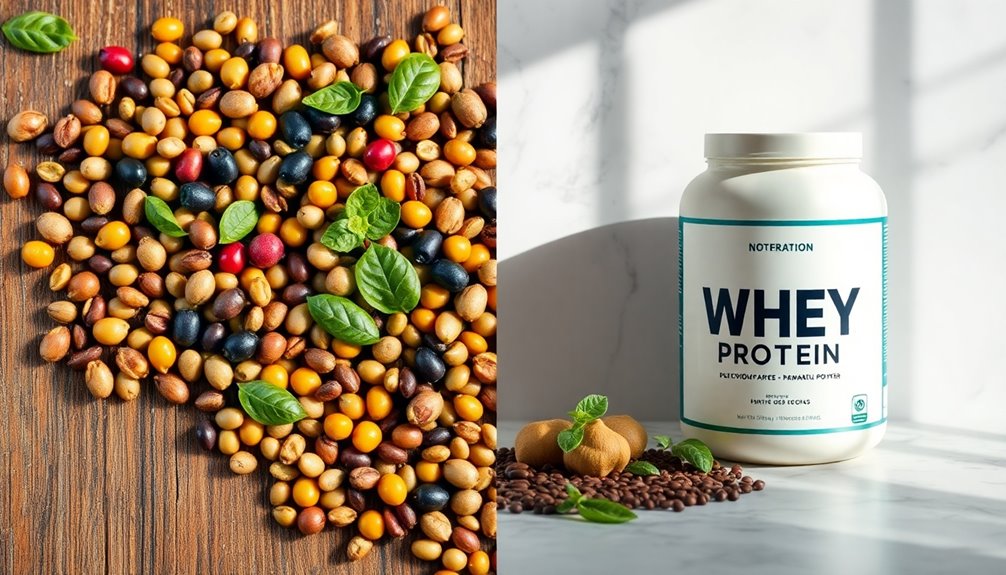
Plant-based proteins are becoming increasingly popular among health-conscious individuals and athletes alike. These sources offer a diverse range of options to meet your protein needs.
Soy protein is a complete source, making it a favorite for many. Quinoa protein packs essential amino acids, while pea protein is known for its digestibility.
Hemp protein not only provides protein but also healthy fats. Rice protein is a great hypoallergenic choice, and chia protein offers fiber along with protein.
Lentil protein is nutrient-dense, and nut protein adds flavor and texture. Pumpkin protein is rich in magnesium, and spirulina protein is a superfood that boosts your nutritional profile.
With so many choices, you can easily find the perfect plant-based protein for your lifestyle.
Nutritional Profiles: Whey vs. Plant-Based

When comparing the nutritional profiles of whey and plant-based proteins, you’ll notice key differences in amino acid composition and nutrient density.
It’s essential to reflect on how well each option digests in your body, as this can affect your protein absorption.
Let’s explore these factors to help you make an informed choice.
Amino Acid Composition
In the world of protein supplements, amino acid composition plays an essential role in determining their effectiveness. When comparing whey and plant-based proteins, you’ll notice key differences in their amino acid profiles that impact protein bioavailability.
Whey protein typically contains all essential amino acids, making it a complete protein source. On the other hand, plant-based proteins might lack one or more essential amino acids, but they can still be effective when combined.
- Whey has higher leucine content, important for muscle growth.
- Plant proteins offer more fiber, benefiting digestion.
- Combining different plant sources can enhance amino acid profiles.
Nutrient Density Comparison
While you might think all protein sources are created equal, the nutrient density of whey and plant-based proteins reveals significant differences.
Whey protein stands out with its high levels of essential amino acids, vitamins, and minerals, making it a top nutrient source for muscle recovery.
On the other hand, plant-based proteins often provide a broader range of nutrients, including fiber, antioxidants, and phytonutrients, supporting overall health. However, their amino acid profiles may not be as complete.
When considering nutrient absorption, whey typically digests quickly, promoting rapid muscle repair. Plant-based options may take longer to absorb, but they offer a wider array of nutrients that benefit long-term health.
Choosing the right protein depends on your specific dietary needs and health goals.
Digestibility Factors
Understanding digestibility is essential when comparing whey and plant-based proteins. The digestibility factors of these proteins can greatly influence your gut health and overall nutrient absorption.
Whey protein typically boasts a higher digestibility rate, making it a favorite for muscle recovery. However, many plant-based proteins also provide beneficial nutrients and can support digestive health.
- Whey protein is digested quickly, aiding post-workout recovery.
- Plant-based proteins often contain fiber, promoting gut health.
- Individual tolerance varies; some may digest one type better than the other.
Ultimately, knowing how each protein affects your body can help you choose the right option for your dietary needs and health goals.
Amino Acids: Complete vs. Incomplete Proteins
When you think about protein sources, it’s vital to recognize the difference between complete and incomplete proteins.
Complete proteins contain all essential amino acids your body needs, while incomplete proteins lack one or more of these amino acids.
Understanding this distinction can help you make better choices for your diet.
Complete Protein Sources
- Animal-based proteins: Such as whey, eggs, and dairy.
- Plant-based proteins: Like quinoa, soy, and chia seeds.
- Combination sources: Pairing legumes with grains, like rice and beans.
These complete protein sources not only enhance protein quality but also support muscle growth, recovery, and overall health.
Whether you’re a meat-eater or a plant-based enthusiast, incorporating a variety of these proteins can help you meet your nutritional needs and optimize your health.
Incomplete Protein Examples
While complete proteins contain all essential amino acids your body needs, many plant sources offer incomplete proteins that lack one or more of these vital building blocks.
For instance, beans and lentils are rich in protein but low in methionine, while grains like rice and wheat are low in lysine. To guarantee you’re getting a balanced intake, consider using protein combinations.
Pairing rice with beans or hummus with whole grain pita can create a complete protein profile. Even if you’re relying on plant-based sources, mixing different foods throughout the day can help you meet your amino acid requirements.
Essential Amino Acids
Understanding protein quality is important for anyone looking to optimize their diet. Essential amino acids are the building blocks your body needs for protein synthesis, and they play a vital role in muscle repair and growth.
When considering protein sources, here are a few key points to remember:
- Complete Proteins: Contain all nine essential amino acids, found in sources like whey.
- Incomplete Proteins: Lack one or more essential amino acids, common in many plant-based options.
- Combining Sources: You can achieve a complete amino acid profile by combining different plant proteins.
Digestibility: Which Protein Is Easier on Your Gut?
When considering protein options, digestibility plays an essential role in how well your body can utilize the nutrients.
Whey protein is generally easier to digest, often leading to faster protein absorption thanks to its high-quality amino acid profile. However, some individuals may experience discomfort due to lactose, affecting their gut health.
On the other hand, plant-based proteins tend to have higher fiber content, which can aid digestion but may cause fermentation effects for some. Your individual tolerance will determine how well you handle each type.
Digestive enzymes also play a significant role; they can enhance protein breakdown, ensuring you get the most benefits from your protein source, whichever one you choose.
Benefits of Whey Protein for Muscle Building
For muscle building, whey protein stands out due to its rapid absorption and high biological value. This makes it an ideal choice for anyone looking to enhance muscle recovery and performance. When you consume whey protein, your body quickly utilizes it, aiding in muscle repair after intense workouts.
- Supports muscle growth by providing essential amino acids
- Promotes faster muscle recovery, allowing for more effective training sessions
- Enhances overall athletic performance, giving you an edge in your workouts
Incorporating whey protein into your diet can greatly boost your muscle-building efforts. Whether you mix it in a shake or add it to your meals, the benefits are clear—you’re setting yourself up for success in achieving your fitness goals.
Advantages of Plant-Based Protein for Overall Health
While many people focus on protein for muscle gain, plant-based protein offers a wealth of advantages for overall health. It supports muscle recovery and boosts energy levels, making it ideal for active lifestyles.
Additionally, these proteins provide essential nutrients that enhance your immune support and promote heart health. With their high fiber content, plant-based proteins also improve digestive health and aid in weight management.
They can help with inflammation reduction, which is vital for maintaining peak metabolic function. Plus, you’ll notice benefits for your skin health as well.
Potential Allergies and Intolerances: Whey vs. Plant-Based
Understanding potential allergies and intolerances is crucial when choosing between whey and plant-based protein. Whey protein can trigger allergy symptoms in some individuals, especially those allergic to dairy. If you’re lactose intolerant, you might experience digestive discomfort, bloating, or gas when consuming whey.
On the other hand, while plant-based proteins are generally well-tolerated, they can still evoke plant reactions in sensitive individuals.
- Whey may cause issues like skin rashes or digestive problems.
- Plant-based proteins can lead to protein sensitivities, especially with certain legumes.
Always consult a healthcare provider if you’re unsure about potential reactions.
Choosing the right protein source involves understanding your body’s unique responses to these different options.
Environmental Impact: Sustainability of Protein Sources
When considering your protein source, the environmental impact plays a vital role in the decision-making process.
Plant-based proteins typically promote sustainable farming practices, leading to better resource efficiency. They often have a lower carbon footprint compared to whey, which requires significant land usage and water consumption.
Plant-based proteins foster sustainable farming, enhancing resource efficiency and boasting a lower carbon footprint than whey.
Additionally, plant-based options can help reduce biodiversity impact, as they often involve less habitat disruption. Ethical sourcing is also a key factor; many plant-based proteins support local farmers and sustainable practices.
On the other hand, whey production can lead to waste management issues and higher greenhouse gas emissions.
Cost Comparison: Whey Protein vs. Plant-Based Options
Cost is a crucial factor when choosing between whey protein and plant-based options. You’ll notice significant price variations depending on brand, quality, and market trends.
Whey protein often falls in the mid to high price range, reflecting its popularity and demand. On the other hand, plant-based proteins can vary widely, sometimes offering more budget-friendly choices.
Consider these points when evaluating costs:
- Brand Differences: Premium brands may charge more for their whey or plant-based proteins.
- Serving Sizes: Compare the cost per serving to get a clearer picture.
- Sales and Promotions: Keep an eye on discounts, which can influence overall pricing.
Ultimately, your budget and preferences will guide your choice between these protein sources.
Taste and Texture: Which Protein Wins?
How do taste and texture influence your choice between plant-based proteins and whey?
When it comes to flavor profiles, whey often has a creamy, mild taste that blends well in shakes and smoothies. On the other hand, plant-based proteins can offer a range of flavors, from nutty to earthy, depending on the source.
If you have specific texture preferences, whey typically delivers a smooth consistency, making it easy to mix. In contrast, some plant-based options can be grainy or gritty, which mightn’t appeal to everyone.
Ultimately, your preference will depend on how you like your protein to taste and feel in your mouth. Trying different brands can help you find the perfect match for your palate.
How to Incorporate Whey and Plant-Based Proteins Into Your Diet
Finding the right protein source is just the first step; incorporating both whey and plant-based proteins into your diet can enhance your nutrition.
Here are some easy ways to do that:
- Smoothie Recipes: Blend your favorite fruits with whey or plant-based protein for a quick breakfast option.
- Snack Ideas: Make homemade protein bars using either protein type for a healthy snack on the go.
- Meal Prep: Add protein to your salads as toppings or use in baking as substitutes to boost your meals.
For post-workout meals, try a protein-packed smoothie or a savory dish.
Experiment with various recipes to see what fits best into your lifestyle while meeting your protein needs!
Popular Whey Protein Products Reviewed
When it comes to choosing a whey protein product, the options can be overwhelming. You’ll find a variety of brands, each offering unique whey protein flavors like chocolate, vanilla, and strawberry. Some products even feature limited-edition flavors that can keep your routine exciting.
When making protein blend comparisons, consider factors like protein content, added ingredients, and price. For instance, some brands prioritize purity, while others include additional nutrients for recovery.
Popular choices include Optimum Nutrition Gold Standard and Dymatize ISO100, both known for their smooth texture and taste.
Ultimately, it’s about finding the right balance of flavor and quality that fits your goals. So, explore the options and pick a whey protein that you’ll enjoy mixing into your favorite shakes!
Best Plant-Based Protein Products to Try
When it comes to choosing the best plant-based protein products, you’ll find a variety of top brands that stand out.
These options not only taste great but also pack impressive nutritional benefits.
Let’s explore some of the best choices that can fit seamlessly into your diet.
Top Brands Overview
Traversing the world of plant-based protein can be overwhelming, but several standout brands make the journey easier.
Here’s a quick look at some top brands to evaluate:
- Brand A: Known for its high-quality ingredient sourcing and great flavor profiles, it consistently garners positive consumer reviews.
- Brand B: Offers competitive pricing analysis, making it a favorite among budget-conscious buyers while maintaining a strong brand reputation.
- Brand C: Stays ahead of market trends with innovative flavors that appeal to diverse tastes, ensuring you don’t sacrifice enjoyment for nutrition.
When making product comparisons, focus on these brands to find options that align with your dietary needs and preferences.
Nutritional Benefits Explained
What nutritional benefits can you gain from incorporating plant-based protein into your diet?
First off, you’ll enjoy a rich source of essential amino acids that promote muscle growth and repair. Plant benefits include increased fiber intake, which aids digestion and keeps you feeling full longer.
Unlike whey, plant-based proteins often come with fewer allergens, making them gentler on your stomach. Additionally, they can improve protein absorption due to their diverse nutrient profiles.
You’ll also find beneficial vitamins and minerals that support overall health. By choosing options like pea, hemp, or brown rice protein, you’re not just fueling your body but also embracing a more sustainable lifestyle.
Choosing the Right Protein for Your Lifestyle Goals
How do you choose the right protein to match your lifestyle goals? Start by considering your fitness goals and dietary restrictions. If you’re focused on building muscle, whey might be ideal, while plant-based options cater to those with ethical values or specific health conditions.
Choosing the right protein depends on your fitness goals and dietary needs, whether for muscle building or ethical considerations.
Here are a few tips to help you decide:
- Assess your dietary restrictions: Verify your protein source aligns with any allergies or preferences.
- Consider your workout routines: Protein timing is vital; choose a type that fits your meal planning and post-workout needs.
- Evaluate flavor preferences: You’re more likely to stick with a protein you enjoy.
Conclusion
In the debate of plant-based protein versus whey, your choice could shape your fitness journey. Will you opt for the creamy richness of whey or the wholesome diversity of plant sources? Each has its unique benefits, but the right fit hinges on your dietary needs and lifestyle goals. As you ponder your decision, remember: the perfect protein could be the key to revealing your ultimate potential. What will you choose to fuel your progress?