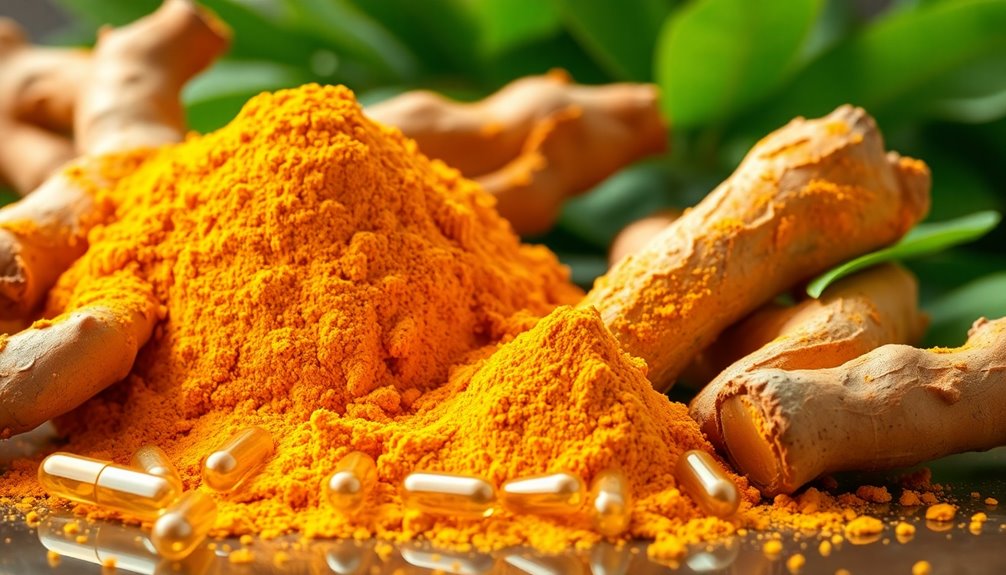
Turmeric, derived from the Curcuma longa plant, packs a powerful punch against inflammation thanks to its active ingredient, curcumin. This natural anti-inflammatory agent not only reduces inflammation but also enhances antioxidant defenses in your body. You can easily incorporate it into your diet through meals, smoothies, or supplements. Just be sure to monitor dosage and choose high-quality products. Stick around, and you’ll discover even more health benefits and tips for maximizing turmeric’s potential.
What Is Turmeric and Curcumin?
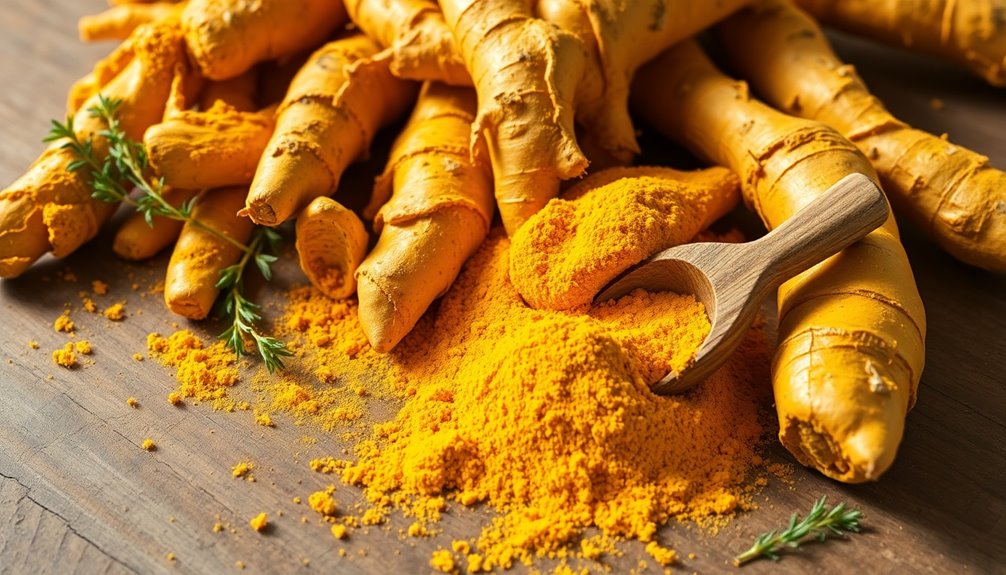
Turmeric, a vibrant yellow spice, is derived from the Curcuma longa plant and has been celebrated for centuries in traditional medicine. Its rich turmeric history spans thousands of years, particularly in Asia, where it’s used not just as a spice but also for its healing properties.
The key active ingredient in turmeric is curcumin, known for its anti-inflammatory and antioxidant effects. Curcumin extraction from the turmeric root is essential for harnessing its benefits effectively.
While you can easily incorporate turmeric into your diet, curcumin supplements provide a more concentrated dose. Understanding the distinction between turmeric and curcumin can help you make informed choices about integrating these natural remedies into your wellness routine.
How Do Turmeric and Curcumin Work in the Body?
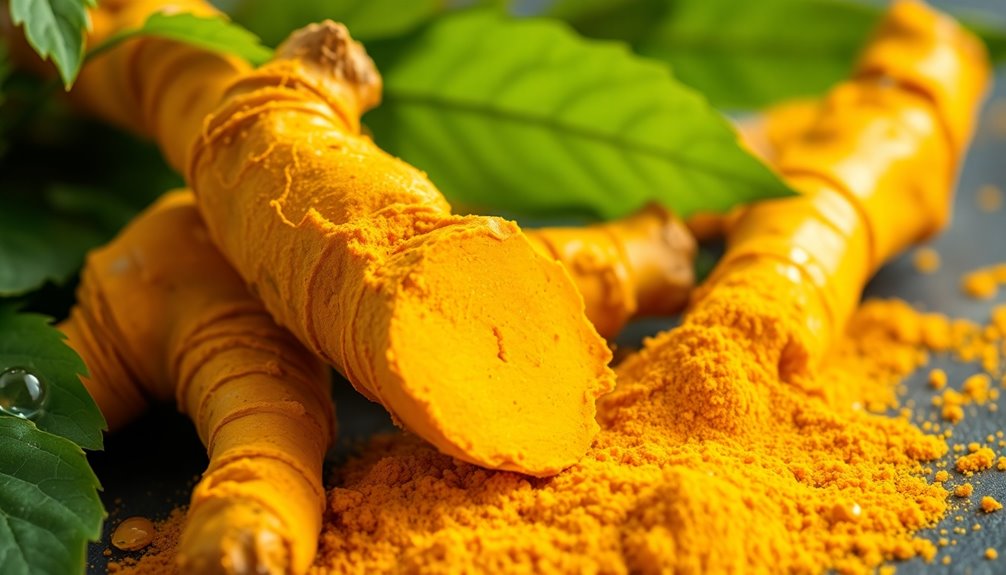
When you consume turmeric or curcumin, they rapidly enter your bloodstream and begin to exert their effects on your body. These bioactive compounds work in various ways to promote health and wellness.
Here’s how they function:
- They help modulate inflammatory pathways, reducing overall inflammation.
- Curcumin’s antioxidant properties combat oxidative stress, protecting your cells.
- The absorption enhancement techniques, like pairing with black pepper, boost their effectiveness.
- They may influence gut health, promoting a balanced microbiome.
The Science Behind Turmeric’s Anti-Inflammatory Properties
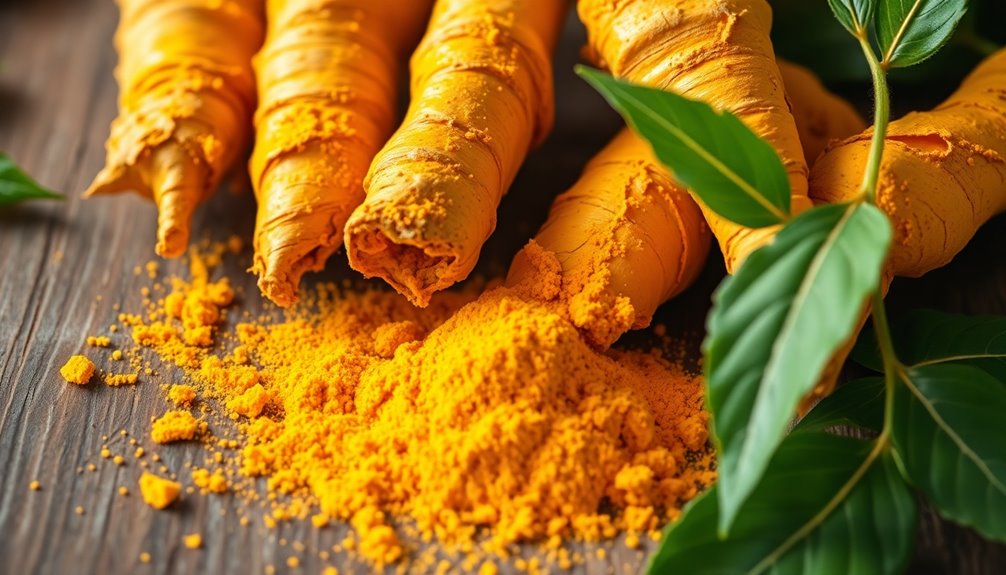
Although many people enjoy turmeric for its flavor, its anti-inflammatory properties are what truly make it stand out. The active turmeric compounds, particularly curcumin, interact with various inflammation pathways in your body, helping to reduce swelling and pain.
These compounds also exhibit powerful antioxidant effects, neutralizing harmful free radicals. Traditional uses of turmeric in Ayurvedic medicine highlight its long-standing reputation for treating inflammation.
To maximize benefits, consider recommended dosages, as higher concentrations can improve efficacy. Extraction methods, such as using oil or alcohol, can enhance the bioavailability of these compounds, making them more effective.
Health Benefits of Turmeric and Curcumin for Chronic Conditions
When you think about chronic conditions, turmeric and curcumin can be game-changers.
They offer joint pain relief, support heart health, and boost digestive wellness.
Incorporating these powerful compounds into your routine might just enhance your overall health.
Joint Pain Relief
If you’re struggling with joint pain, turmeric and its active compound, curcumin, might offer the relief you’ve been searching for.
These natural remedies are known for their powerful anti-inflammatory properties, which can enhance joint mobility and support effective pain management.
Consider incorporating turmeric in your routine through:
- Dietary sources: Add turmeric to meals or smoothies.
- Turmeric dosage: Aim for about 500-2000 mg of curcumin daily.
- Herbal combinations: Pair with ginger or black pepper for better absorption.
- Lifestyle adjustments: Combine turmeric use with regular exercise and a balanced diet.
Heart Health Support
Turmeric and curcumin can play an essential role in supporting heart health, especially as chronic conditions rise. They help reduce inflammation markers linked to heart disease, promoting better cardiovascular function.
By incorporating turmeric into your diet, you can benefit from its antioxidant effects, which combat oxidative stress and support overall heart health. Aim for an effective turmeric dosage while being mindful of curcumin absorption; pairing it with black pepper can enhance its bioavailability.
Additionally, adopting lifestyle changes, such as a balanced diet rich in dietary sources like fruits and vegetables, can further lower blood pressure and improve heart function.
Digestive Wellness Boost
A healthy heart sets the stage for overall well-being, which includes digestive wellness.
Turmeric and curcumin can greatly support your digestive health by enhancing your gut microbiome and boosting digestive enzymes. Here’s how they can help:
- Supports gut bacteria: Promotes a balanced gut microbiome, essential for digestion.
- Reduces bloating: Alleviates discomfort and aids in digestion.
- Enhances enzyme production: Boosts digestive enzymes, making nutrient absorption more efficient.
- Soothes inflammation: Helps reduce inflammation in the digestive tract, promoting overall comfort.
How Can Turmeric Support Joint Health and Arthritis Relief?
While many people seek natural remedies for joint pain, turmeric stands out for its potential to support joint health and provide arthritis relief. Its active compound, curcumin, is known for inflammation reduction, targeting the root cause of discomfort.
By incorporating turmeric into your diet, you may experience enhanced joint flexibility, allowing you to move more freely and comfortably. You can add turmeric to meals, smoothies, or even take it as a supplement.
Regular consumption might help ease stiffness and swelling, making daily activities more manageable. Remember, though, it’s always a good idea to consult your healthcare provider before starting any new supplement regimen to guarantee it aligns with your overall health plan.
What Is the Role of Turmeric in Cardiovascular Health?
Joint health isn’t the only area where turmeric shines; it also plays a significant role in supporting cardiovascular health. Research from various cardiovascular studies highlights how turmeric can benefit your heart by reducing inflammation and improving blood flow.
Turmeric not only supports joint health but also enhances cardiovascular well-being by reducing inflammation and improving blood flow.
Here’s how it works:
- Antioxidant Properties: Curcumin, the active compound, helps neutralize free radicals.
- Cholesterol Management: It may assist in lowering bad cholesterol levels.
- Blood Pressure Regulation: Turmeric can support healthier blood pressure levels.
- Turmeric Dosage: Effective dosages vary, but many studies suggest around 500-2000 mg daily for ideal benefits.
Incorporating turmeric into your routine may be a simple yet effective way to enhance your cardiovascular health.
Ways to Incorporate Turmeric and Curcumin Into Your Diet
Incorporating turmeric and curcumin into your diet can be both delicious and beneficial. Start your day with a revitalizing turmeric smoothie, blending banana, spinach, and curcumin powder for an energizing boost.
For a cozy evening treat, enjoy a cup of turmeric tea or golden milk, combining warm milk with spices for a soothing drink. Experiment with curcumin recipes by adding turmeric seasoning to your favorite dishes, from soups to stir-fries.
Don’t forget to try turmeric desserts, like spiced cakes or energy balls, for a sweet twist. If convenience is key, consider curcumin capsules for an easy supplement.
With these ideas, you’ll effortlessly reap the health benefits of turmeric and curcumin in your daily meals.
Potential Side Effects and Considerations for Use
Enjoying the benefits of turmeric and curcumin in your meals is a great way to enhance your health, but it’s important to be aware of potential side effects and considerations.
Here are some key points to keep in mind:
- Dosage Guidelines: Stick to recommended amounts; excessive consumption can lead to side effects.
- Allergy Concerns: If you have allergies, consult a healthcare provider before use.
- Medication Interactions: Turmeric may interact with blood thinners and other medications, so check with your doctor.
- Long-Term Effects: Research on long-term use is limited; consider periodic breaks to assess tolerance.
Also, pay attention to absorption factors and conduct a quality assessment of any supplements you consider.
Tips for Choosing Quality Turmeric Supplements
When you’re looking for quality turmeric supplements, it’s essential to focus on a few key factors to guarantee you’re getting the most beneficial product.
First, consider the supplement forms available—capsules, powders, or extracts. Capsules are convenient, while powders can be easily added to food or drinks.
Next, check for standardized curcumin content; aim for at least 95% for maximum efficacy.
Aim for standardized curcumin content of at least 95% to ensure maximum efficacy in your turmeric supplements.
Additionally, follow dosage guidelines closely. Most recommendations suggest between 500 to 2000 mg of turmeric extract daily, but it’s best to consult with a healthcare professional for personal advice.
Finally, choose brands that provide third-party testing for quality assurance, ensuring you’re investing in a safe and effective supplement.
Conclusion
Incorporating turmeric and curcumin into your routine can offer impressive health benefits, especially for inflammation and chronic conditions. Remember, “an ounce of prevention is worth a pound of cure.” By making small changes in your diet, you can support your overall well-being and promote joint and heart health. Just be mindful of the quality of the supplements you choose. With a little effort, you can harness the power of this natural anti-inflammatory powerhouse!