
If you’re looking to enhance your sleep quality, top-rated sleep supplements can help you fall asleep faster and stay asleep longer. Key ingredients like melatonin, magnesium, and GABA work together to promote relaxation and reduce anxiety. Melatonin regulates your sleep-wake cycle, while magnesium relaxes your muscles and calms your nervous system. Plus, herbal options like valerian root and chamomile may provide soothing benefits. There’s more to discover about choosing the best supplement for your needs.
What Are Sleep Supplements and How Do They Work?

Sleep supplements can be a game-changer for those struggling with restless nights. They’re designed to support your body’s natural sleep cycle, helping you fall asleep faster and stay asleep longer.
Many supplements contain ingredients that promote relaxation techniques, such as reducing anxiety and calming the mind. By addressing factors that disrupt sleep, these supplements can enhance your overall sleep quality.
Many sleep supplements include ingredients that reduce anxiety and promote relaxation, ultimately enhancing overall sleep quality.
When you take a sleep supplement, it works by influencing neurotransmitters or hormones that regulate sleep, like melatonin. This can create a more conducive environment for restful slumber.
However, it’s essential to combine these supplements with good sleep hygiene practices, such as maintaining a consistent sleep schedule and creating a tranquil bedtime routine, for best results.
Common Ingredients in Sleep Supplements Explained
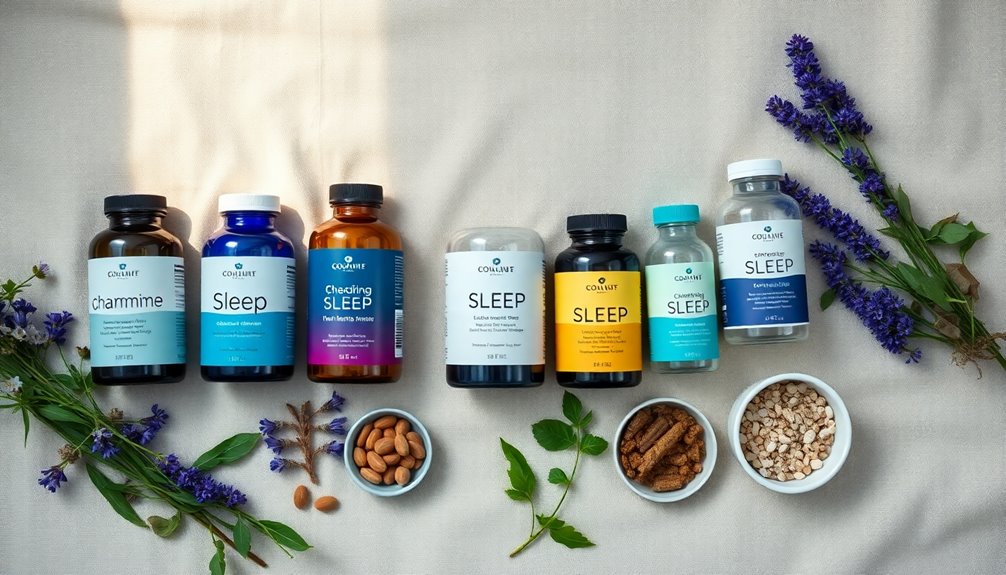
When choosing sleep supplements, you’ll often come across ingredients like melatonin and valerian root.
Melatonin helps regulate your sleep-wake cycle, making it a popular choice.
Valerian root offers herbal benefits that can promote relaxation and improve sleep quality.
Melatonin: Sleep Regulator Role
Melatonin plays an essential role in regulating your body’s sleep-wake cycle, making it a popular choice in sleep supplements.
When using melatonin, consider these key factors:
- Melatonin Dosage: Typical doses range from 0.5 mg to 5 mg. Starting low can help you find what works best for you.
- Melatonin Timing: It’s most effective when taken about 30 to 60 minutes before bedtime. This helps signal your body that it’s time to wind down.
- Individual Variation: Everyone responds differently, so monitor how you feel and adjust accordingly.
Valerian Root: Herbal Benefits
If you’re seeking a natural approach to enhance your sleep quality, valerian root may be worth considering. This herbal remedy has long been used for its calming effects, making it a popular choice for those struggling with insomnia or anxiety.
Valerian root benefits include promoting relaxation and reducing the time it takes to fall asleep. Many users report feeling more refreshed upon waking, thanks to its ability to improve sleep quality.
When it comes to valerian root dosage, most studies suggest taking between 300 to 600 mg, ideally 30 minutes to two hours before bedtime.
Always consult a healthcare professional before starting any new supplement to verify it’s right for you and to determine the best dosage.
Top-Rated Sleep Supplements: A Quick Overview

As you explore options for better sleep, you’ll find that top-rated sleep supplements can make a significant difference.
While enhancing your sleep hygiene through practices like establishing a bedtime routine and employing relaxation techniques, consider these popular supplements:
- Magnesium: Known for its calming effects, magnesium can help relax muscles and improve sleep quality.
- L-Theanine: This amino acid, found in tea, promotes relaxation without causing drowsiness, making it great for winding down.
- Chamomile: A classic herbal remedy, chamomile tea can soothe your mind and body, helping you drift off more easily.
Combining these supplements with good sleep hygiene and relaxation techniques can lead to better rest and rejuvenation.
Melatonin: Benefits and Considerations
Melatonin is a natural sleep regulator that can help you fall asleep faster and improve your overall sleep quality.
However, it’s important to contemplate potential side effects, like daytime drowsiness or mood changes.
Understanding both the benefits and risks can help you make an informed choice about using melatonin.
Natural Sleep Regulator
While countless sleep supplements flood the market, melatonin stands out as a natural sleep regulator that many people turn to for relief. This hormone plays a vital role in regulating your sleep-wake cycle, making it easier to drift off.
To maximize its effectiveness, consider these key points:
- Combine with sleep hygiene: Establish a consistent bedtime routine to signal to your body that it’s time to sleep.
- Incorporate relaxation techniques: Practices like deep breathing or meditation can enhance melatonin’s calming effects.
- Be mindful of dosage: A lower dose often works better for many, helping you achieve restful sleep without feeling groggy.
Potential Side Effects
Using melatonin can be an effective way to improve sleep quality, but it’s important to be aware of potential side effects.
While many people tolerate melatonin well, some might experience dizziness, daytime sleepiness, or headaches. These reactions can vary based on your individual tolerance, so it’s wise to start with a low dose.
Long-term effects of melatonin use are still being studied, and while it’s generally considered safe for short-term use, prolonged use could lead to hormonal imbalances or disrupt your body’s natural sleep-wake cycle.
Always consult with a healthcare provider before starting any supplement, especially if you’re pregnant, nursing, or taking other medications.
Monitoring your body’s response can help you use melatonin effectively and safely.
Magnesium: How Does It Promote Better Sleep?
How can magnesium improve your sleep quality? This essential mineral plays a vital role in regulating sleep patterns. By incorporating magnesium sources like leafy greens, nuts, and whole grains into your diet, you can support better rest.
Here are three ways magnesium helps you sleep:
- Reduces Stress: Magnesium helps calm your nervous system, reducing anxiety that can interfere with sleep.
- Regulates Melatonin: It aids in the production of melatonin, the hormone responsible for sleep-wake cycles.
- Muscle Relaxation: By relaxing muscles, magnesium can help ease tension that keeps you awake.
For best results, consider a magnesium dosage that fits your needs, typically around 200-400 mg daily. This can make a significant difference in your sleep quality!
Herbal Options: Valerian Root, Chamomile, and More
If you’re seeking natural ways to enhance your sleep, herbal options like valerian root and chamomile might be just what you need.
Valerian root is known for its calming effects, helping you drift off more easily and enjoy deeper rest. Chamomile, on the other hand, is famous for its soothing properties, often enjoyed as a warm tea before bedtime.
Both herbs are popular choices in the area of herbal sleep aids, providing gentle support without the grogginess that some supplements can cause.
If valerian root isn’t for you, consider valerian alternatives like passionflower or lemon balm, which also promote relaxation.
Experimenting with these options can lead you to the perfect blend for a restful night’s sleep.
The Role of GABA in Sleep Quality
GABA plays an essential role in regulating your sleep by promoting relaxation and reducing anxiety.
You might find that GABA supplements can enhance your sleep quality, making it easier to drift off and stay asleep.
Additionally, exploring natural sources of GABA could offer you alternative ways to support restful nights.
GABA’s Function in Sleep
Sleep quality hinges on various factors, and one key player is the neurotransmitter GABA. It helps regulate your brain’s activity, promoting relaxation and enhancing sleep architecture.
Here’s how GABA functions in your sleep:
- Binding to GABA Receptors: When GABA binds to its receptors, it decreases neuronal excitability, making it easier for you to wind down.
- Promoting Deep Sleep: By enhancing slow-wave sleep, GABA contributes to restorative sleep, essential for your overall health.
- Reducing Anxiety: Lower levels of anxiety lead to improved sleep onset, helping you fall asleep faster.
Incorporating GABA into your supplement routine might help you achieve better sleep quality, ensuring you wake refreshed and ready for the day.
Benefits of GABA Supplements
While many factors contribute to a good night’s rest, GABA supplements can considerably enhance sleep quality. These supplements promote relaxation by increasing GABA levels in your brain, which can help reduce anxiety and stress that often keep you awake.
Many users report falling asleep faster and enjoying deeper sleep, thanks to the calming effects of GABA.
To experience the GABA benefits effectively, it’s important to evaluate the GABA dosage. A typical dosage ranges from 250 to 750 mg, depending on individual needs and tolerances.
Natural Sources of GABA
Many people seek natural ways to boost GABA levels for better sleep quality, and certain foods can help with that.
Incorporating GABA rich foods into your diet may enhance your relaxation and sleep patterns. Here are three great options:
- Fermented Foods: Yogurt and kimchi are packed with probiotics that may help increase GABA production in your body.
- Green Tea: Rich in L-theanine, green tea can enhance GABA levels and promote a calming effect.
- Whole Grains: Foods like brown rice and oats contain complex carbohydrates that can assist in GABA synthesis.
Potential Side Effects of Sleep Supplements
Some people turn to sleep supplements hoping for a restful night, but it’s essential to evaluate the potential side effects. While many supplements can promote better sleep, they may also cause unwanted reactions.
For instance, herbal interactions can occur, especially if you’re taking other medications. Always check with a healthcare provider to avoid complications.
Additionally, sticking to dosage recommendations is vital; taking more than advised won’t necessarily lead to better sleep and could increase the risk of side effects like dizziness, headaches, or digestive issues.
Sticking to recommended dosages is crucial; exceeding them won’t guarantee better sleep and may heighten side effects.
Pay attention to your body, and if you notice any adverse effects, it’s wise to reconsider your choice of supplement. Prioritizing safety can help you achieve the rest you’re seeking.
How to Choose the Right Sleep Supplement for You?
Choosing the right sleep supplement can feel overwhelming, especially with so many options available.
To make the best choice, consider these key factors:
- Personal Preferences: Identify what you’re looking for in a supplement. Do you prefer natural ingredients or are you open to synthetic options?
- Lifestyle Factors: Think about your daily routine. If you have a busy schedule, a quick-dissolve formula might work better for you.
- Specific Sleep Issues: Are you struggling with falling asleep, staying asleep, or waking up too early? Choose a supplement targeted to your specific needs.
Expert Tips for Enhancing Sleep Naturally
While sleep supplements can provide relief, incorporating natural methods can greatly enhance your sleep quality. Start by prioritizing sleep hygiene—maintain a consistent sleep schedule, create a dark, cool environment, and limit screen time before bed. These small changes can make a big difference.
Next, explore relaxation techniques like deep breathing, meditation, or gentle yoga to calm your mind and body before sleep. Herbal teas, such as chamomile or valerian root, can also promote relaxation.
Finally, consider reducing caffeine and heavy meals in the evening to prevent disruptions. By combining these strategies with any supplements you choose, you’ll set the stage for a more restful night, helping you wake up refreshed and ready for the day ahead.
Conclusion
In your quest for better sleep, choosing the right supplement can feel like finding a needle in a haystack. But with the right knowledge, you can navigate the options with confidence. Remember, supplements are just tools; enhancing your sleep naturally through good habits is the ultimate goal. So, don’t overlook the basics—create a calming bedtime routine, limit screen time, and listen to your body. Sweet dreams await when you prioritize your rest!