If you want the best digestive enzymes for gut health, focus on key types like amylase, protease, and lipase. These natural catalysts help break down carbohydrates, proteins, and fats. When choosing supplements, look for reputable brands with third-party testing, like Garden of Life. Also, consider enzyme-rich foods like pineapple and papaya for natural support. Understanding your digestive needs can guide you in finding the right solutions, and there’s plenty more to explore on this topic.
Understanding Digestive Enzymes and Their Importance

Digestive enzymes act as the body’s natural catalysts, breaking down food into nutrients your body can absorb. These enzymes play essential roles in the digestive process, ensuring you get the most from what you eat.
They help break down carbohydrates, proteins, and fats into smaller molecules that your body can utilize effectively. Without proper enzyme functions, you might experience bloating, gas, or nutrient deficiencies, affecting your overall health.
Your body produces various enzymes, but factors like age, diet, and stress can impact their production. Understanding how these enzymes work can guide you in making better dietary choices that support gut health.
Common Types of Digestive Enzymes You Should Know
While you mightn’t think about them often, various types of digestive enzymes play essential roles in breaking down the foods you eat.
The key enzyme functions include amylase, which helps digest carbohydrates; protease, responsible for breaking down proteins; and lipase, which tackles fats. Each of these enzymes comes from different enzyme sources, such as saliva, stomach lining, and the pancreas.
Understanding these enzymes can help you appreciate how your body processes nutrients. When you consume a meal, these enzymes work together to guarantee efficient digestion and nutrient absorption.
How to Choose the Right Digestive Enzymes for Your Needs?
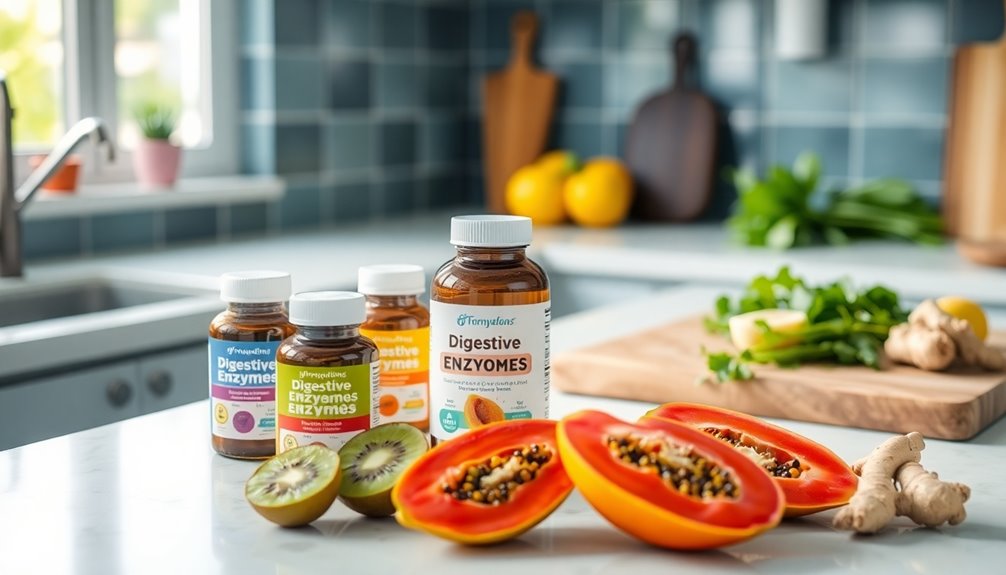
To choose the right digestive enzymes, start by identifying your specific digestive issues.
This will help you determine which enzyme types can best support your needs. Knowing what you’re dealing with sets the stage for effective supplementation.
Identify Your Digestive Issues
How do you know which digestive enzymes are right for you? Start by focusing on symptom identification. Pay attention to the digestive discomfort you experience—do you have bloating, gas, or heartburn?
Each symptom can indicate specific enzyme deficiencies. For instance, if you struggle with lactose, you might need lactase, while those facing gluten sensitivity may benefit from proteases.
Keep a journal of your symptoms to track patterns, helping you pinpoint what you need. Consulting a healthcare professional can also aid in understanding your unique issues.
Consider Enzyme Types
Choosing the right digestive enzymes can feel overwhelming, but understanding the types available makes the process easier. Start by identifying your specific needs. Different enzyme functions target various digestive issues.
For instance, proteases break down proteins, while lipases focus on fats. If you’re lactose intolerant, consider lactase to help digest dairy products.
Next, look into enzyme sources. You can find enzymes derived from plants, animals, or microorganisms.
Plant-based enzymes are often gentler and suitable for vegetarians. Animal-based enzymes, like those from pancreatin, may offer stronger digestive support.
Top Digestive Enzyme Supplements Reviewed
When it comes to supporting gut health, the right digestive enzyme supplements can make a significant difference. You’ll want to look for products with proven enzyme efficacy, ensuring they effectively break down fats, proteins, and carbohydrates.
Brands like Garden of Life and Digest Gold have gathered positive reviews for their thorough formulations that cater to various dietary needs.
Don’t overlook supplement safety; check for third-party testing and transparent labeling. This helps confirm you’re getting a high-quality product free from harmful additives.
Research user experiences and consult with a healthcare professional to find the best option for your unique digestive concerns. With the right supplement, you can enhance your digestion and overall gut health effectively.
Natural Food Sources of Digestive Enzymes
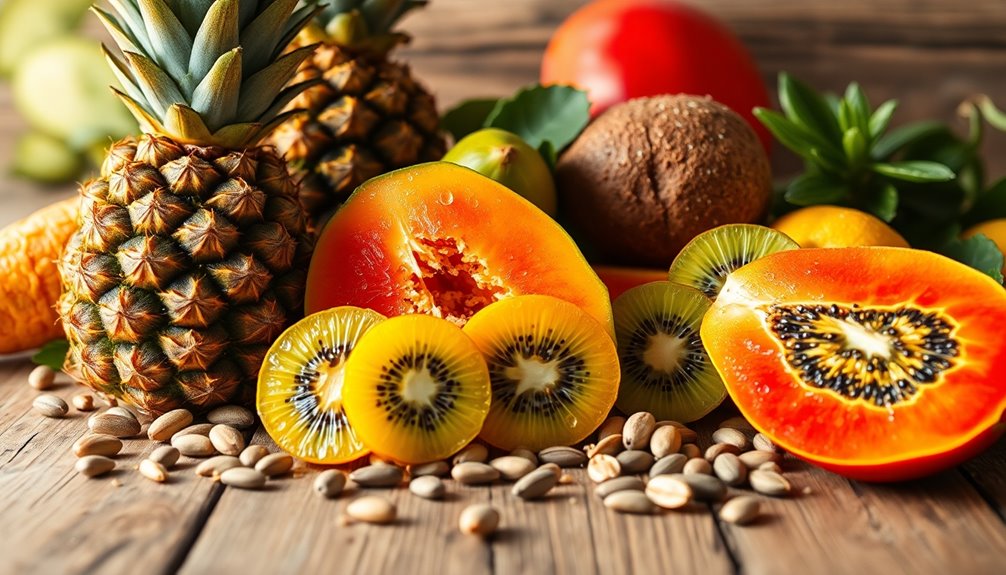
Incorporating natural food sources of digestive enzymes into your diet can greatly boost your gut health. Pineapple bromelain and papaya papain are powerful enzymes that help break down proteins.
Including enzyme-rich vegetables like spinach and kale can further enhance your digestive health.
Don’t forget about fermented foods such as kimchi, sauerkraut, and kefir probiotics; these not only provide food enzymes but also support your gut microbiome.
A drizzle of raw honey can add sweetness while offering additional digestive benefits.
If you suspect an enzyme deficiency, these natural sources can be a delicious way to improve digestion.
Signs You Might Need Digestive Enzyme Support
How do you know if your body needs a little extra help with digestion? If you often experience bloating, gas, or discomfort after meals, it could be a sign of enzyme deficiency.
If bloating, gas, or discomfort after meals is common for you, it might indicate a need for digestive enzyme support.
You might notice that certain foods sit heavy in your stomach, leaving you feeling sluggish. Regular heartburn or indigestion can also indicate that your body isn’t breaking down food efficiently.
If you’ve tried dietary changes but still seek bloating relief, it might be time to evaluate digestive enzyme support. Additionally, if you’re feeling fatigued after eating, it may signal that your body isn’t absorbing nutrients properly.
Listening to these signs can guide you toward better digestive health and overall well-being.
How to Incorporate Digestive Enzymes Into Your Diet
If you’re looking to support your digestion, adding digestive enzymes to your diet can be a straightforward process. Start by choosing the right enzyme combinations tailored to your dietary needs.
Consider your meal timing; taking enzymes just before or during meals can enhance their effectiveness.
- Opt for broad-spectrum enzymes for diverse foods.
- Look for specific enzymes if you have food sensitivities (like lactase for dairy).
- Pay attention to dosage recommendations for ideal results.
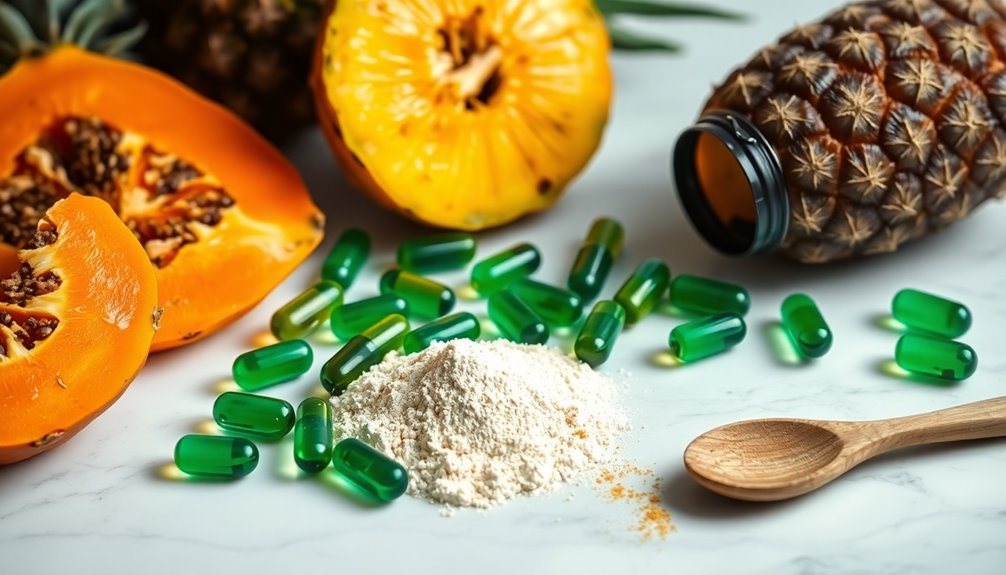
You can find supplements in capsules or powders, making them easy to incorporate.
Additionally, some foods naturally contain enzymes, like pineapple and papaya, so integrating these into your meals can boost your digestive health naturally.
Conclusion
Incorporating the right digestive enzymes into your routine can greatly enhance your gut health. By understanding your unique needs and exploring natural food sources or supplements, you can optimize digestion and overall well-being. Keep an eye out for signs that indicate you might need extra support, and don’t hesitate to make adjustments to your diet. With a bit of effort, you can enjoy a happier, healthier gut that supports your daily activities.