Creatine is a natural compound that boosts energy production during high-intensity workouts. It’s essential for muscle performance, recovery, and strength gains. Taking 3-5 grams daily, especially post-workout, maximizes absorption. While it can enhance workouts across various types, from strength training to HIIT, it’s also misunderstood. You might experience water retention or minor digestive issues, but the benefits often outweigh these. Explore how to effectively integrate creatine into your fitness routine for ideal results and performance.
What Is Creatine and How Does It Work?
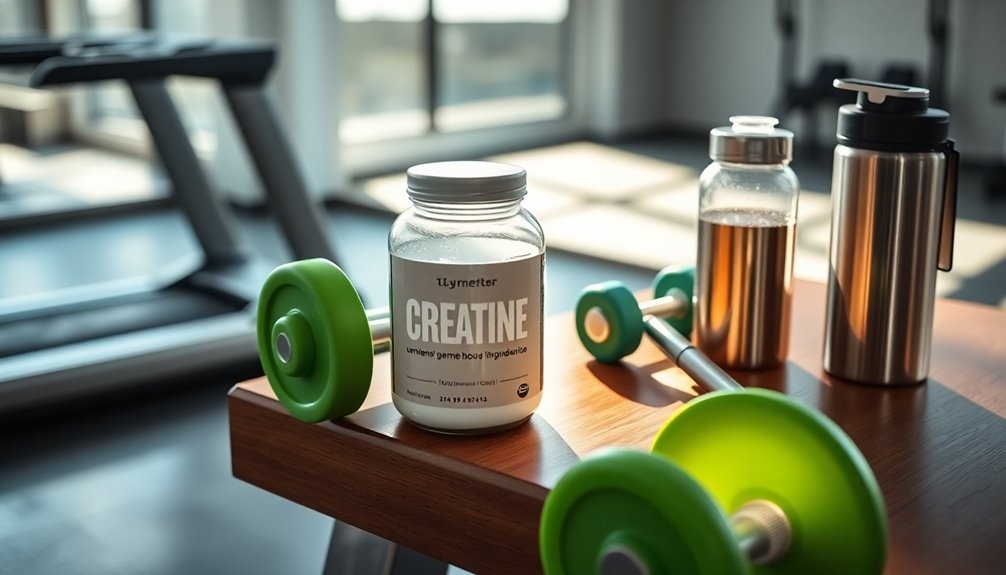
Creatine, a naturally occurring compound in your body, plays a key role in energy production during high-intensity workouts. It’s found in sources like red meat and fish, but if you’re vegetarian, consider supplements.
Creatine has a rich history, with its use dating back to the 1800s. For best results, dosage recommendations typically suggest 3 to 5 grams daily. Timing is essential; taking it post-workout can enhance absorption rates.
Creatine has a history dating back to the 1800s, with optimal daily dosages of 3 to 5 grams recommended for best results.
You should also be aware of creatine safety; studies show it’s generally safe for most people. Your body naturally produces creatine, but supplementation can boost levels.
Whether you’re a seasoned athlete or just starting, understanding these basics helps you make informed choices about incorporating creatine into your routine.
The Science Behind Creatine Supplementation

Understanding how creatine works can transform your workouts. By boosting your body’s energy production, it not only enhances performance but also aids in muscle recovery.
Let’s explore the key benefits of creatine supplementation and how it impacts your fitness journey.
How Creatine Works
When you engage in high-intensity exercise, your muscles demand a quick source of energy, and that’s where creatine comes into play.
Creatine works by enhancing creatine metabolism, which boosts your muscles’ ability to regenerate adenosine triphosphate (ATP), the primary energy carrier in your body.
During short bursts of activity, like sprinting or lifting weights, ATP levels deplete rapidly. Supplementing with creatine increases the stored phosphocreatine in your muscles, allowing for faster ATP production.
This means you can push harder and longer during your workouts. By improving energy production, creatine helps optimize your performance, making it a popular choice among athletes and fitness enthusiasts alike.
Understanding this mechanism is essential for maximizing your training efforts.
Benefits of Supplementation
While many fitness enthusiasts focus on workout routines and diets, incorporating creatine supplementation can greatly enhance your performance.
Creatine timing is essential; taking it post-workout can optimize muscle hydration and recovery. For effective results, consider dosage strategies like a loading phase followed by maintenance.
Hydration importance can’t be overstated, as creatine pulls water into your muscles, so stay well-hydrated.
Cycling protocols, such as taking breaks from supplementation, may help maintain effectiveness. If you’re vegetarian, look for creatine sources that fit your diet.
Always keep performance tracking in mind to assess your gains.
Finally, prioritize safety considerations by consulting a healthcare professional before starting any supplementation regimen. Embracing these strategies can help you maximize your fitness journey.
Benefits of Creatine for Fitness Enthusiasts

When you incorporate creatine into your routine, you can expect enhanced muscle performance and increased strength gains.
This powerful supplement also helps you recover faster, making it easier to push through tough workouts.
Let’s explore how these benefits can elevate your fitness journey.
Enhanced Muscle Performance
Creatine considerably boosts muscle performance, making it a go-to supplement for fitness enthusiasts aiming to enhance their workouts.
By increasing your muscle’s energy reserves, creatine helps you push through those last few reps, maximizing your training sessions.
You’ll find that faster muscle recovery means you can hit the gym more often, reducing downtime between workouts. This leads to improved performance longevity, allowing you to sustain high-intensity efforts over longer periods.
With consistent use, you’ll notice better endurance and quicker recovery times, which translates into more effective training sessions.
So, if you’re looking to elevate your fitness game, adding creatine to your routine could be a game-changer.
Keep pushing your limits and watch your performance soar.
Increased Strength Gains
Building on the enhanced muscle performance that creatine offers, you’ll find that it also plays a significant role in increasing strength gains.
When you engage in strength training, creatine helps boost your energy levels, allowing you to push harder during workouts. This extra power can lead to more effective lifts, resulting in greater muscle hypertrophy over time.
You’ll notice that your ability to perform higher repetitions or lift heavier weights improves, directly contributing to your strength development.
Additionally, creatine supports the recovery of ATP, your muscles’ primary energy source, which means you can train more intensely and frequently.
All these factors combine to help you achieve your strength goals faster and more efficiently, making creatine an essential tool for any fitness enthusiast.
Improved Recovery Time
While you push your limits in the gym, improved recovery time becomes essential for maintaining progress. Creatine plays a significant role in enhancing your recovery techniques, allowing you to bounce back faster between workouts.
With ideal timing in mind, you can maximize its benefits by taking creatine post-workout to replenish your energy stores.
Here are some ways creatine aids in recovery:
- Reduces muscle soreness after intense sessions
- Supports quicker repair of muscle fibers
- Enhances hydration within muscle cells
- Boosts overall energy levels for your next workout
Incorporating creatine into your routine not only enhances your strength gains but also helps you recover efficiently, keeping you on track toward your fitness goals.
Different Forms of Creatine: Which One Should You Choose?
Which form of creatine suits your fitness goals best? When looking at creatine types comparison, you’ll find several options like creatine monohydrate, creatine ethyl ester, and buffered creatine.
Creatine monohydrate is the most researched and often recommended due to its effectiveness and affordability. If you’re sensitive to water retention, you might prefer buffered creatine, which tends to be gentler on the stomach.
Creatine ethyl ester promises better absorption but usually comes at a higher cost. Always consult creatine dosage guidelines for ideal results; a common starting point is 5 grams per day.
Choosing the right form depends on your specific needs and preferences, so consider experimenting to discover what works best for you.
How to Properly Take Creatine for Maximum Effect
To maximize the benefits of creatine, it’s essential to follow a proper regimen that includes timing, dosage, and hydration. Start with a loading phase of 20 grams daily for the first week, then switch to a maintenance dosage of 3-5 grams.
To gain the full benefits of creatine, adhere to a regimen of proper timing, dosage, and hydration.
For ideal dosage timing, consider taking it just before or after your workouts for pre workout use and post workout recovery benefits.
Remember these tips:
- Hydration importance: Drink plenty of water to support muscle function.
- Liquid vs. powder: Choose what you prefer, but mix powder with water or juice for better absorption.
- Cycling creatine: Take breaks every few months to maintain effectiveness.
- Combining supplements: Creatine pairs well with protein for enhanced results.
Common Myths About Creatine: Debunking Misconceptions
Many fitness enthusiasts fall prey to misconceptions about creatine, believing it’s only for bodybuilders or that it causes weight gain.
Myth busting is essential to understanding this popular supplement. First, creatine’s benefits extend beyond bulking up; it enhances performance in various sports, including endurance activities.
Second, while some users may experience temporary weight gain due to water retention, this isn’t fat gain and often stabilizes over time.
Creatine facts reveal it’s safe and effective for most people when used correctly.
Finally, it doesn’t harm kidneys in healthy individuals.
Potential Side Effects of Creatine: What You Should Know
While creatine is widely recognized for its benefits, it’s important to be aware of potential side effects that may arise. Many fitness enthusiasts fall prey to creatine misconceptions, believing it’s free of risks.
Here are some potential side effects you should consider:
- Water retention: You might experience weight gain due to increased water in your muscles.
- Digestive issues: Some users report stomach cramps or diarrhea.
- Kidney strain: If you have pre-existing kidney issues, creatine could exacerbate them.
- Muscle cramps: A few individuals notice more frequent muscle cramps when supplementing.
Understanding these potential risks can help you make informed choices about using creatine effectively and safely.
Always consult a healthcare professional if you’re uncertain about its effects on your body.
Who Can Benefit Most From Creatine Supplementation?
If you’re looking to enhance your athletic performance, creatine supplementation could be a game-changer. Athletes in sports like weightlifting, sprinting, and high-intensity interval training often see significant benefits.
When considering athlete profiles, those engaged in explosive, short-duration activities tend to gain the most from creatine.
Age considerations also matter; younger athletes may experience faster improvements in strength and power, while older individuals can benefit from enhanced muscle recovery and preservation.
Even recreational athletes can see gains in performance and endurance. If you fit into any of these categories, creatine might be worth exploring to maximize your training outcomes and push your limits further.
Always remember to consult a healthcare professional before starting any supplementation regimen.
Creatine and Different Types of Workouts: A Guide
When it comes to your workouts, creatine can play an essential role in enhancing performance across various types.
Whether you’re focused on building strength, boosting endurance, or powering through high-intensity interval training, creatine has something to offer.
Let’s explore how it can elevate your fitness routine.
Strength Training Benefits
Understanding the strength training benefits of creatine can greatly enhance your workouts. By incorporating creatine into your routine, you’ll notice significant improvements in strength adaptation and muscle hypertrophy.
Here’s what you can expect:
- Increased energy during high-intensity workouts
- Enhanced recovery between sets, allowing you to push harder
- Greater muscle mass over time, thanks to improved protein synthesis
- Improved overall performance, making your lifting sessions more effective
Creatine helps you realize your full potential, making each training session more productive.
Whether you’re hitting the gym for powerlifting or just looking to build muscle, creatine can be a game-changer in your strength training journey. Embrace its benefits and watch your progress soar!
Endurance Performance Enhancement
While creatine is often linked to strength training, its benefits extend to endurance performance as well. If you’re engaged in endurance training, creatine can help enhance your stamina and reduce fatigue.
By increasing your phosphocreatine stores, it supports ATP production, allowing you to maintain a higher intensity for longer periods.
For best results, a typical creatine dosage is around 3-5 grams per day. This can improve your performance in long-distance activities, like running or cycling, by allowing your muscles to recover quicker between efforts.
However, it’s important to combine creatine with proper hydration and a balanced diet to maximize its effects.
High-Intensity Interval Training
High-Intensity Interval Training (HIIT) is a powerful way to boost your fitness, and incorporating creatine into your routine can amplify those benefits.
By enhancing your performance, creatine helps you get the most out of your HIIT sessions. Here’s what you should know:
- HIIT Benefits: Increases cardiovascular fitness and burns calories efficiently.
- Creatine Timing: Taking creatine post-workout can aid recovery and muscle growth.
- Short Bursts: HIIT focuses on high-intensity efforts followed by rest, maximizing output.
- Adaptability: You can tailor HIIT workouts to fit your fitness level and goals.
Combining HIIT with creatine not only boosts your energy but also improves overall workout effectiveness.
How to Incorporate Creatine Into Your Fitness Routine
To effectively incorporate creatine into your fitness routine, start by determining the right dosage for your specific goals. Most experts recommend a daily dosage of 3 to 5 grams.
Next, consider your creatine timing strategies. Taking creatine post-workout with a meal can enhance absorption, especially when combined with carbohydrates and protein. Alternatively, some prefer a pre-workout approach to boost energy during training.
It’s essential to stay consistent; daily intake is key to maximizing its benefits.
Finally, remember to hydrate well, as creatine can draw water into your muscles. By following these dosage recommendations and timing strategies, you’ll see improved performance and muscle gains in no time.
Conclusion
So, if you thought creatine was just for bodybuilders, think again! This powerhouse supplement can boost anyone’s game, whether you’re lifting weights or just trying to keep up with your kids. But hey, you could always skip it and see how that works out for you—after all, who needs an extra edge in their workouts? Embrace the science, reap the benefits, and don’t be surprised if your friends start asking your secret to success!