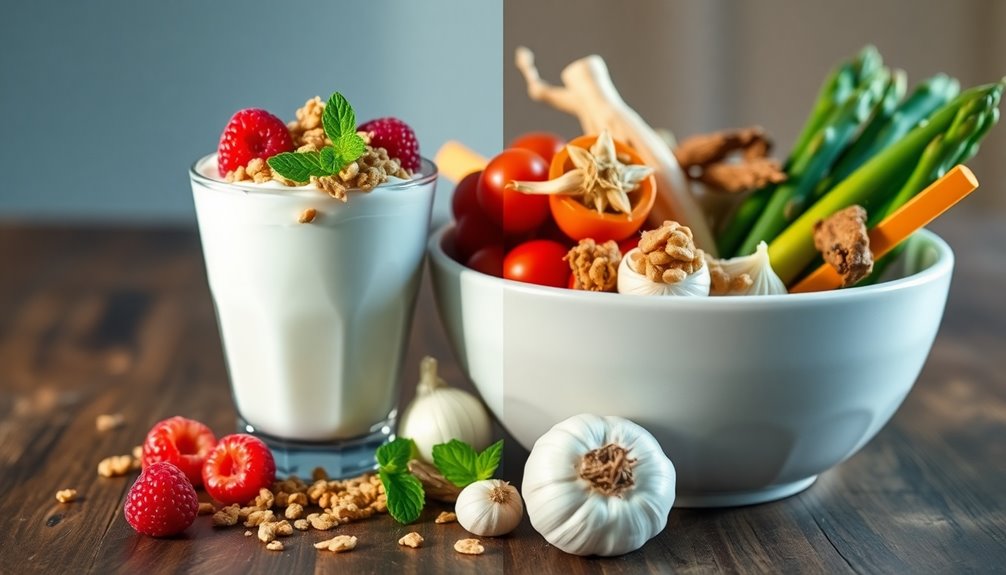
Probiotics are live beneficial bacteria that help balance your gut microbiome, improving digestion and boosting your immune system. Prebiotics, on the other hand, are non-digestible fibers that nourish these good bacteria, supporting microbial diversity and nutrient absorption. Both are essential for gut health, working together to enhance your overall well-being. By incorporating foods rich in probiotics and prebiotics into your diet, you can optimize your digestive health. Discover more insights about their roles and benefits!
What Are Probiotics and How Do They Work?
When you think about gut health, probiotics often come to mind as key players. These beneficial bacteria help maintain the health balance of your gut microbiome.
Probiotics are essential for gut health, helping to balance your microbiome with beneficial bacteria.
They work by populating your intestines with good bacteria, which can crowd out harmful pathogens. This not only supports digestion but also boosts your immune system, enhancing your overall well-being.
Probiotics can be found in various foods like yogurt, sauerkraut, and supplements. When you include them in your diet, you’re promoting a thriving gut microbiome, which is essential for nutrient absorption and gut health.
The right balance of probiotics can lead to improved digestion and reduced bloating, making you feel more energized and healthier in your daily life.
What Are Prebiotics and Their Role in Gut Health?
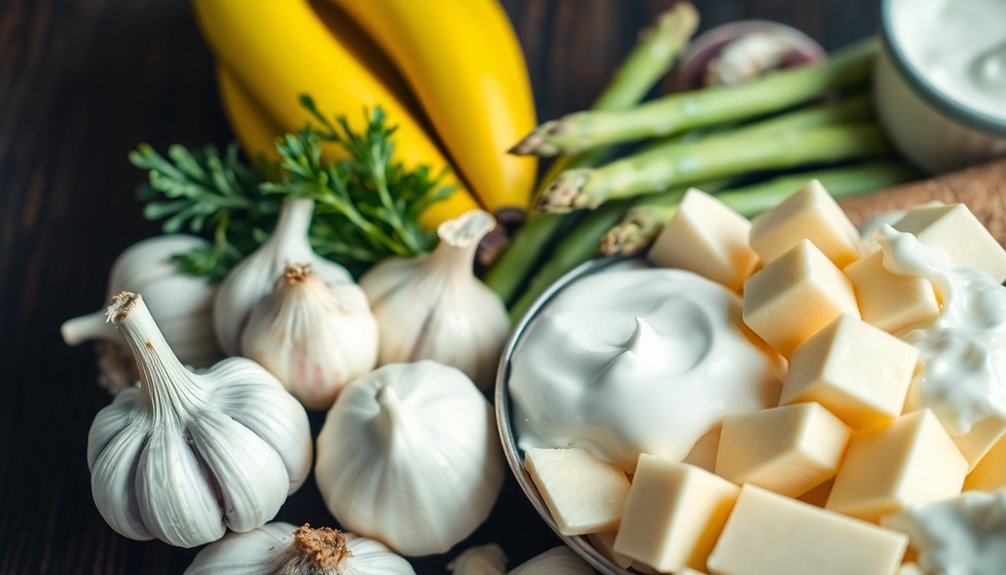
Although probiotics often steal the spotlight in discussions about gut health, prebiotics play an essential supporting role. These non-digestible fibers act as food for the beneficial bacteria in your gut microbiome.
By incorporating various fiber sources into your diet, you enhance digestive balance and promote the fermentation process, which helps maintain gut diversity. This can lead to improved nutrient absorption and may help prevent certain health conditions.
Following dietary guidelines that emphasize prebiotic-rich foods, like garlic, onions, and bananas, can optimize your gut health.
By fostering a thriving gut microbiome, you’re not just supporting digestion; you’re also contributing to overall wellness and resilience against various ailments.
How Do Probiotics Benefit Your Digestive System?
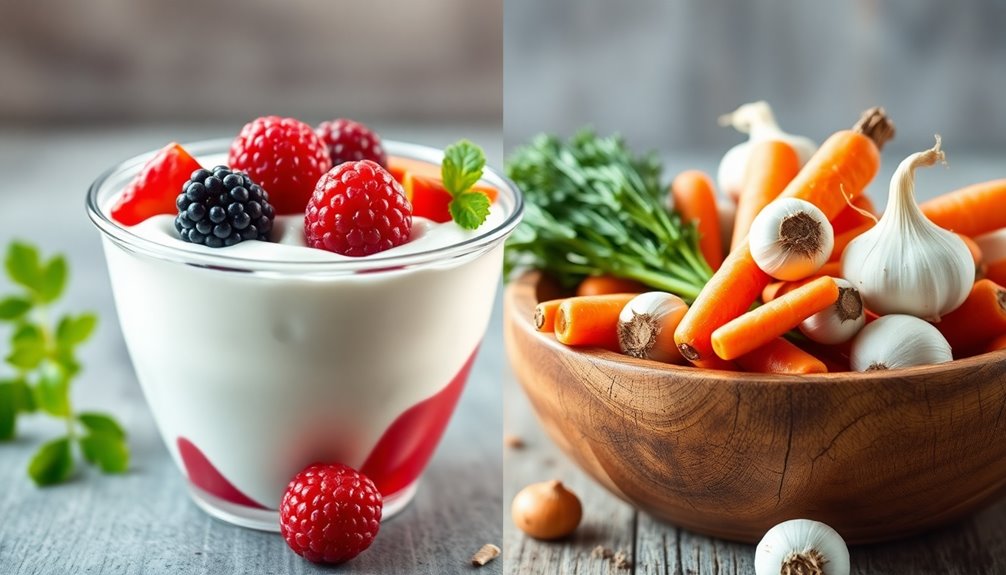
Probiotics, often referred to as “good bacteria,” play an essential role in enhancing your digestive system. They help maintain a balanced gut microbiome, vital for optimal health.
By producing digestive enzymes, probiotics aid in breaking down food, improving nutrient absorption. They also combat gut inflammation, which can lead to digestive disorders like inflammatory bowel disease.
Including fermented foods in your diet, such as yogurt and kefir, can boost your probiotic intake. Additionally, probiotics support gut motility, ensuring smooth digestion.
They even connect with the gut brain axis, influencing your overall well-being. By integrating these beneficial bacteria into your diet, you can enhance your digestive health and promote better gut function.
Why Are Prebiotics Essential for Gut Flora?
Prebiotics are essential for nurturing your gut flora, as they serve as food for the beneficial bacteria living in your intestines. These fiber sources fuel the fermentation process, promoting a healthy gut microbiome.
By supporting microbial diversity, prebiotics help maintain digestive balance, ensuring that good bacteria thrive while harmful ones are kept in check. This health synergy enhances nutrient absorption, allowing your body to utilize vitamins and minerals more effectively.
When you include prebiotics in your diet, you’re fostering an environment where your gut flora can flourish, contributing to overall well-being.
Key Differences Between Probiotics and Prebiotics
When you think about probiotics and prebiotics, it’s essential to understand how they differ. Probiotics are live bacteria that support your gut health, while prebiotics are fibers that feed those beneficial bacteria.
Let’s explore their definitions, sources, and health benefits to see how they each play a unique role in your wellness.
Definition and Function
While many people use the terms interchangeably, probiotics and prebiotics serve distinct roles in gut health. Probiotics are live bacteria that contribute to a healthy gut microbiome. They help maintain digestive balance by promoting the growth of beneficial bacteria, which can enhance digestion and boost your immune system.
On the other hand, prebiotics are non-digestible fibers that feed these good bacteria. By providing nourishment, prebiotics support the growth and activity of probiotics, ensuring a thriving gut environment.
Together, they work synergistically to improve overall gut health, but understanding their individual functions is essential for optimizing your digestive balance. Incorporating both into your diet can lead to better well-being.
Sources and Examples
Understanding the distinct roles of probiotics and prebiotics can help you make informed choices about your diet.
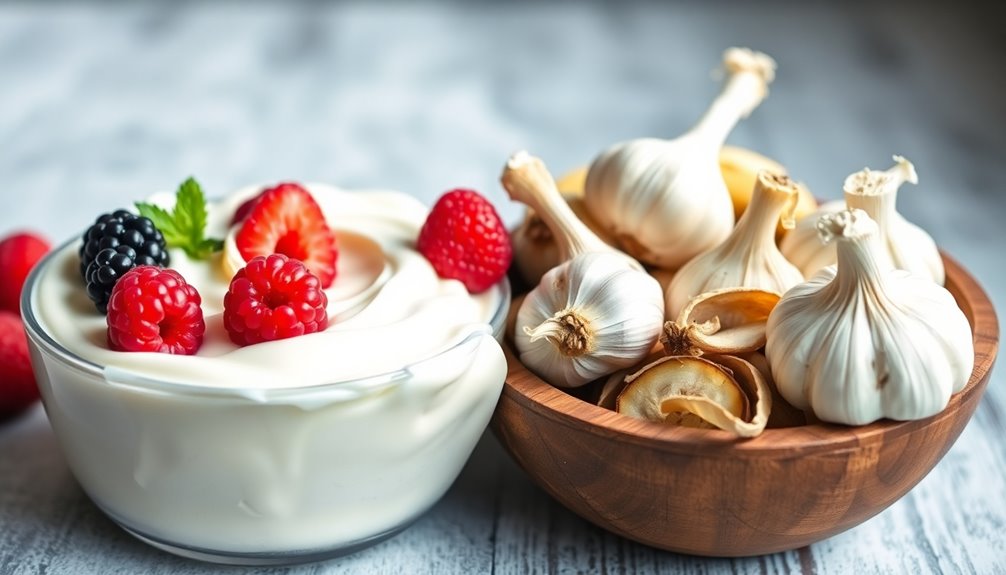
Probiotics are found in fermented foods like yogurt, kefir, and sauerkraut, which boost your gut bacteria. On the other hand, prebiotics come from fiber sources like garlic, onions, and bananas, feeding those beneficial bacteria.
Incorporating both into your meal planning guarantees dietary balance and promotes nutrient synergy. Don’t fall for health myths suggesting you need one without the other; they work best together.
By including probiotics and prebiotics, you’ll support your digestive enzymes and overall gut health.
Health Benefits Comparison
Probiotics and prebiotics each offer unique health benefits that can greatly impact your gut health. Understanding their roles helps create gut microbiome synergy, ensuring your digestive system runs smoothly. Here’s how they differ:
- Probiotics: These live bacteria support digestive balance strategies, helping to restore and maintain your gut flora.
- Prebiotics: These non-digestible fibers fuel the growth of beneficial bacteria, enhancing your gut microbiome and aiding digestion.
- Together: When combined, they amplify each other’s effects, promoting overall gut health.
Incorporating both into your diet can lead to improved digestion, strengthened immunity, and better nutrient absorption.
How to Incorporate Probiotics Into Your Diet
Incorporating probiotics into your diet can be a simple yet effective way to boost your gut health. Start by adding fermented foods like sauerkraut and kimchi to your meals.
When it comes to yogurt choices, opt for those with live cultures for maximum benefits. You can also enjoy the kombucha benefits by sipping on this fizzy drink as a revitalizing snack option.
Consider making probiotic smoothies with yogurt or kefir for a delicious breakfast. Pay attention to meal timing; consuming probiotics regularly helps maintain digestive balance.
Don’t forget to make dietary adjustments based on your health tracking—monitor how different foods affect your gut microbiome.
With these strategies, you’ll easily enhance your overall well-being.
How to Add Prebiotics to Your Meals
Adding prebiotics to your meals can greatly enhance your gut health, especially since they feed the beneficial bacteria in your digestive system.
Incorporating these fiber sources into your diet is easier than you think. Here are some meal ideas to get you started:
- Breakfast additions: Toss some sliced bananas or add chia seeds to your morning oatmeal for a fiber boost.
- Salad toppings: Sprinkle in some raw garlic or onions for extra crunch and gut-friendly benefits.
- Smoothie boosters: Blend in a tablespoon of ground flaxseed or add a handful of spinach for a nutritious kick.
With these cooking tips and ingredient swaps, you can create wholesome snacks and delicious meals that nourish your body while supporting digestive health!
Common Food Sources of Probiotics
While you might be familiar with prebiotics, it’s essential to know that probiotics are equally important for gut health.
Incorporating fermented foods into your diet can boost your gut diversity and microbiome balance. Yogurt varieties, especially those labeled with live cultures, are excellent sources of probiotics, providing immune support and digestive enzymes.
Incorporating fermented foods like yogurt with live cultures can enhance gut diversity and support digestive health.
Other great options include kefir, sauerkraut, kimchi, and miso. These foods not only promote a healthy gut but also enhance nutrient absorption.
You can easily add them to your meals, whether as snacks or part of a dish. By including these probiotic-rich foods, you’ll be taking a significant step towards improving your overall health and well-being.
Enjoy the journey to a healthier gut!
Common Food Sources of Prebiotics
When it comes to prebiotics, knowing which foods pack the most punch can really help your gut health.
You’ll find that cooking methods can affect their potency, so it’s good to be mindful of how you prepare them.
Plus, understanding daily intake recommendations can guide you in making the best choices for your diet.
Top Prebiotic-Rich Foods
If you’re looking to boost your gut health, incorporating prebiotic-rich foods into your diet is a great place to start. These foods help nourish the beneficial bacteria in your gut, improving digestion and overall well-being.
Here are some top choices:
- Bananas: They offer banana benefits, providing fiber that supports gut health.
- Garlic and onions: Both have powerful garlic effects and come in various onion types, enhancing flavor while promoting good bacteria.
- Chicory roots and dandelion greens: These are excellent sources of fiber and can easily fit into salads or smoothies.
Don’t forget about versatile options like leeks, barley grains, oats varieties, asparagus recipes, and artichoke uses. Each of these can greatly elevate your prebiotic intake!
Cooking Methods Impact
Cooking methods can profoundly influence the prebiotic content of your food, impacting how effectively they nourish your gut bacteria.
For instance, using fermentation methods can enhance the prebiotic properties of ingredients, while high cooking temperatures may destroy some beneficial fibers. To maximize nutrient retention, consider shorter cooking times and lower temperatures.
Pairing prebiotic-rich foods with complementary ingredients can also boost flavor enhancement, making them more enjoyable to eat.
Additionally, opt for food preservation techniques, such as pickling or fermenting, to maintain prebiotic benefits.
Daily Intake Recommendations
To support your gut health effectively, it’s essential to know the daily intake recommendations for prebiotics and their common food sources. The daily intake guidelines suggest aiming for about 3 to 5 grams of prebiotics per day.
Here are some food sources to help you meet those recommended servings:
- Chicory root: One of the richest sources of inulin, offering about 4-5 grams per serving.
- Garlic: Adds flavor and about 1 gram of prebiotics per clove.
- Onions: Provide around 1-2 grams per serving, perfect for enhancing various dishes.
Incorporating these foods into your meals can help you maintain a healthy gut and enjoy the benefits of prebiotics.
Who Should Consider Taking Probiotic Supplements?
Curious about who might benefit from probiotic supplements? If you’re looking to improve your gut health, probiotics could be a great option. They help restore digestive balance, especially if you’ve experienced disruptions due to diet or lifestyle factors.
Individuals with specific health conditions, such as irritable bowel syndrome or those recovering from antibiotics, often find relief. Age considerations matter too; seniors may benefit from enhanced microbial diversity to support their immune response.
Always prioritize supplement safety and consult your healthcare provider to tailor choices to your individual needs. By focusing on your dietary choices and lifestyle, you can determine if probiotics fit into your wellness routine.
Who Can Benefit From Prebiotic Supplements?
If you’re looking to support your digestive health, prebiotic supplements might be just what you need.
They can also give your immune system a boost and help with weight management.
Understanding who can benefit from these supplements is key to making the right choice for your health.
Digestive Health Support
While many people focus on probiotics for digestive health, prebiotic supplements can also play an essential role in enhancing gut function. They help nourish beneficial bacteria, promoting healthy gut microbiome interactions and providing digestive enzyme support.
You might benefit from prebiotics if you:
- Experience bloating or irregular digestion
- Want to boost your gut health alongside probiotics
- Are seeking a natural way to improve nutrient absorption
Incorporating prebiotics into your routine can help create a thriving environment for your gut bacteria, leading to improved digestive health overall.
Immune System Boost
Prebiotic supplements can greatly enhance your immune system, especially if you’re looking for a natural way to support your body’s defenses.
By nourishing the beneficial gut bacteria, these supplements help boost your immune response. When your gut bacteria thrive, they create a balanced environment that can fend off harmful pathogens and reduce inflammation.
This is particularly beneficial for those prone to frequent colds or infections. If you’ve been feeling run down or want to enhance your overall health, incorporating prebiotics into your diet might be just what you need.
Remember, a strong immune system starts in the gut, and prebiotic supplements can play an essential role in maintaining that balance.
Give your immune system the support it deserves!
Weight Management Aid
Many people looking to manage their weight find prebiotic supplements beneficial, as they can support a healthier gut environment.
By improving your gut microbiome, these supplements can play a key role in weight loss and appetite control. Here’s how prebiotics help:
- Metabolism Boost: They can enhance your metabolism, making it easier to shed extra pounds.
- Nutrient Absorption: Prebiotics improve the absorption of nutrients, helping you get the most from your food.
- Behavioral Factors: They may influence your eating habits, promoting healthier food choices.
Incorporating prebiotic supplements into your dietary strategies and lifestyle changes can complement your weight management efforts, making your journey more effective and enjoyable.
How Do Probiotics and Prebiotics Work Together for Optimal Health?
How can probiotics and prebiotics work together to enhance your health? When you combine these two, you create powerful synergistic effects that promote digestive harmony.
Probiotics, the beneficial bacteria, thrive on the fiber and nutrients provided by prebiotics. This means that as you consume prebiotics, you’re feeding the good bacteria in your gut, helping them flourish.
This balance not only aids digestion but also supports your immune system and improves nutrient absorption. By ensuring both probiotics and prebiotics are part of your diet, you can create an environment where your gut health thrives.
Conclusion
In the grand orchestra of gut health, probiotics and prebiotics play distinct yet harmonious melodies. While probiotics serve as the vibrant musicians, directly enriching your digestive symphony, prebiotics act as the nourishing conductor, guiding the performance from behind the scenes. By understanding their unique roles and combining them in your diet, you can create a masterpiece of wellness that resonates throughout your body. Embrace both, and let your gut flourish like a garden in full bloom.