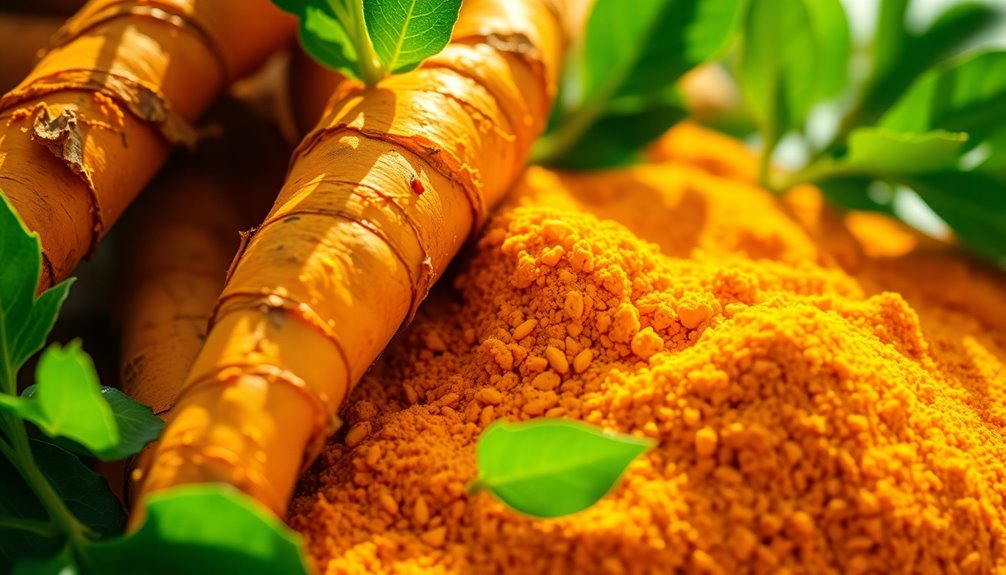
Turmeric, derived from the Curcuma longa plant, is a powerful natural anti-inflammatory thanks to its key compound, curcumin. It targets inflammation pathways, helping manage conditions like arthritis and digestive issues. You can easily add turmeric to your diet through golden milk, spice blends, or smoothies. Just remember to check for organic sources and look for supplements with black pepper for better absorption. You’ll discover even more ways to incorporate this powerhouse into your routine.
What Is Turmeric and How Does It Work?
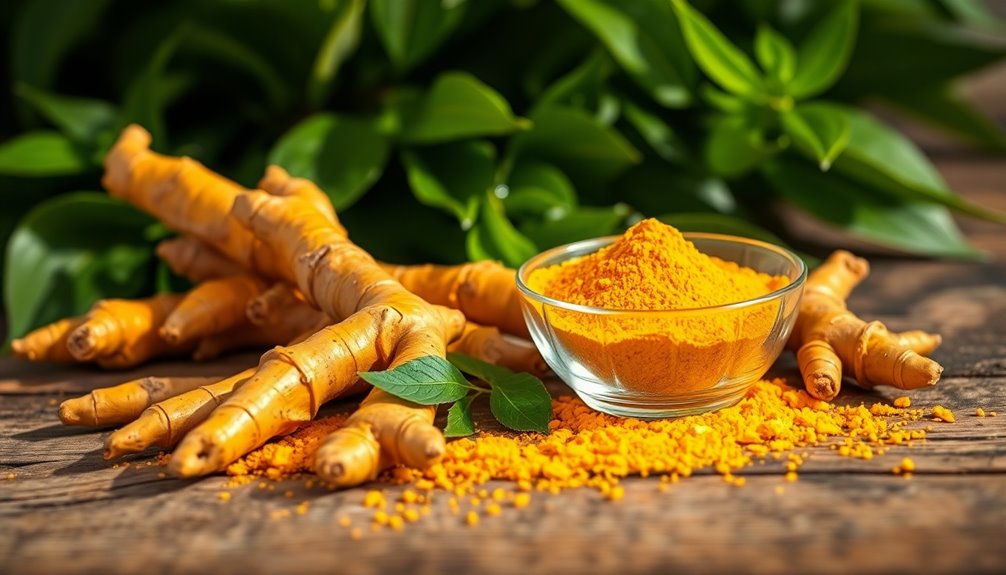
Turmeric, a vibrant yellow spice derived from the Curcuma longa plant, has been celebrated for its medicinal properties for centuries. Its history traces back to ancient India, where it was used not just in cooking but also in traditional medicine.
You’ll find various turmeric varieties, each with unique flavors and health benefits. The most common, Curcuma longa, is known for its potent compounds.
When you incorporate turmeric into your diet, you’re tapping into a rich heritage that values its healing potential. Whether you use it in curries, teas, or supplements, understanding turmeric’s diverse forms can enhance your experience.
The Science Behind Curcumin’s Anti-Inflammatory Effects
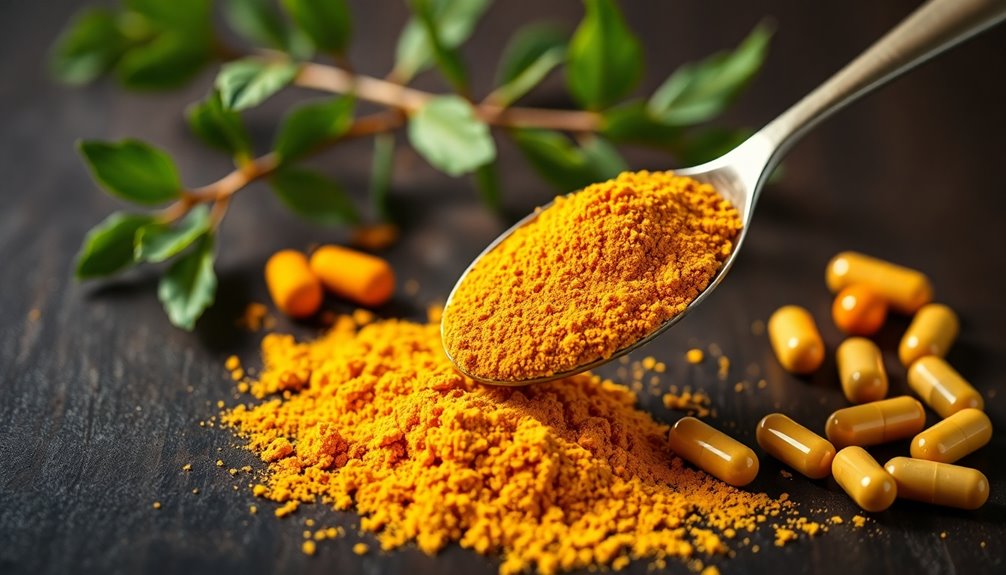
Curcumin, the primary active compound in turmeric, is where the spice’s anti-inflammatory prowess lies. It works by targeting multiple inflammation pathways within your body.
Studies show that curcumin mechanisms inhibit pro-inflammatory cytokines and enzymes, effectively dampening the inflammatory response. By blocking these signals, curcumin reduces the activation of nuclear factor kappa B (NF-kB), a key player in chronic inflammation. This action helps to prevent diseases linked to inflammation, promoting overall health.
You’ll find that curcumin also enhances antioxidant activity, further supporting your body’s ability to combat inflammation. Understanding these mechanisms can empower you to harness curcumin’s benefits more effectively, making it a valuable addition to your anti-inflammatory toolkit.
Benefits of Turmeric for Common Inflammatory Conditions
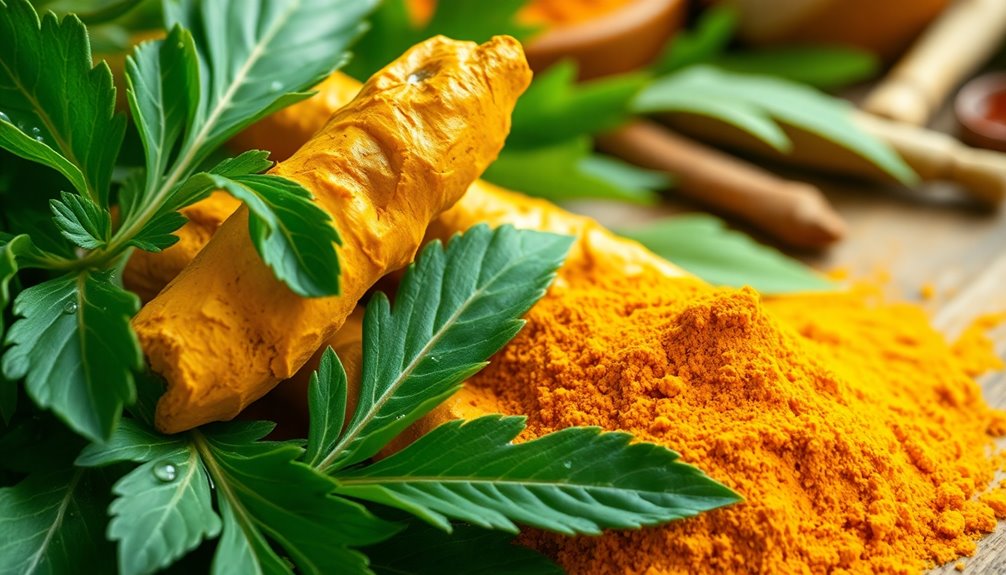
When it comes to managing common inflammatory conditions, incorporating turmeric into your diet can make a significant difference.
Turmeric, with a rich history in traditional medicine, boasts powerful anti-inflammatory properties thanks to its active compound, curcumin. You might find relief from conditions like arthritis, joint pain, or even digestive issues by simply adding turmeric to your meals.
Research suggests a typical turmeric dosage for inflammation ranges from 500 to 2,000 mg daily, but it’s wise to consult a healthcare professional for personalized advice.
How to Incorporate Turmeric Into Your Diet
Incorporating turmeric into your diet is easier than you think.
You can whip up a comforting golden milk, spice up your everyday meals, or blend a nutritious turmeric smoothie.
Let’s explore some delicious ways to enjoy this vibrant spice!
Golden Milk Recipe Ideas
If you’re looking to add turmeric to your diet, golden milk is a delicious and easy way to do it. This warm beverage combines turmeric with milk (dairy or plant-based) and spices like cinnamon and ginger.
Start with a basic recipe: heat a cup of milk, stir in a teaspoon of turmeric, and add honey to taste.
For recipe variations, you can experiment by adding black pepper to enhance absorption or blend in coconut oil for a creamier texture.
Want a twist? Try adding vanilla extract or even a pinch of cayenne for some heat.
Golden milk not only tastes great but also offers a comforting way to enjoy the benefits of turmeric daily.
Spice Up Your Meals
Adding turmeric to your meals can transform ordinary dishes into flavorful, health-boosting creations. You can easily incorporate this vibrant spice into a variety of recipes.
Start by adding turmeric to your favorite spice blends; it pairs wonderfully with cumin, coriander, and paprika. Sprinkle it on roasted vegetables or stir it into soups for a warm flavor enhancement.
You can also mix turmeric into marinades for meats or tofu, giving your dishes a unique twist. If you’re feeling adventurous, try adding it to rice or quinoa for a colorful side dish.
With just a few simple adjustments, you’ll enjoy the benefits of turmeric while savoring delicious meals that excite your taste buds.
Turmeric Smoothie Variations
Turmeric smoothies are a delicious way to enhance your diet while reaping the spice’s anti-inflammatory benefits. You can easily whip up various smoothie recipes that pack a nutritious punch.
Start with a base of banana and almond milk, then add a teaspoon of turmeric for that vibrant color and health boost.
For a tropical twist, blend in pineapple and coconut water. If you prefer something earthy, consider spinach and avocado as flavor combinations that work well with turmeric.
Don’t forget to toss in a pinch of black pepper; it enhances curcumin absorption!
Experimenting with these variations will make it easy to enjoy turmeric’s benefits while delighting your taste buds. Enjoy your vibrant, health-boosting smoothies!
Turmeric vs. Other Natural Anti-Inflammatories: A Comparison
When you compare turmeric to other natural anti-inflammatories, you’ll notice its unique composition sets it apart.
While alternatives like ginger and boswellia offer benefits, turmeric’s active compound, curcumin, packs a powerful punch.
Let’s explore how these options stack up against each other with regard to effectiveness.
Turmeric’s Unique Composition
The unique composition of turmeric sets it apart from other natural anti-inflammatories. Unlike many alternatives, turmeric contains a range of active turmeric compounds, primarily curcumin, which boasts potent anti-inflammatory properties.
These compounds work synergistically, enhancing each other’s effectiveness, which can lead to significant health benefits for you. While some natural anti-inflammatories may target specific inflammatory pathways, turmeric’s wide-ranging action allows it to tackle multiple issues at once. This makes it an attractive option for those seeking extensive support.
Additionally, turmeric’s natural antioxidant properties complement its anti-inflammatory effects, further promoting overall wellness. By incorporating turmeric into your routine, you’re not just alleviating inflammation; you’re also investing in a healthier lifestyle.
Efficacy of Alternatives
While many natural anti-inflammatories claim to offer relief, few can match turmeric’s unique efficacy. Compared to other herbal remedies, turmeric stands out for its potent curcumin content, which supports the body’s natural healing processes.
Holistic approaches often include dietary changes and lifestyle modifications, but turmeric integrates seamlessly into these routines. While alternatives like ginger and omega-3 fatty acids can be effective, they may not provide the same level of anti-inflammatory benefits as turmeric.
Supplementation options exist, but ensuring proper dosages is key. Embracing alternative therapies can enhance your mind-body connection, making natural treatments more effective.
Ultimately, turmeric remains a top choice for those seeking reliable anti-inflammatory support.
Potential Side Effects and Considerations for Use
Although turmeric and curcumin offer impressive anti-inflammatory benefits, it’s important to evaluate potential side effects and individual health conditions before incorporating them into your routine.
Some people may experience mild side effects like nausea, diarrhea, or headaches, especially with high doses. It’s essential to follow dosage recommendations, typically around 500 to 2,000 mg per day, depending on the form.
If you’re pregnant, breastfeeding, or taking medications like blood thinners, consult your healthcare provider before starting. Turmeric can interact with certain medications, so understanding how it fits into your overall health plan is key.
How to Choose Quality Turmeric Supplements
How can you guarantee you’re choosing a quality turmeric supplement? First, focus on turmeric sourcing tips.
Look for brands that use organic, sustainably sourced turmeric, preferably from regions like India, known for high curcumin content.
Next, check the supplement dosage; effective doses typically range from 500 to 2,000 mg of turmeric extract daily.
Ascertain the product contains a standardized amount of curcumin, ideally at least 95%.
Additionally, consider supplements that include black pepper extract (piperine), which enhances absorption.
Always read reviews and verify third-party testing to ascertain the product’s purity and potency.
Conclusion
Incorporating turmeric and curcumin into your routine can be a game-changer for managing inflammation. As the saying goes, “An ounce of prevention is worth a pound of cure.” By harnessing nature’s powerhouse, you can support your health and combat common inflammatory conditions. Remember to choose high-quality supplements and consult a healthcare professional if you’re unsure. With a little effort, you can make turmeric a vibrant part of your diet and lifestyle.