Mixing supplements can be risky, so it’s essential to consult your doctor before combining them. For instance, fish oil can enhance the blood-thinning effects of anticoagulants, increasing your bleeding risk. Calcium and iron should also be taken separately, as they can hinder each other’s absorption. You might not realize the dangers of combining antioxidants or herbal remedies either. To stay safe and maximize effectiveness, it’s best to know which combinations to avoid; there’s more to discover about this topic.
Understanding the Risks of Mixing Supplements

When you mix supplements, you might unknowingly increase your risk of adverse reactions and reduce their effectiveness.
Understanding supplement synergy is vital; some combinations can enhance benefits, while others can lead to health risks. For instance, taking high doses of certain vitamins can interfere with nutrient absorption or trigger toxicity.
Understanding supplement synergy is crucial; the right combinations can enhance benefits, while the wrong ones may pose health risks.
You may think that combining multiple supplements will boost your results, but this can backfire, causing side effects or diminishing effects instead.
It’s important to research and consult a healthcare professional before mixing. Your body’s unique chemistry means what works for one person mightn’t work for you.
Prioritizing safety guarantees you’re making the most of your supplements without compromising your health.
Common Supplements That Should Never Be Combined

When you’re taking supplements, it’s essential to know which ones shouldn’t mix.
For instance, combining blood thinners with omega-3 can increase bleeding risks, while calcium and iron supplements can interfere with each other’s absorption.
St. John’s Wort also interacts with various medications, so being aware of these combinations can keep you safe.
Blood Thinners And Omega-3
Though omega-3 fatty acids are often praised for their heart health benefits, combining them with blood thinners can pose serious risks.
If you’re on medications like warfarin or aspirin, you need to be cautious. Omega-3 can increase the effects of these blood thinners, leading to an increased risk of bleeding or bruising.
You might think you’re boosting your heart health, but these omega-3 interactions can complicate your treatment and put you in danger. Always discuss any supplements with your doctor before adding them to your routine, especially if you’re on blood thinners.
Your health is paramount, so make informed decisions to avoid unintended side effects. Prioritizing communication with your healthcare provider is essential for safe supplementation.
Calcium And Iron Supplements
While managing your health with supplements, it’s important to be aware of how different nutrients can interact. Combining calcium and iron supplements can hinder your body’s ability to absorb iron, which may worsen symptoms of iron deficiency.
Consider these potential issues:
- Reduced iron absorption can lead to fatigue and weakness.
- You might miss out on the benefits of both nutrients when taken together.
- This interaction could complicate managing your overall health effectively.
To get the most out of your supplements, consult your doctor before combining calcium and iron. They can guide you on the best timing and dosages to guarantee your body gets the nutrients it needs without interference.
St. John’s Wort Interactions
St. John’s Wort is a popular herbal supplement known for its potential benefits in managing mood. However, you need to be cautious about St. John’s Wort interactions.
This supplement can interfere with various medications, including antidepressants, birth control pills, and blood thinners. By increasing the breakdown of these drugs, it may reduce their effectiveness, leading to unwanted side effects or diminished therapeutic effects.
Always take herbal supplement precautions seriously; consult your doctor before combining St. John’s Wort with any other medications or supplements. Your health is paramount, and an open dialogue with your healthcare provider can help you avoid harmful interactions and guarantee that you’re using supplements safely and effectively.
Don’t risk your well-being—get informed!
Why Vitamin K and Blood Thinners Don’t Mix?
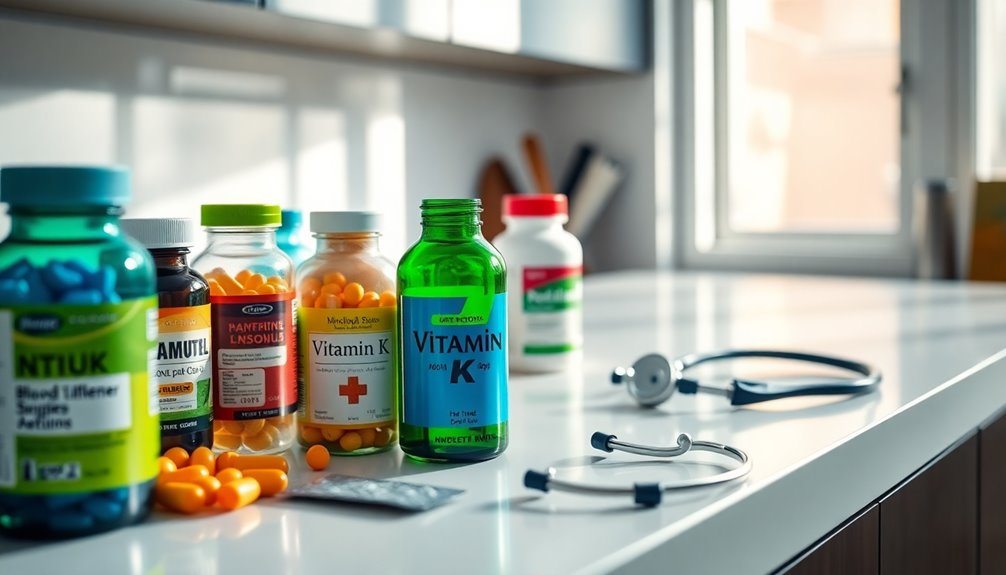
When you’re on blood thinners, it’s essential to be mindful of your vitamin K intake, as this vitamin plays a key role in blood clotting.
Consuming too much vitamin K can counteract the effectiveness of your medication, putting you at risk for serious health issues.
Consider the following:
- Your medication’s effectiveness may decrease, leading to potential blood clots.
- You could face increased monitoring and adjustments to your treatment plan, adding stress.
- The risk of complications could rise, making you feel anxious about your health.
Always consult with your doctor before making any changes to your vitamin K intake.
Staying informed helps you manage your health while on blood thinners effectively.
The Dangers of Combining Calcium and Iron Supplements
Combining calcium and iron supplements can lead to absorption issues, which might leave you feeling frustrated about your health regimen.
When you take these two supplements together, calcium can interfere with iron absorption in your body. This means you could be at risk for iron deficiency, especially if you’re already prone to it.
To maximize your nutrient intake, it’s best to space out the timing of these supplements—consider taking calcium at one time and iron at another. Additionally, be mindful of vitamin C, which can enhance iron absorption when taken with it.
To optimize nutrient absorption, take calcium and iron supplements at different times, and pair iron with vitamin C for better results.
Always consult your doctor before making changes to your supplement routine to guarantee you’re meeting your health needs without any unwanted interactions.
How Magnesium and Certain Medications Interact
Though magnesium is essential for many bodily functions, it can interact negatively with certain medications, reducing their effectiveness. When taking magnesium supplements, you should be aware of how they affect your medication. Here’s what to take into account:
- Reduced magnesium absorption: Some drugs may hinder how well your body absorbs magnesium.
- Increased magnesium dosage: If you’re on certain medications, you might need a higher magnesium dosage to achieve desired effects.
- Potential side effects: Mixing magnesium with certain meds can lead to unexpected side effects.
Always consult your doctor before combining magnesium with medications. This way, you can maintain optimal health and avoid complications that could arise from these interactions. Your well-being deserves thoughtful reflection!
The Risks of Mixing St. John’s Wort With Other Medications
While St. John’s Wort is often used to alleviate depression, mixing it with other medications can lead to serious St. John’s Wort interactions. This herbal supplement affects how your body metabolizes various drugs, potentially reducing their effectiveness.
If you’re taking antidepressants, combining them with St. John’s Wort might interfere with their efficacy, leading to inadequate treatment of your depression. Additionally, it can heighten the risk of side effects from other medications, such as blood thinners and certain pain relievers.
Always talk to your doctor before starting St. John’s Wort, especially if you’re on any prescribed medications. Prioritizing your health means ensuring that all your treatments work harmoniously together without unexpected complications. Don’t take chances with your wellbeing.
Why You Should Avoid Combining Fish Oil With Anticoagulants?
When you combine fish oil with anticoagulants, you increase your risk of bleeding, which can be dangerous.
It’s vital to take into account your dosage and consult your doctor, especially if you have a medical history that involves clotting issues.
Keeping these factors in mind can help you stay safe while managing your health.
Increased Bleeding Risk
Combining fish oil with anticoagulants can considerably increase your risk of bleeding. This combination can lead to increased bruising and impact your platelet function, making it essential to tread carefully.
You might experience:
- Frequent nosebleeds that disrupt your daily life
- Unexplained bruises that leave you feeling anxious and vulnerable
- Prolonged bleeding from minor cuts that can be alarming
These risks highlight the importance of discussing any supplement regimen with your doctor, especially if you’re on anticoagulants.
Ignoring this can lead to serious health complications. Always prioritize your safety and make informed choices about your supplements.
Dosage Considerations
Understanding dosage considerations is essential for anyone taking anticoagulants, especially if you’re thinking about adding fish oil to your regimen.
Fish oil can enhance blood-thinning effects, which might lead to an increased risk of bleeding. It’s vital to follow dosage guidelines set by your healthcare provider since they’ll take into account your specific situation.
Each person’s response to fish oil can vary due to individual tolerance levels; what works for one person may not be safe for another.
Always discuss the proper dosage with your doctor before starting fish oil, as they can help you navigate the risks and benefits based on your current medications and health status.
Prioritizing safety will help you avoid potential complications.
Medical History Importance
Your medical history plays an essential role in determining whether you should combine fish oil with anticoagulants. Before making any decisions, consider your health background and how it might affect your treatment.
Combining these supplements can increase your risk of bleeding, so it’s important to consult with your doctor first.
- You might face unexpected side effects.
- Your current medications could interact dangerously.
- A small oversight could lead to serious health complications.
Always prioritize your safety. Your health history is unique, and understanding it will help you make informed decisions.
Don’t take chances with your well-being; discussing your specific circumstances with a healthcare professional is significant.
The Impact of Mixing Different Types of Antioxidants
While antioxidants are celebrated for their health benefits, mixing different types can lead to unexpected consequences. You might think that combining them enhances their effects through antioxidant synergy, but that’s not always the case.
Some combinations can actually increase the risk of antioxidant toxicity, where too many antioxidants overwhelm your body. For example, mixing vitamin E with certain other antioxidants can interfere with their effectiveness and disrupt your body’s balance.
It’s vital to understand that not all antioxidants work well together. Before you decide to stack your supplements, it’s best to consult your doctor. They can guide you on safe combinations and guarantee you’re reaping the benefits without risking your health.
What Happens When You Combine Multiple Herbal Remedies?
When you combine multiple herbal remedies, you might face unexpected interactions and risks.
These combinations can also lead to compounded side effects that amplify rather than alleviate your health issues.
Plus, the effectiveness of each herb can vary greatly, making it tricky to know what works best for you.
Potential Interactions And Risks
Combining multiple herbal remedies can lead to unexpected interactions and risks that might undermine your health. It’s essential to adhere to supplement guidelines and prioritize health precautions.
You may think you’re making a healthy choice, but the consequences can be severe:
- You could experience unexpected side effects that disrupt your daily life.
- The effectiveness of your remedies might diminish, leaving you feeling frustrated.
- You risk creating toxic combinations that could lead to serious health issues.
Before you mix herbal supplements, consult your doctor to guarantee safety.
Compounding Side Effects
Mixing multiple herbal remedies can amplify side effects, creating a cocktail of reactions that may be more harmful than beneficial.
You might experience unexpected potential side effects when combining different herbs, as they can interact in ways you don’t anticipate. This can lead to synergistic effects, where the combined impact is greater than the sum of individual effects, potentially increasing your risk of adverse reactions.
For example, one herb might enhance the sedative properties of another, leading to excessive drowsiness.
It’s vital to consult your doctor before mixing herbal remedies, ensuring you understand the risks and how they might affect your overall health.
Prioritizing safety can help you avoid unwanted complications while seeking natural wellness.
Efficacy Variation Among Herbs
The interactions between different herbal remedies can lead to significant variations in efficacy. When you combine multiple herbs, you might experience unforeseen changes in herbal potency and efficacy differences.
Here’s why you should think twice before mixing:
- You could diminish the effectiveness of one or more herbs.
- Some combinations might create unexpected side effects.
- The intended benefits could be lost entirely.
Navigating the world of herbal remedies isn’t straightforward. While you may be seeking enhanced benefits, combining herbs without professional guidance can lead to unwanted outcomes.
It’s essential to consult your doctor to guarantee that your herbal regimen remains safe and effective, avoiding any dangerous interactions that could undermine your health goals. Always prioritize your well-being when considering herbal combinations.
Consulting Your Doctor: When and Why It’s Essential
While you might feel confident in your supplement choices, consulting your doctor is vital before making any changes to your regimen. The consultation importance can’t be overstated; even natural supplements can interact unpredictably with medications or other supplements.
Your doctor can provide personalized recommendations based on your health history and current medications. They’ll help you avoid potential side effects or adverse reactions that could arise from combining certain supplements.
Additionally, not all supplements are suitable for everyone, so professional guidance is essential for guaranteeing safety and efficacy. Ultimately, taking the time to discuss your supplement plans with your doctor guarantees you’re making informed decisions that align with your health goals.
Don’t skip this critical step!
Conclusion
In the intricate dance of health, mixing supplements without guidance is like stepping on a tightrope without a safety net. Each supplement carries its own rhythm, and when combined carelessly, they can create discord in your body. Just as a maestro guarantees harmony in an orchestra, consulting your doctor is essential to keep your health in tune. So, before you blend those bottles, remember: your well-being deserves a symphony, not a cacophony.