
When comparing omega-3 supplements like fish oil and algae oil, you’ll find unique benefits and choices. Fish oil supports heart health and reduces inflammation, but it raises environmental concerns due to overfishing. In contrast, algae oil is a sustainable, plant-based alternative packed with DHA, perfect for vegans and vegetarians. Both options have potential side effects, so it’s essential to choose what’s best for your health needs. Keep exploring to uncover more details about these omega-3 sources.
Understanding Omega-3 Fatty Acids: What You Need to Know

When you think about healthy fats, omega-3 fatty acids probably come to mind. These essential fats are vital for your body, and they come in various fatty acid types, mainly ALA, EPA, and DHA.
ALA, found in plant-based omega 3 sources like flaxseeds and walnuts, is a precursor to the other two types. EPA and DHA primarily come from marine sources, such as fatty fish like salmon and sardines. You might also consider algae oil as a plant-based alternative rich in EPA and DHA.
Including a variety of omega-3 sources in your diet can enhance your overall health. Understanding these fatty acid types helps you make informed decisions about how to incorporate them into your meals for best benefits.
The Benefits of Fish Oil: Heart Health and Beyond
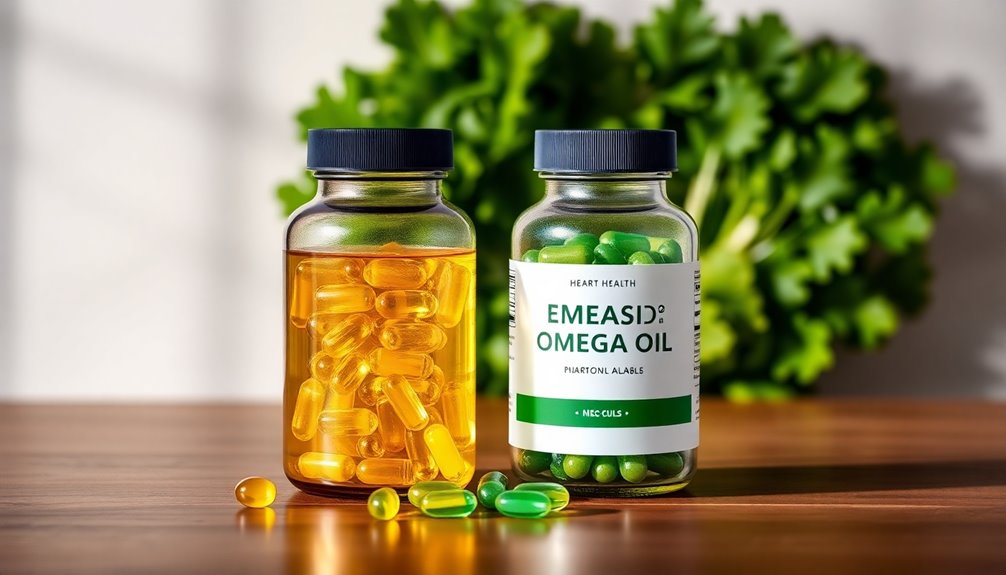
When you think about fish oil, consider its powerful benefits for heart health and more.
It can help prevent heart disease, reduce inflammation, and even support your brain function.
Incorporating fish oil into your routine might just boost your overall well-being.
Heart Disease Prevention
Although heart disease remains a leading cause of mortality worldwide, incorporating fish oil supplements into your daily routine can markedly bolster your cardiovascular health.
Omega-3 fatty acids found in fish oil are proven to lower triglyceride levels and enhance overall heart function. By adding these supplements to your diet, you’re actively engaging in effective prevention strategies against heart disease.
They can help reduce blood pressure and improve arterial function, making your heart work more efficiently. Plus, regular intake of fish oil may decrease the risk of arrhythmias, which can lead to sudden cardiac events.
Anti-Inflammatory Properties
Omega-3 fatty acids, particularly those found in fish oil, are renowned for their powerful anti-inflammatory properties that can considerably benefit your overall health.
These fats work through various anti-inflammatory mechanisms, such as reducing the production of pro-inflammatory cytokines and promoting the synthesis of anti-inflammatory compounds.
By incorporating fish oil into your routine, you may experience reduced joint pain, improved recovery from exercise, and a lower risk of chronic diseases linked to inflammation.
For ideal results, pay attention to the omega 3 dosage; many experts recommend a daily intake of around 1,000 mg.
With consistent use, you can harness the anti-inflammatory benefits of fish oil to enhance your well-being and support a healthier lifestyle.
Brain Health Support
As you seek to boost your cognitive function, incorporating fish oil into your diet can be a game-changer for brain health. Rich in omega-3 fatty acids, fish oil supports neural health, enhancing memory and learning capabilities.
Studies show that regular consumption can lead to improved cognitive performance and reduced mental decline as you age. Furthermore, fish oil isn’t just about sharp thinking; it also plays an essential role in mood enhancement.
The omega-3s in fish oil help regulate neurotransmitters, which can positively impact your emotional well-being. By integrating fish oil into your routine, you’re not only nurturing your brain but also fostering a more balanced mood.
It’s a simple step toward a healthier mind and overall better quality of life.
Algae Oil: a Plant-Based Alternative With Unique Advantages

If you’re looking for a sustainable source of omega-3 fatty acids, algae oil stands out as a plant-based alternative that offers unique advantages.
One of the key plant-based benefits of algae oil is its eco-friendliness. Algae sourcing is often less taxing on marine ecosystems compared to traditional fish oil production, making it a more sustainable choice.
Algae oil is a sustainable choice, with eco-friendly sourcing that protects marine ecosystems compared to traditional fish oil production.
Plus, algae oil is suitable for vegetarians and vegans, providing a valuable option for those avoiding animal products. It also contains no fishy aftertaste, making it easier to incorporate into your daily routine.
With its rich omega-3 content and environmental benefits, algae oil can be a smart addition to your supplement regimen, supporting your health while being kind to the planet.
Nutritional Comparison: Fish Oil vs. Algae Oil
When comparing fish oil and algae oil, you’ll notice differences in omega-3 content and their sources.
Sustainability factors also play a role in choosing between these two options.
Plus, consider how well your body absorbs these oils, as bioavailability can impact their effectiveness.
Omega-3 Content Comparison
Understanding the omega-3 content in fish oil and algae oil is essential for making informed dietary choices. Both are excellent omega-3 sources, but they differ in composition.
Fish oil primarily contains EPA and DHA, which are highly beneficial for heart health and brain function. On the other hand, algae oil is a plant-based alternative rich in DHA, making it suitable for vegetarians and vegans.
When considering daily recommendations, most health organizations suggest around 250-500 mg of combined EPA and DHA. If you’re looking for an omega-3 supplement, check the label for these values to guarantee you meet your needs.
Ultimately, choosing between fish oil and algae oil depends on your dietary preferences and health goals.
Source and Sustainability Factors
While both fish oil and algae oil provide valuable omega-3s, their sources and sustainability factors set them apart.
Fish oil, derived from fatty fish, often raises concerns about overfishing and ecological impact. Many fish populations are under threat, which makes sourcing a significant issue.
On the other hand, algae oil is produced from marine algae, offering a more sustainable alternative. Algae can be cultivated without depleting ocean resources, and its farming typically has a lower ecological impact.
By choosing algae oil, you support sustainable sourcing practices that help preserve aquatic ecosystems.
Ultimately, if you’re looking for a more environmentally friendly omega-3 option, algae oil stands out as the better choice for both your health and the planet.
Bioavailability and Absorption Rates
Bioavailability and absorption rates play a crucial role in determining how effectively your body can utilize the omega-3 fatty acids found in fish oil and algae oil.
Several bioavailability factors impact absorption efficiency, and understanding them can help you make better choices.
- Form of Omega-3s: The type of omega-3s (EPA and DHA) present influences how well your body absorbs them.
- Digestive Health: A healthy gut enhances absorption rates, making it easier for your body to utilize these essential fats.
- Dietary Context: Consuming omega-3s with fats can improve absorption efficiency, as they’re fat-soluble.
Environmental Impact: Sustainability of Fish Oil and Algae Oil
As consumers increasingly prioritize sustainability, the environmental impact of omega-3 supplements, particularly fish oil and algae oil, comes under scrutiny.
Fish oil often raises concerns due to overfishing and habitat destruction. Many fish species are harvested unsustainably, leading to a significant environmental footprint that affects marine ecosystems.
In contrast, algae oil offers a more sustainable sourcing option. It’s derived from algae, which can be cultivated without depleting oceans and requires fewer resources.
By choosing algae oil, you support a more eco-friendly alternative that minimizes harm to fish populations and marine habitats.
Ultimately, being aware of these differences allows you to make informed choices that align with your values on sustainability and environmental responsibility.
Potential Side Effects: What to Watch Out For
When considering omega-3 supplements, it’s crucial to be aware of potential side effects that can arise from both fish oil and algae oil.
While many people tolerate these supplements well, you should keep an eye out for specific issues:
- Digestive upset: Some may experience nausea, diarrhea, or bloating.
- Allergy considerations: If you’re allergic to fish or shellfish, be cautious with fish oil; algae oil is a safer alternative.
- Blood thinning effects: High doses can increase bleeding risk, so follow dosage recommendations closely.
Before starting any supplement, consult a healthcare provider to verify you’re making the right choice for your health needs.
Being informed helps you enjoy the benefits of omega-3s while minimizing any potential side effects.
How to Choose the Right Omega-3 Supplement for You?
Choosing the right omega-3 supplement can feel overwhelming, especially with the variety of options available. Start by considering your personal dietary restrictions; if you’re vegetarian or vegan, algae oil might be your best bet.
Next, check the dosage recommendations on the label. Most adults need about 250-500 mg of combined EPA and DHA daily, but individual needs can vary. If you have specific health conditions, consult your healthcare provider for tailored advice.
Additionally, consider the source of the omega-3s—fish oil typically offers higher levels of EPA and DHA, while algae oil is a great alternative for those avoiding animal products.
Finding the right fit for you guarantees you’ll reap the benefits without compromising your lifestyle.
Conclusion: Making an Informed Decision on Omega-3 Supplements
Ultimately, making an informed decision about omega-3 supplements requires careful consideration of your individual needs and preferences.
Making an informed decision about omega-3 supplements involves thoughtful consideration of your unique needs and preferences.
Here are some key points to keep in mind:
- Natural Sources: Consider incorporating foods rich in omega-3s, like fatty fish or flaxseeds, into your diet.
- Fish Oil vs. Algae Oil: Evaluate which supplement aligns better with your ethical beliefs and dietary restrictions.
- Dosage Recommendations: Consult with your healthcare provider to determine the appropriate dosage based on your health goals.
Conclusion
To sum up, choosing between fish oil and algae oil depends on your needs and values. Did you know that over 80% of the world’s fish populations are overexploited or depleted? This highlights the importance of considering the sustainability of your omega-3 source. Algae oil not only offers a plant-based alternative but also supports marine conservation. So, whether you’re prioritizing health or environmental impact, you can make an informed choice that aligns with your lifestyle and beliefs.