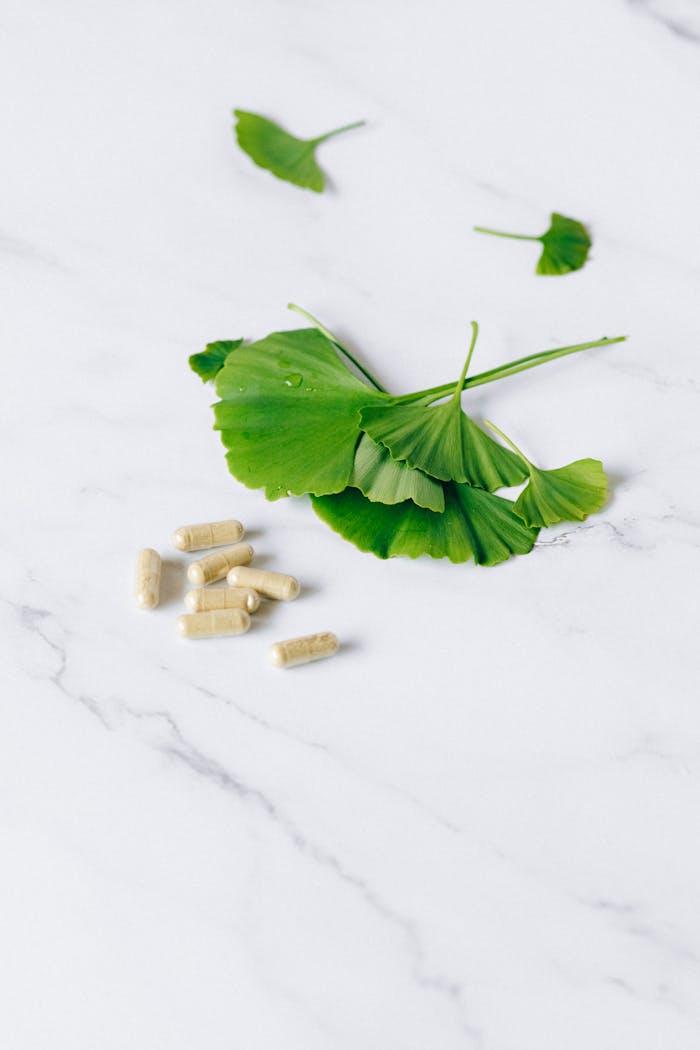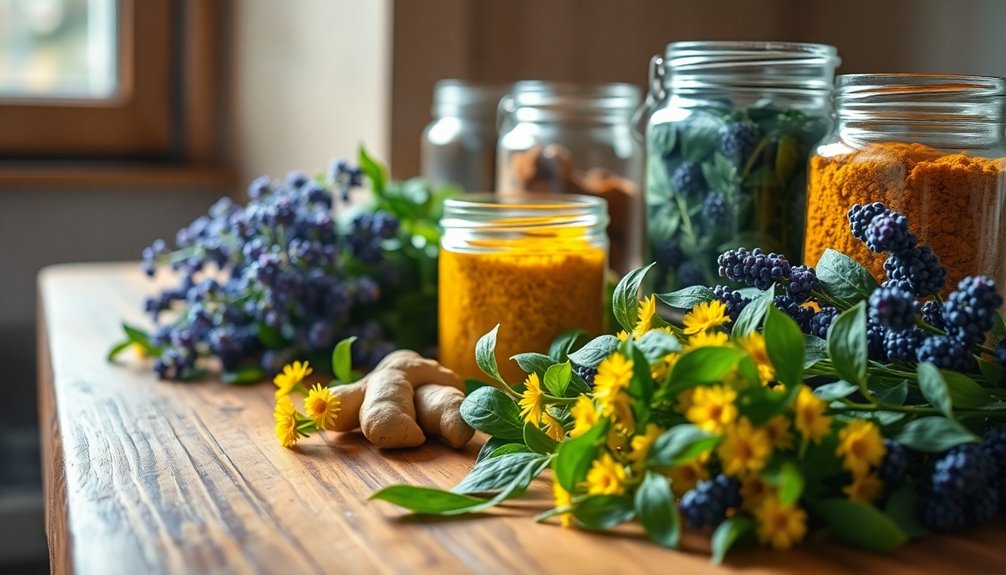
If you’re looking for natural PMS support, herbs like chamomile, evening primrose oil, and vitex can offer relief. Chamomile soothes mood and cramps, while evening primrose oil helps balance hormones and reduce breast tenderness. Vitex may assist in regulating your menstrual cycle and easing irritability. Don’t forget the importance of minerals like magnesium and calcium for muscle relaxation and mood stabilization. Keep exploring to discover more about how these remedies can enhance your comfort during that time of the month.
Understanding PMS: What Are the Symptoms?
PMS, or premenstrual syndrome, can bring a range of uncomfortable symptoms that many women experience in the days leading up to their period. You might notice mood swings, irritability, fatigue, bloating, and breast tenderness.
These symptoms can vary in intensity and duration, making PMS education essential for understanding what to expect. Recognizing your unique symptoms will help you in symptom management.
You can track your cycle and note how you feel to identify patterns. This awareness empowers you to implement strategies, like lifestyle changes or dietary adjustments, to alleviate discomfort.
The Role of Herbs in Alleviating PMS Symptoms
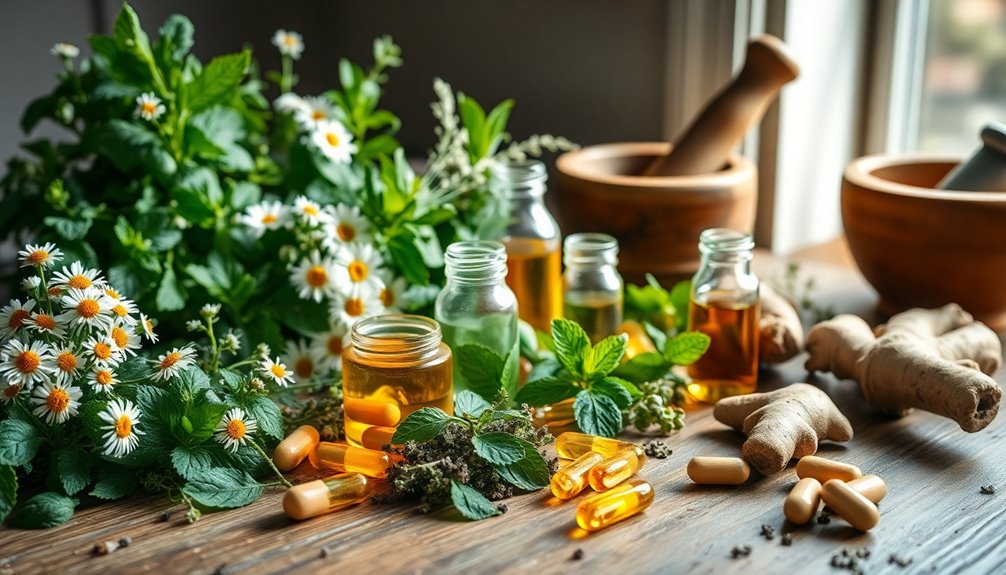
When seeking relief from uncomfortable symptoms, many women turn to herbs known for their potential to alleviate PMS-related discomfort.
These natural remedies harness herbal efficacy to provide symptom relief, helping to ease your experience during this challenging time.
Consider these four powerful herbs:
- Chaste Tree (Vitex): Known for balancing hormones, it may reduce mood swings.
- Ginger: Often used to combat nausea and bloating, it can soothe your stomach.
- Peppermint: Its calming properties may help relieve headaches and cramps.
- St. John’s Wort: This herb can lift your mood and alleviate feelings of anxiety.
Incorporating these herbs into your routine could make a significant difference, allowing you to feel more comfortable and in control.
Chamomile: A Soothing Herbal Remedy for PMS
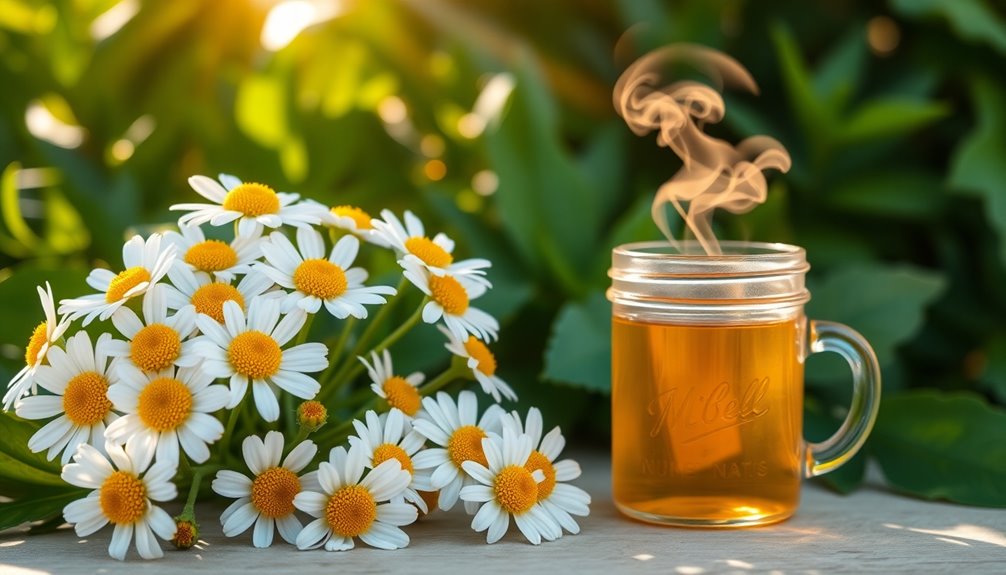
While many women seek natural remedies for relief, chamomile stands out as a soothing herbal option for easing PMS symptoms.
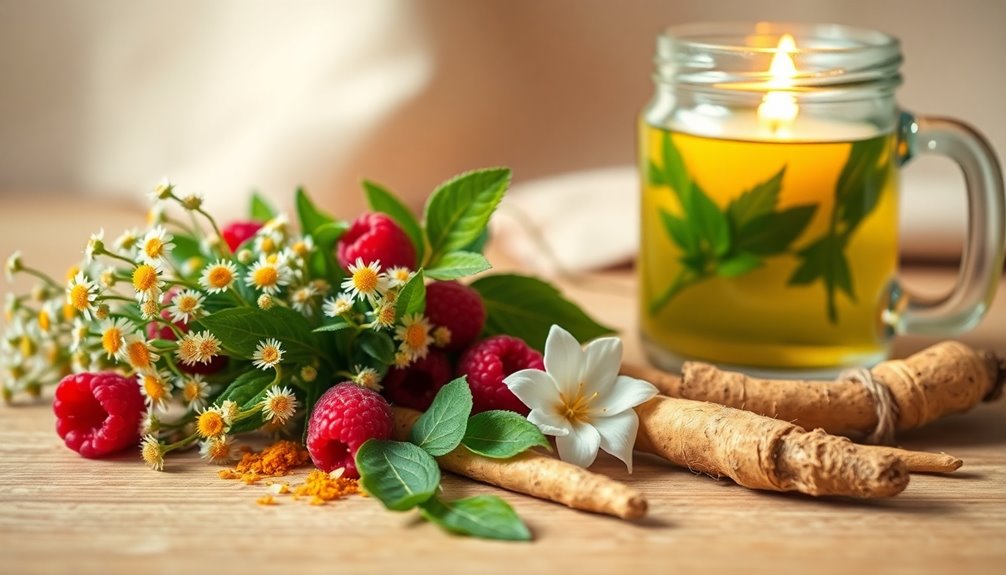
You might find that sipping chamomile tea can provide a sense of calm during those uncomfortable days. The calming effects of chamomile can help reduce anxiety and irritability, making it easier to cope with mood swings.
Additionally, chamomile has anti-inflammatory properties, which may alleviate cramps and discomfort associated with PMS.
Chamomile’s anti-inflammatory properties may help soothe cramps and discomfort linked to PMS.
To enjoy its benefits, brew a warm cup of chamomile tea and take a moment to relax. Incorporating this gentle herb into your routine could offer you the relief you’re looking for, allowing you to face PMS with a bit more ease and tranquility.
Evening Primrose Oil: Balancing Hormones Naturally
For those seeking additional natural support during PMS, evening primrose oil offers a promising option for balancing hormones.
This oil is rich in gamma-linolenic acid (GLA), which can help alleviate symptoms and promote hormonal balance.
You might find that evening primrose oil:
- Reduces breast tenderness and discomfort.
- Eases mood swings and irritability.
- Helps manage bloating and cramping.
- Supports overall emotional well-being.
Vitex (Chaste Tree Berry): Regulating Menstrual Cycles
Vitex, commonly known as chaste tree berry, is a powerful ally for those looking to regulate their menstrual cycles naturally.
This herb’s primary vitex benefits include balancing hormonal levels, which can help alleviate irregular periods and PMS symptoms. By stimulating the pituitary gland, vitex encourages the production of progesterone, promoting a healthier cycle.
Vitex helps balance hormonal levels, easing irregular periods and PMS by boosting progesterone production for a healthier cycle.
For ideal results, dosage recommendations typically suggest starting with 20-40 mg of standardized extract daily, but it’s wise to consult a healthcare provider for personalized advice.
You might notice improvements in just a few months of consistent use. Remember, patience is key, as natural remedies can take time to show their full effects.
Embrace the journey toward more balanced cycles with vitex!
Magnesium and Calcium: Essential Minerals for PMS Relief
When dealing with PMS, magnesium and calcium can be your allies.
Magnesium helps ease tension and cramps, while calcium plays an essential role in stabilizing your mood.
Understanding how these minerals support your body can make a significant difference during your cycle.
Magnesium’s Role In PMS
Magnesium plays an essential role in alleviating PMS symptoms, acting as a natural muscle relaxant and mood stabilizer. By ensuring you get enough magnesium from sources like nuts, seeds, leafy greens, and whole grains, you can experience several benefits that help ease discomfort:
- Reduces bloating and water retention.
- Alleviates cramps and muscle tension.
- Enhances mood and reduces irritability.
- Helps improve sleep quality.
Incorporating magnesium-rich foods into your diet can make a difference during those tough days.
Remember, the right balance of magnesium can greatly impact how you feel, making your PMS experience more manageable.
Calcium’s Impact On Mood
Although often overlooked, calcium plays an essential role in influencing your mood, particularly during PMS. This mineral helps with mood stabilization by regulating neurotransmitters that impact emotions.
When calcium levels dip, you might experience irritability or anxiety, making PMS symptoms feel even more intense. To support your mood, you can include calcium sources in your diet such as dairy products, leafy greens, and fortified plant-based milks.
Incorporating these foods can help guarantee you maintain ideal calcium levels, which may lead to a more balanced emotional state. Remember, a well-rounded diet is key to managing PMS effectively, so don’t underestimate the power of calcium in your overall wellness strategy.
How to Incorporate Natural Remedies Into Your Routine
Incorporating natural remedies into your routine can be a simple yet effective way to manage PMS symptoms.
Adopting a natural lifestyle doesn’t have to feel overwhelming; just weave these practices into your daily routines:
- Herbal Teas: Sip on chamomile or ginger tea to soothe cramps and anxiety.
- Daily Supplements: Consider magnesium or vitamin B6 to support mood balance.
- Mindfulness Practices: Spend a few minutes each day meditating or practicing yoga to relieve stress.
- Healthy Eating: Focus on whole foods and incorporate more fruits, vegetables, and healthy fats for better overall wellness.
Conclusion
Incorporating natural remedies into your routine can offer relief from PMS symptoms. For instance, Sarah, who struggled with severe cramps and mood swings, found that adding evening primrose oil and magnesium supplements to her diet greatly eased her discomfort. By exploring herbal options like chamomile and Vitex, you can create a personalized approach to managing PMS. Remember, it’s important to consult with a healthcare provider before starting any new supplements for the best results tailored to your needs.