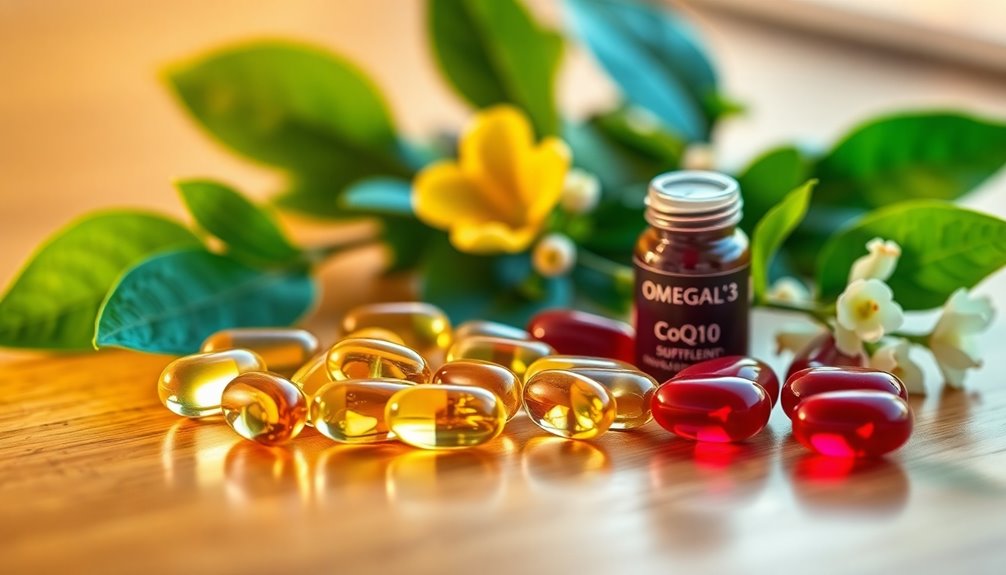
Supplements like CoQ10 and omega-3 fatty acids are key for heart health. CoQ10 boosts energy in heart cells and reduces oxidative stress, while omega-3s lower inflammation and triglyceride levels. Including antioxidants, potassium, and magnesium in your diet further supports cardiovascular wellness. It’s important to choose quality supplements tailored to your needs and consult healthcare professionals for advice. Keep in mind that a balanced diet and active lifestyle are essential too, and there’s more to discover about optimizing your heart health.
What Is CoQ10 and How Does It Support Heart Health?

CoQ10, or coenzyme Q10, is a powerful antioxidant found in every cell of your body, playing an essential role in energy production.
CoQ10 is a vital antioxidant present in every cell, crucial for energy production and overall health.
It’s particularly beneficial for heart health, as it helps improve energy levels in heart cells, supports healthy blood pressure, and reduces oxidative stress.
When you supplement with CoQ10, you may experience enhanced exercise performance and better overall cardiovascular function.
Some excellent CoQ10 sources include fatty fish, organ meats, spinach, broccoli, and whole grains.
However, you mightn’t get enough from diet alone, especially as you age.
The Role of Omega-3 Fatty Acids in Cardiovascular Wellness

While many people focus on diet and exercise for heart health, incorporating omega-3 fatty acids into your routine can also make a significant difference.
Omega-3 sources like fatty fish, flaxseeds, and walnuts provide essential nutrients that can help reduce inflammation and lower triglyceride levels. By including these foods, you’re not just adding variety to your meals; you’re also reaping omega-3 benefits that support cardiovascular wellness.
Studies suggest that regular consumption can decrease the risk of heart disease and improve overall heart function. If you find it challenging to get enough omega-3s from food, consider quality supplements to bridge the gap.
Prioritizing omega-3s can be a simple yet impactful step toward a healthier heart.
Other Essential Nutrients for Heart Health: What You Need to Know

In addition to omega-3 fatty acids, several other nutrients play an essential role in maintaining heart health. Antioxidants, like vitamins C and E, can help combat oxidative stress, protecting your heart from damage.
You’ll also want to include potassium in your diet, as it helps regulate blood pressure. Additionally, magnesium supports heart function and may lower the risk of heart disease.
Don’t forget about fiber sources, like whole grains, fruits, and vegetables; they can help lower cholesterol levels and maintain a healthy weight.
Incorporating a variety of these nutrients into your daily meals won’t only support your heart but boost your overall wellness too. Prioritizing these essentials can lead to a healthier, happier you.
How to Choose the Right Heart Health Supplements for You?
When choosing the right heart health supplements, start by evaluating your specific health needs.
It’s also important to consult with your healthcare professional for tailored advice.
Finally, make sure to assess the quality of ingredients in the supplements you consider.
Assess Your Health Needs
How can you determine which heart health supplements are best for you? Start with a heart assessment to understand your unique needs and align them with your personal goals.
Contemplate these five factors:
- Current health conditions: Are there any underlying issues affecting your heart?
- Dietary habits: Do you get enough omega-3s or antioxidants from food?
- Lifestyle choices: Are you active, or do you need support for heart health?
- Age and gender: These can influence your nutritional requirements.
- Family history: Are there hereditary risks to contemplate?
Consult With Healthcare Professionals
Consulting with healthcare professionals is essential for selecting the right heart health supplements tailored to your individual needs. Your doctor can provide valuable recommendations based on your health history, current medications, and lifestyle.
They can help you understand which supplements might benefit your heart and which could interact negatively with other treatments. Personalized advice from your healthcare team guarantees that you focus on the most effective options for your situation.
Don’t hesitate to discuss your heart health goals and any concerns you have about supplements. By collaborating with professionals, you can make informed choices that support your heart health journey and enhance your overall well-being.
Always prioritize expert guidance when considering new supplements.
Evaluate Ingredient Quality Standards
To choose the right heart health supplements, you need to evaluate ingredient quality standards carefully.
Pay attention to how the ingredients are sourced and tested to guarantee their effectiveness and safety. Here are some key factors to reflect on:
- Ingredient sourcing: Look for supplements made from high-quality, natural sources.
- Quality testing: Check if the manufacturer conducts third-party testing for purity and potency.
- Certification: Seek products with certifications from reputable organizations.
- Transparency: Choose brands that provide clear labeling and ingredient information.
- Reputation: Research the manufacturer’s history and customer reviews.
Understanding Dosages: How Much Should You Take?
When it comes to determining the right dosages for heart health supplements, understanding your individual needs is vital. Each supplement, like CoQ10 or Omega-3, has specific dosage guidelines based on factors such as age, weight, and health conditions.
It’s important to consult with a healthcare professional to tailor the dosage to your unique situation. For instance, while some may benefit from lower doses, others might require higher amounts for best results.
Always start with the recommended dosage and monitor your body’s response. Adjustments can be made as needed, but be cautious not to exceed suggested limits.
Prioritizing your individual needs will help guarantee you’re supporting your heart health effectively and safely.
Potential Side Effects and Interactions of Heart Health Supplements
While heart health supplements can provide significant benefits, they may also come with potential side effects and interactions that you should be aware of.
Heart health supplements offer benefits, but be mindful of potential side effects and interactions.
It’s important to consult your healthcare provider before starting any new supplement. Here are some common side effects and interaction risks you might encounter:
- Digestive issues like nausea or diarrhea
- Allergic reactions, including skin rashes
- Increased bleeding risk, especially with anticoagulants
- Blood pressure fluctuations with certain supplements
- Potential impact on other medications, reducing their effectiveness
Being informed helps you make safe choices.
Always listen to your body and report any unusual symptoms to your doctor. Remember, supplements are just one piece of the puzzle in maintaining heart health!
The Importance of a Balanced Diet Alongside Supplements
A balanced diet is essential for heart health, as it provides the nutrients your body needs to function effectively.
While supplements like CoQ10 and Omega-3 can support your heart, they work best alongside a diet rich in dietary diversity. Incorporating a variety of fruits, vegetables, whole grains, and lean proteins guarantees you’re getting a broad spectrum of vitamins and minerals.
This diversity promotes nutrient synergy, where different nutrients enhance each other’s absorption and effectiveness. For instance, pairing omega-3 fatty acids with antioxidants from fruits can maximize their heart-protective effects.
Tips for Maintaining Overall Heart Health Beyond Supplements
Maintaining heart health goes beyond just taking supplements; it’s about adopting a holistic lifestyle.
Regular physical activity, balanced nutritional choices, and effective stress management are key components you can integrate into your daily routine.
Regular Physical Activity
Engaging in regular physical activity is essential for heart health, as it strengthens your cardiovascular system and boosts overall well-being.
The exercise benefits go beyond just physical fitness; they enhance your mood and energy levels, too.
To maintain an effective fitness routine, consider these tips:
- Aim for at least 150 minutes of moderate aerobic activity each week.
- Incorporate strength training at least twice a week.
- Choose activities you enjoy, like dancing, swimming, or cycling.
- Set realistic goals to keep yourself motivated and accountable.
- Include flexibility exercises to improve balance and prevent injuries.
Balanced Nutritional Choices
Regular physical activity lays a strong foundation for heart health, but what you eat plays a significant role too. To support your heart, focus on achieving nutritional balance in your meals. Incorporate a variety of fruits, vegetables, whole grains, lean proteins, and healthy fats, as these foods align with dietary guidelines for ideal heart health.
Aim for colorful plates that provide essential vitamins and minerals. Limit saturated fats, added sugars, and sodium to reduce your risk of heart disease. Stay mindful of portion sizes and try to cook at home more often, which allows you to control ingredients.
Stress Management Techniques
While you might focus on diet and exercise for heart health, managing stress is equally essential. Incorporating mindfulness practices and relaxation techniques into your daily routine can make a significant difference.
Here are some effective strategies to try:
- Deep breathing exercises to calm your mind and body.
- Meditation to enhance your awareness and reduce anxiety.
- Yoga to combine movement with breath for relaxation.
- Nature walks to reconnect with the outdoors and clear your mind.
- Journaling to express thoughts and manage stress.
Conclusion
Incorporating heart health supplements like CoQ10 and omega-3s is like adding a protective layer to your heart, much like a sturdy umbrella shields you from rain. Just as you wouldn’t rely solely on an umbrella during a storm, remember that a balanced diet and healthy lifestyle are essential too. By combining the right supplements with wholesome foods and regular exercise, you’re not just weatherproofing your heart; you’re creating a fortress of wellness for years to come.