Natural supplements aren’t always safe, and assuming that “natural” means “harmless” can be risky. They can interact with medications, cause adverse reactions, and contain harmful contaminants. Quality control issues make it hard to trust every brand you find. Watch for signs like digestive issues or allergic reactions, and guarantee you choose reliable products. Educating yourself about these risks is essential for your health, and you’ll discover even more important insights as you explore further.
Understanding the Risks of “Natural” Supplements

While many people assume that “natural” supplements are always safe, it’s important to recognize that they can pose significant risks. You might believe these products are harmless, but that’s one of the common natural misconceptions.
Many supplement myths suggest that because something comes from nature, it’s automatically beneficial. In reality, some natural ingredients can interact negatively with medications or cause side effects. For instance, herbal supplements like St. John’s Wort can alter the effectiveness of prescription drugs.
It’s vital to research and consult healthcare professionals before starting any supplement regimen. Don’t let these misconceptions cloud your judgment—being informed can help you make safer choices regarding your health.
Always prioritize safety over the allure of “natural” labels.
Common Contaminants and Quality Control Issues
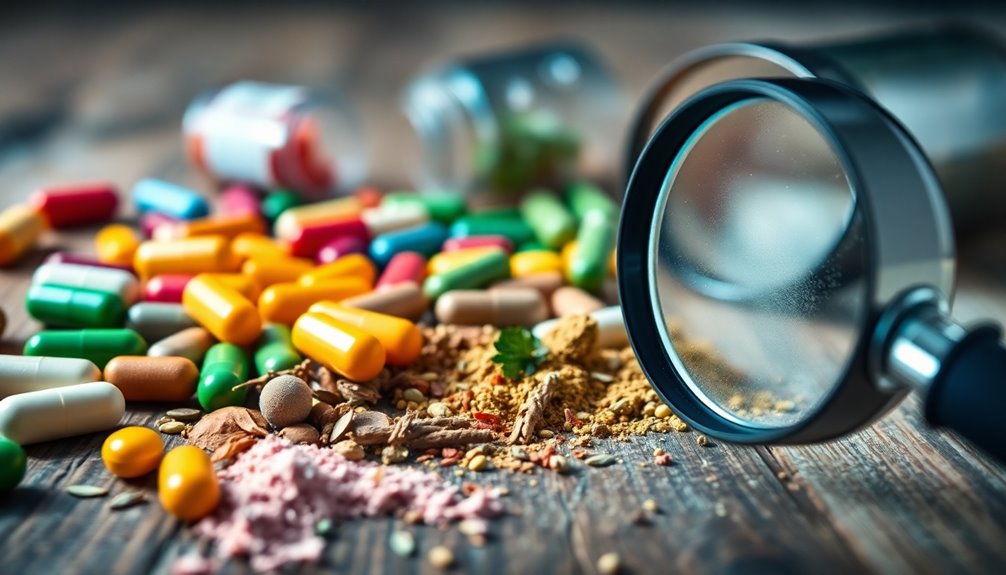
Even with the belief that natural supplements are safe, many products can harbor contaminants and suffer from quality control issues.
Even natural supplements can contain harmful contaminants, making quality assurance essential for your health.
It’s essential to be aware of potential problems that could compromise your health. Here are some common contaminant sources you should watch for:
- Heavy metals – Lead, mercury, and cadmium can leach into supplements from soil and manufacturing processes.
- Pesticides – Residues from agricultural practices may contaminate herbal products.
- Microbial contamination – Bacteria or fungi can thrive in poorly processed supplements.
- Mislabeling – Ingredients may not match what’s on the label, leading to ineffective or harmful doses.
Always look for brands that prioritize quality assurance to minimize these risks.
Your health deserves it!
The Role of Regulation in Supplement Safety
When it comes to natural supplements, you might be surprised by the gaps in regulatory oversight.
Many products lack clear labeling and ingredient transparency, which can leave you in the dark about what you’re taking.
Additionally, the reporting of adverse effects isn’t always reliable, raising concerns about safety.
Regulatory Oversight Limitations
Despite the growing popularity of natural supplements, the regulatory framework governing their safety remains inadequate. You might be surprised to learn that regulatory challenges persist, leading to potential risks when using these products.
Here are four key limitations you should know:
- Lack of Pre-Market Approval: Supplements don’t need FDA approval before hitting the shelves.
- Minimal Oversight: The FDA only intervenes if adverse effects are reported.
- Vague Industry Standards: There’s inconsistency in quality and potency among products.
- Limited Testing Requirements: Many ingredients don’t undergo rigorous safety testing.
These gaps can impact your health. Always research supplements thoroughly and consult healthcare professionals before starting any new regimen.
Labeling and Ingredient Transparency
While the allure of natural supplements continues to grow, the lack of clear labeling and ingredient transparency poses significant risks to consumers.
You might assume that what’s on the label is accurate, but that’s not always the case. Many supplements don’t disclose their ingredient sourcing, leaving you in the dark about what’s really in your products.
This can lead to potential allergens or harmful substances slipping through. Label accuracy is vital; without it, you can’t make informed decisions about your health.
Always check for third-party testing and certifications to guarantee you’re getting what you pay for.
Adverse Effects Reporting Gaps
Although you might trust that natural supplements are safe, gaps in adverse effects reporting can leave you vulnerable to unexpected health risks. Many users aren’t aware of the potential dangers due to:
- Limited regulation: Supplements aren’t as strictly regulated as medications.
- Underreported incidents: Many adverse reactions go unreported, skewing safety perceptions.
- Lack of research: Not all supplements have undergone rigorous testing for safety.
- Consumer ignorance: Users often don’t know how to report adverse reactions.
These factors contribute to a misleading sense of security.
You should stay informed and cautious, as the absence of visible side effects doesn’t guarantee safety. Always consult healthcare professionals before starting a new supplement to better protect your health.
Potential Interactions With Prescription Medications?
When considering natural supplements, you need to be aware of how they might interact with your prescription medications.
Consulting your healthcare provider is essential to avoid any harmful combinations.
Keep an eye on any side effects, as they can signal potential issues with these interactions.
Common Drug-Supplement Interactions
Understanding common drug-supplement interactions is essential for anyone taking prescription medications. Many supplements can enhance or hinder the effects of your prescribed treatments, leading to unwanted side effects or reduced efficacy.
Here are four key interactions to watch for:
- St. John’s Wort: This herb can decrease the effectiveness of antidepressants and birth control pills.
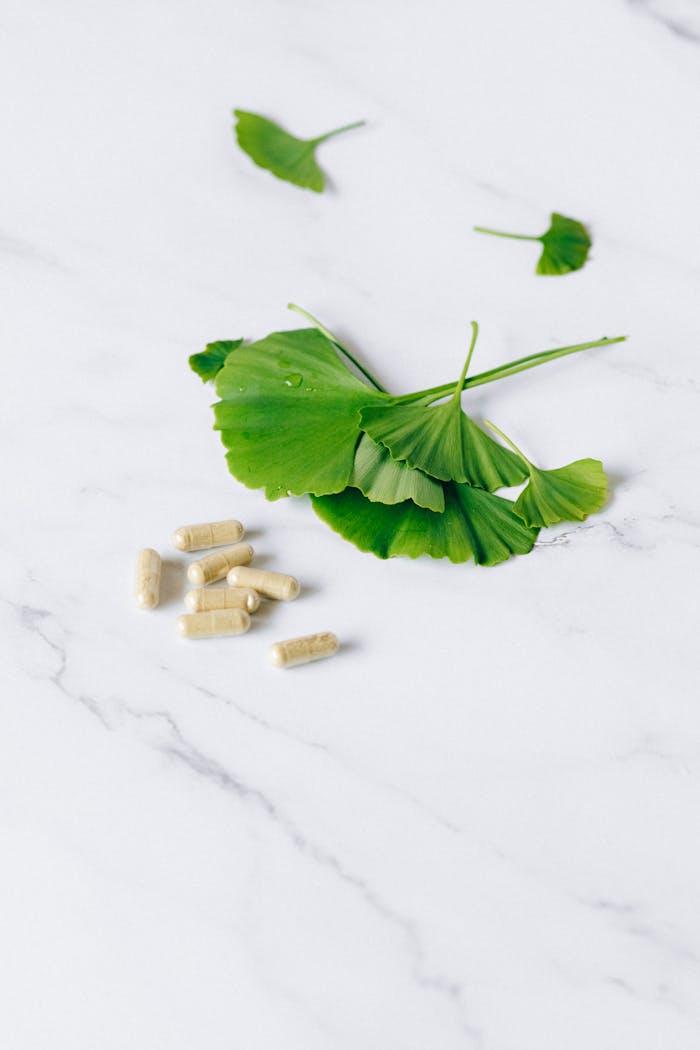
- Ginkgo Biloba: It may increase bleeding risk when taken with blood thinners.
- Garlic: High doses can interfere with medications for high blood pressure.
- Fish Oil: It can amplify the effects of blood-thinning drugs.
Being aware of these herbal interactions helps you avoid complications and guarantees better supplement synergy with your medications.
Always stay informed!
Importance Of Medical Consultation
Before starting any natural supplement, it’s essential to consult with your healthcare provider, especially if you’re on prescription medications. Your medical history plays a significant role in this conversation.
Your doctor can perform a risk assessment to identify potential interactions between supplements and your current medications. Even seemingly harmless herbs can affect how your prescriptions work, leading to unexpected side effects or reduced efficacy.
By discussing your supplement plans, you guarantee your healthcare provider can help you make informed decisions. They might recommend specific supplements, adjust dosages, or suggest alternatives that align better with your treatment.
Prioritizing this consultation is critical for your safety and overall health management. Don’t skip this important step!
Monitoring Side Effects Closely
- Symptom Tracking: Keep a daily log of any new symptoms or changes in your condition.
- Consult Your Doctor: Discuss any supplements you’re taking with your healthcare provider to prevent adverse reactions.
- Dosage Adjustments: Be open to modifying your supplement dosage based on your symptoms or your doctor’s advice.
- Stay Informed: Research the supplements you’re considering to understand their potential interactions with your medications.
Identifying Reliable Brands and Products
When you’re looking for reliable natural supplements, it’s crucial to know how to spot trustworthy brands and products. Start by checking the brand reputation—look for companies with positive customer reviews and a history of transparency.
Research their product sourcing; reputable brands often provide clear information about where their ingredients come from. Certifications from third-party organizations can also indicate quality and safety.
Examine the product labels for any certifications, like GMP (Good Manufacturing Practices) or USDA Organic. Don’t hesitate to reach out to the company for more information if needed.
Being informed will help you make better choices, ensuring that what you take is both effective and safe. Always prioritize quality over price when it comes to your health.
Recognizing Signs of Adverse Reactions
- Digestive Issues: Look for nausea, diarrhea, or stomach cramps.
- Allergic Reactions: Pay attention to rashes, itching, or swelling.
- Mood Changes: Notice any unusual anxiety, irritability, or depression.
- Physical Symptoms: Be alert for headaches, fatigue, or dizziness.
If you experience any of these symptoms, stop taking the supplement and consult a healthcare professional.
Staying attuned to your body can help you make safer choices and maintain your overall well-being.
Making Informed Decisions About Supplement Use
Recognizing adverse reactions is just the first step in managing supplement use safely. To make informed choices about supplements, you need solid knowledge. Start by researching any supplement you’re considering. Look for evidence from reputable sources, and pay attention to potential interactions with medications or other supplements.
Supplement education is essential; it helps you understand what’s beneficial and what’s risky. Speak with healthcare professionals who can provide personalized advice based on your health history.
Keep a journal of any supplements you take and note their effects. This practice will help you track your body’s responses and make necessary adjustments. Ultimately, being proactive in your supplement education empowers you to use these products safely and effectively.
Conclusion
To sum up, while natural supplements can offer benefits, they aren’t always safe. For instance, a person taking St. John’s Wort for depression might unknowingly interact with their prescription antidepressants, leading to serious side effects. Always do your research, check for contaminants, and consult your healthcare provider before starting any supplement. By staying informed and cautious, you can make better choices for your health and avoid potential pitfalls. Your well-being deserves it!