
Creatine isn’t just for bodybuilders; it can boost your energy, enhance recovery, and sharpen cognitive function. Whether you’re a weekend warrior or someone looking to improve daily productivity, creatine can help you push your limits. It increases your endurance and reduces muscle soreness, making recovery after intense workouts quicker. Plus, it supports brain health and mental clarity. If you want to discover more ways creatine can benefit your routine, keep exploring the possibilities!
What Is Creatine and How Does It Work?
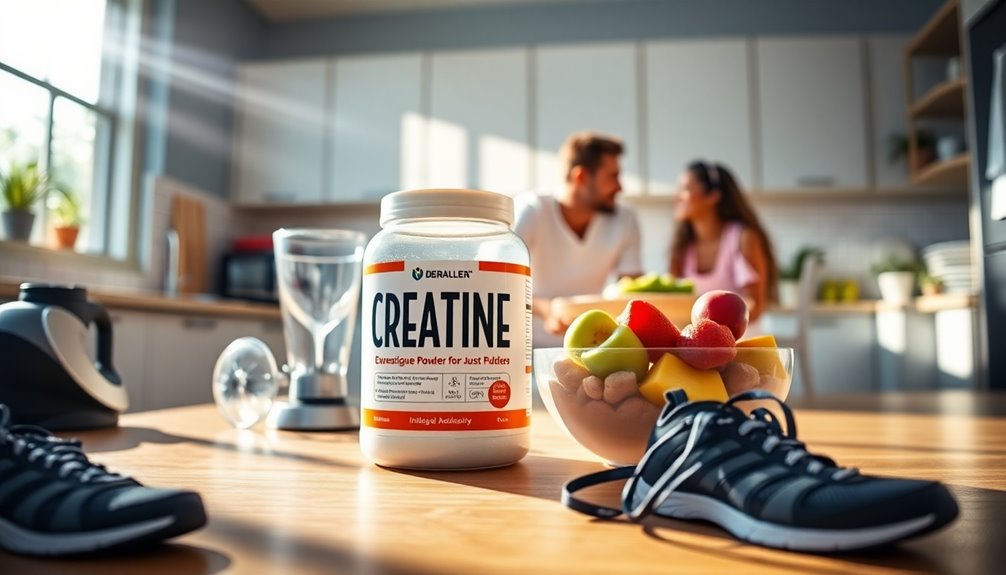
If you’ve ever wondered what creatine is and how it works, you’re not alone. Creatine is a naturally occurring compound found in small amounts in certain foods, like red meat and fish, making these primary creatine sources.
Creatine is a natural compound found in foods like red meat and fish, essential for energy production.
It also plays a crucial role in energy production during high-intensity workouts.
You can find creatine in various dosage forms, including powders, capsules, and even chewable tablets, allowing you to choose what suits you best.
When you supplement with creatine, it helps increase your muscles’ phosphocreatine stores, which can boost your energy levels and performance during short bursts of exercise.
The Science Behind Creatine Benefits

While many people associate creatine primarily with bodybuilding and athletic performance, the science behind its benefits extends beyond just muscle gains.
Creatine plays a vital role in energy production, enhancing your body’s ability to regenerate ATP, the primary energy currency in cells. This process improves physical performance, but it also has notable effects on brain function.
Studies show that creatine supplementation can lead to cognitive performance enhancement, particularly in tasks requiring quick thinking and problem-solving. The creatine metabolism effects can help increase your mental energy levels, potentially reducing mental fatigue.
Who Can Benefit From Creatine Supplementation?

Creatine supplementation can benefit a wide range of individuals, not just elite athletes or bodybuilders. If you lead an active lifestyle, whether you’re a weekend warrior or a fitness enthusiast, creatine can enhance your daily energy levels and overall performance.
Recreational athletes can also experience improved endurance and recovery, making it easier to stay consistent with workouts.
Additionally, creatine isn’t just for physical benefits; it can boost mental clarity and workplace productivity. If you’re looking to sharpen your focus during long hours at your desk, creatine supports brain health, too.
Creatine for Energy: More Than Just Muscle Fuel
Creatine isn’t just for building muscle; it can boost your energy in surprising ways.
You might notice enhanced cognitive function, improved endurance during workouts, and quicker recovery times.
Let’s explore how creatine can benefit your overall performance and daily energy levels.
Enhanced Cognitive Function
Did you know that creatine isn’t just for athletes? It’s gaining attention as a powerful tool for enhancing cognitive function.
If you’re looking to boost your brain health, consider creatine as part of your cognitive enhancement techniques. Research shows that creatine can improve memory, attention, and overall mental clarity.
Many brain health supplements focus solely on vitamins and herbs, but creatine offers a unique advantage by directly fueling your brain’s energy needs. This means you can experience sharper thinking and quicker problem-solving skills in your daily life.
Improved Athletic Endurance
While many people associate creatine with building muscle, it also plays a significant role in improving athletic endurance. If you’re involved in endurance training, adding creatine to your regimen could enhance your stamina improvement.
It helps replenish your energy stores, allowing you to push through longer workouts without fatigue. By increasing your phosphocreatine levels, creatine supports the rapid production of ATP, the energy currency your muscles need during extended physical activity.
This means you can maintain your performance during high-intensity efforts, whether you’re running, cycling, or swimming. Incorporating creatine into your routine can make a noticeable difference, helping you train harder and longer, ultimately leading to better results in your athletic pursuits.
Faster Recovery Times
After pushing your limits with endurance training, you want to recover quickly to get back to your routine. Creatine can help with that.
It’s not just for building muscle; it actually promotes faster recovery times. By increasing your body’s phosphocreatine stores, creatine helps replenish ATP, the energy currency your muscles need after intense workouts. This means less time feeling drained and more time feeling energized.
Additionally, creatine can reduce muscle soreness post-exercise, allowing you to tackle your next session with vigor. If you’re looking to enhance your recovery and minimize discomfort, incorporating creatine into your regimen can make a significant difference.
You’ll be surprised at how quickly you bounce back, ready to take on your next challenge.
How Does Creatine Enhance Cognitive Function?
When you think of creatine, you might only consider its physical benefits, but it can also boost your brainpower.
Research shows that creatine improves memory retention, enhances focus during tasks, and increases mental energy levels.
Improved Memory Retention
As you explore the benefits of creatine, you’ll discover its surprising role in enhancing cognitive function, particularly memory retention.
Research suggests that creatine supplementation can boost your brain’s energy levels, which may lead to improved memory performance. This is especially beneficial when you’re using memory improvement techniques, like mnemonic devices or spaced repetition.
By enhancing the brain’s energy availability, creatine supports cognitive enhancement strategies, making it easier for you to recall information and retain new knowledge.
Whether you’re studying for exams or just trying to remember daily tasks, creatine can be a valuable addition to your routine.
Enhanced Focus During Tasks
Creatine doesn’t just boost memory retention; it also sharpens your focus during tasks. When you incorporate creatine into your routine, you may find that your ability to concentrate improves markedly.
This enhancement is particularly beneficial when you’re employing focus techniques or productivity hacks to tackle challenging projects. By supporting your brain’s energy levels, creatine helps you maintain attention for longer periods, making it easier to stay engaged in what you’re doing.
Instead of feeling mentally fatigued, you can push through distractions and achieve your goals more efficiently. So, whether you’re studying for exams or working on a tight deadline, creatine can be a valuable ally in enhancing your cognitive performance and keeping your focus razor-sharp.
Increased Mental Energy Levels
Studies have shown that creatine greatly boosts mental energy levels, which can enhance cognitive function. When you supplement with creatine, you may notice improved mental clarity, allowing you to think more sharply and make decisions with ease. This isn’t just beneficial for athletes; everyday tasks become smoother as your brain gets the fuel it needs.
Moreover, creatine enhances cognitive stamina, helping you maintain focus during long study sessions or work hours without that dreaded mental fatigue.
You’ll likely find that your ability to process information and solve problems improves considerably. So, if you’re looking for a boost in your mental performance, consider adding creatine to your routine. It could be the key to releasing your full cognitive potential.
Creatine’s Role in Recovery and Injury Prevention
Recovery and injury prevention are essential aspects of maintaining a consistent fitness routine, and many people overlook the potential benefits of creatine in these areas.
Incorporating creatine into your daily routines can support muscle repair and enhance joint health, making it a valuable ally for active lifestyles.
Here are some key recovery strategies to evaluate:
- Supports muscle repair after intense workouts
- Reduces muscle soreness and improves recovery time
- Enhances joint health, lowering the risk of injuries
- Aids in physical therapy and rehabilitation benefits
- Contributes to overall injury prevention, allowing for sustained activity
The Myths and Misconceptions Surrounding Creatine
You might’ve heard that creatine causes weight gain or that it’s only for serious athletes.
These misconceptions can lead to confusion about its benefits and who can actually use it.
Let’s clear up these myths so you can make informed decisions about adding creatine to your routine.
Creatine Causes Weight Gain
Many people believe that creatine inevitably leads to weight gain, but this misconception deserves a closer look.
While some weight gain theories suggest that creatine causes increased muscle mass, it’s essential to differentiate between fat and muscle gain. Here are some key points to take into account:
- Creatine primarily increases water retention in muscles, not fat gain.
- Weight gain can occur as a result of enhanced performance and muscle growth.
- Individual responses to creatine vary; not everyone experiences weight gain.
- Proper dosages and diet can mitigate unwanted weight changes.
- Creatine is often misrepresented in discussions about overall body composition.
Understanding these creatine misconceptions can help you make informed decisions about its use in your fitness journey.
Only For Athletes
While creatine is often seen as a supplement reserved for elite athletes, this perception overlooks its potential benefits for everyday individuals.
Many people believe creatine is only for bodybuilders or professional sports, but that’s just one of the common creatine myths.
In reality, this supplement can enhance energy levels and improve overall performance, whether you’re hitting the gym or tackling daily tasks.
Creatine misconceptions often paint it as dangerous, but research shows it’s safe for most people.
If you’re looking to boost your workout efficiency or support your active lifestyle, creatine could be a game-changer.
It’s time to dispel the myths and consider how creatine might fit into your routine, regardless of your fitness level.
How to Safely Incorporate Creatine Into Your Routine
Incorporating creatine into your routine can seem intimidating, but with a few simple steps, it can become a seamless part of your daily regimen.
To guarantee creatine safety, start by:
- Choosing the right type: Stick with creatine monohydrate for proven benefits.
- Following recommended dosages: Typically, 3-5 grams daily is effective.
- Timing your intake: Take it post-workout or with meals for better absorption.
- Staying hydrated: Drink plenty of water to help your body process creatine.
- Monitoring your body’s response: Pay attention to how you feel and adjust if necessary.
Different Forms of Creatine: Which One Is Right for You?
Creatine comes in several forms, each with its unique characteristics and benefits. The most popular creatine types include creatine monohydrate, creatine ethyl ester, and buffered creatine.
Creatine monohydrate is the most researched and cost-effective option, ideal for beginners. If you’re looking for faster absorption, creatine ethyl ester might be your choice, although its benefits are debated.
Creatine monohydrate is the most efficient and researched option, making it perfect for newcomers to supplementation.
Buffered creatine claims to reduce stomach discomfort and improve absorption, but its effectiveness compared to monohydrate isn’t well-established.
When doing a creatine comparison, consider your fitness goals and how your body responds to each type. Ultimately, the right creatine for you depends on your lifestyle, budget, and personal preferences.
Experimenting may help you find the best fit!
Dosage Guidelines for Everyday Users
Finding the right dosage of creatine can make a significant difference in your results. For everyday users, it’s essential to follow proper guidelines to maximize benefits without risking side effects. A common daily dosage is around 3 to 5 grams, which is effective for most people.
If you’re considering long-term use, consistency is key. Here are some dosage tips to keep in mind:
- Start with a loading phase of 20 grams per day for a week, if desired.
- Follow with a maintenance dose of 3-5 grams daily.
- Stay hydrated to support muscle function.
- Monitor your body’s response and adjust accordingly.
- Consult with a healthcare provider for personalized recommendations.
With the right approach, you can enjoy the benefits of creatine safely.
Best Times to Take Creatine: Does Timing Matter?
When it comes to taking creatine, timing can play a role in maximizing its benefits.
You’ll want to contemplate whether you prefer taking it pre-workout or post-workout, and remember that daily consistency is key.
If you’re in the loading phase, you’ll also need to think about how that impacts your schedule.
Pre-Workout vs. Post-Workout
While the debate over pre-workout versus post-workout creatine intake continues, understanding the ideal timing can enhance your fitness journey.
Taking creatine before your workout can provide several pre-workout benefits, such as increased energy and improved strength. On the other hand, post-workout creatine can support your body’s recovery process, helping replenish energy stores and promote muscle growth.
Consider these factors when deciding:
- Your personal fitness goals
- The type of workout you’re doing
- Your body’s response to creatine timing
- Meal timing and nutrient absorption
- Overall daily creatine intake
Ultimately, the best approach might be to experiment with both timings to see what works best for you and your individual needs.
Daily Consistency Matters
Maintaining daily consistency in your creatine intake can be more important than the specific timing of when you take it. By incorporating creatine into your daily habits, you guarantee that your muscles remain saturated over time, which maximizes its benefits.
Think about consistency strategies that fit your routine—whether you take it in the morning with breakfast or after your workout. The key is to choose a time that works best for you and stick to it. This way, you’re less likely to forget and more likely to experience the performance and recovery benefits you’re after.
Loading Phase Considerations
If you’re considering a loading phase for creatine, timing can play an essential role in how effectively your muscles become saturated. The loading phase benefits you by rapidly increasing creatine levels, but you’ll want to optimize when you take it.
Here are key timing considerations:
- Split doses: Take creatine at intervals throughout the day for better absorption.
- Post-workout: Consuming creatine after your workout can enhance muscle recovery.
- With carbs: Pairing it with carbohydrate-rich foods can increase uptake.
- Hydration: Drink plenty of water to support muscle saturation during the loading phase duration.
- Consistency: Stick to a schedule to maximize the benefits and maintain elevated levels.
Combining Creatine With Other Supplements
Combining creatine with other supplements can enhance your workout performance and recovery. When you explore supplement stacking, pairing creatine with ingredients like beta-alanine or branched-chain amino acids (BCAAs) can create a powerful creatine synergy.
Pairing creatine with beta-alanine or BCAAs can significantly boost your workout performance and recovery.
This combination can improve endurance, reduce muscle fatigue, and support muscle growth. If you’re aiming for better results, consider adding a pre-workout that contains caffeine, which may help you push through those tough sessions.
Don’t forget about hydration; pairing creatine with electrolytes can help maintain performance levels. Always remember to assess your individual needs and how your body responds to each supplement combination.
Ultimately, finding the right blend can optimize your workouts and help you achieve your fitness goals more effectively.
Potential Side Effects of Creatine Supplementation
While stacking creatine with other supplements can boost your performance, it’s important to be aware of potential side effects that may arise from creatine supplementation.
You should consider the following creatine safety concerns and potential interactions:
- Gastrointestinal discomfort, like bloating or cramps
- Weight gain due to water retention
- Possible kidney stress in individuals with pre-existing conditions
- Muscle cramping, particularly in dehydration situations
- Increased risk of dehydration, especially during intense workouts
Knowing these side effects can help you make informed decisions about whether creatine is right for you.
Always consult a healthcare professional before starting any new supplement regimen, especially if you’re already taking other medications or supplements that could interact.
Real-Life Success Stories: Everyday People Using Creatine
Many everyday people have experienced remarkable transformations by incorporating creatine into their fitness routines.
Take Sarah, a busy mom and amateur runner. By adding creatine, she boosted her energy and improved her endurance, allowing her to complete her first half-marathon.
Then there’s Mike, a weekend warrior who struggled with strength training. After using creatine, he noticed significant gains in muscle mass and overall performance, helping him achieve personal records.
These real-life transformations show that creatine isn’t just for bodybuilders; it’s for everyday athletes like you.
Whether you’re looking to enhance your workout, recover faster, or push your limits, creatine can play an essential role in your fitness journey, helping you reach your personal goals.
Conclusion
Incorporating creatine into your daily routine could boost not just your physical performance but also your cognitive abilities. Whether you’re hitting the gym, tackling a demanding job, or just looking to improve your overall energy levels, creatine can be a game-changer. Why limit its benefits to bodybuilders when everyday people can thrive, too? With the right approach, you can harness its potential and feel the difference in your daily life. Give it a try and see how you feel!