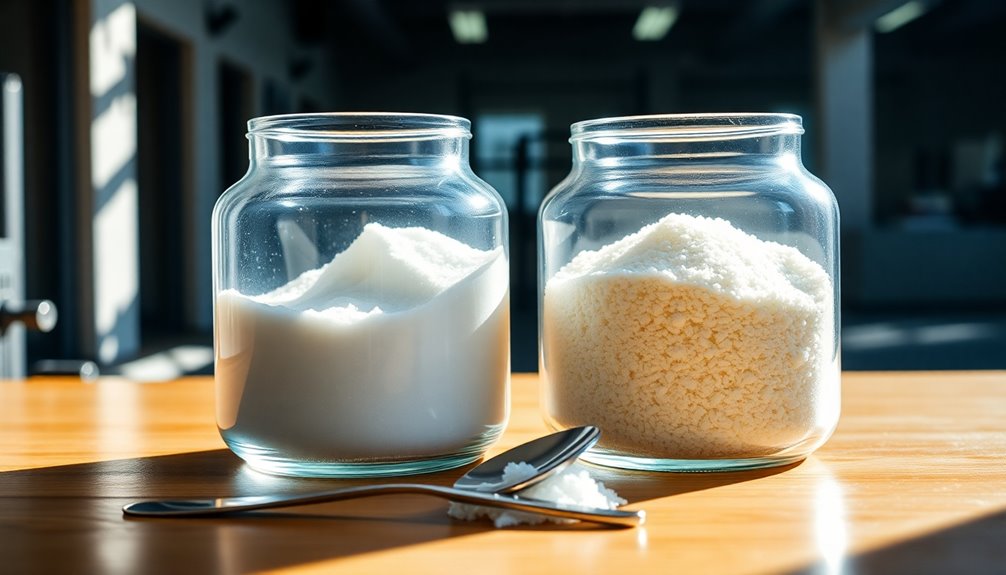
When it comes to creatine monohydrate vs. HCL, both can boost your performance, but they work differently. Monohydrate is well-researched and can enhance strength and recovery but may cause bloating. HCL, on the other hand, absorbs faster, potentially reducing gastrointestinal discomfort and requires smaller doses. Your choice depends on personal tolerance and fitness goals. Stick around to discover which form might be best for you and how to maximize your results!
The Basics of Creatine: What You Need to Know
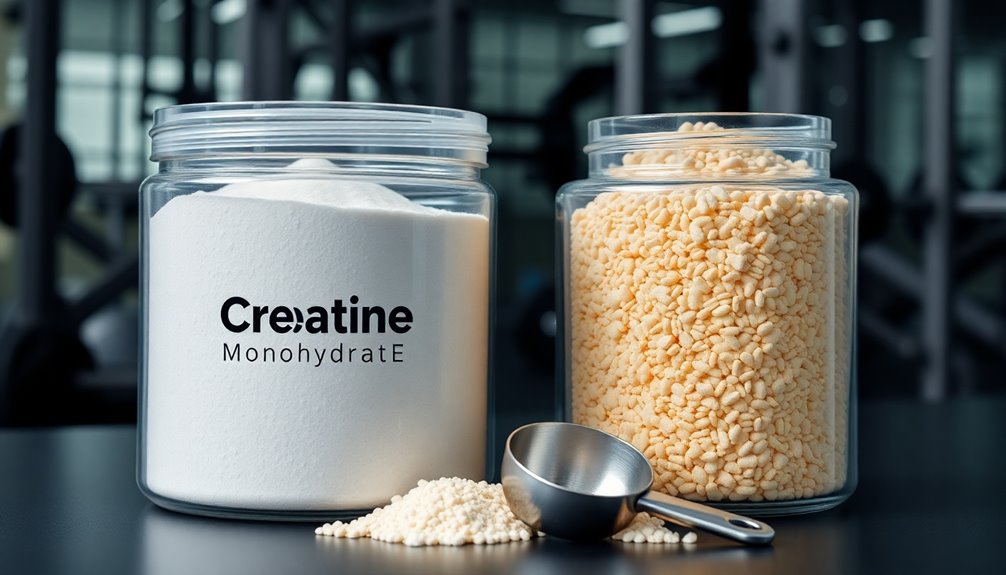
When you immerse yourself in the world of sports supplements, understanding creatine is vital for maximizing your performance.
Creatine’s benefits include increased strength, improved endurance, and enhanced recovery. It’s a naturally occurring compound found in meat and fish, and your body can also synthesize it.
To reap the benefits, follow clear supplementation guidelines: a common approach is to start with a loading phase of 20 grams daily for five to seven days, followed by a maintenance dose of 3 to 5 grams daily.
Staying hydrated is essential, as creatine draws water into your muscles. By adhering to these guidelines, you’re setting yourself up for success, ensuring you harness the full potential of creatine in your training regimen.
How Does Creatine Monohydrate Work?
Creatine monohydrate boosts your energy production by replenishing ATP, the primary energy currency in your muscles.
This process not only fuels high-intensity workouts but also plays a key role in enhancing your muscle recovery afterward.
Understanding how it works can help you maximize your performance and results.
Energy Production Mechanism
Although many supplements promise enhanced athletic performance, creatine monohydrate stands out for its well-documented role in energy production during high-intensity exercise.
When you engage in intense activities, your muscles rely on ATP (adenosine triphosphate) as the primary energy source. Creatine monohydrate supports ATP synthesis by replenishing ATP levels quickly, allowing you to maintain peak performance for longer.
It does this by enhancing the energy pathways in your muscles, especially during short bursts of activity like sprinting or weightlifting. By increasing the availability of phosphocreatine, creatine monohydrate guarantees that your body can rapidly regenerate ATP.
This means you can push harder and train more effectively, ultimately leading to improved athletic performance and faster gains.
Muscle Recovery Enhancement
While you may focus on performance during workouts, muscle recovery is equally essential for achieving your fitness goals.
Creatine monohydrate plays a vital role in enhancing muscle repair after intense exercise. It helps replenish ATP stores, allowing your muscles to recover more quickly. By promoting faster recovery time, creatine supports your body in repairing damaged muscle fibers, which can lead to increased strength and endurance in subsequent workouts.
Moreover, creatine reduces inflammation and muscle soreness, making it easier for you to get back into your routine.
The Science Behind Creatine Hydrochloride
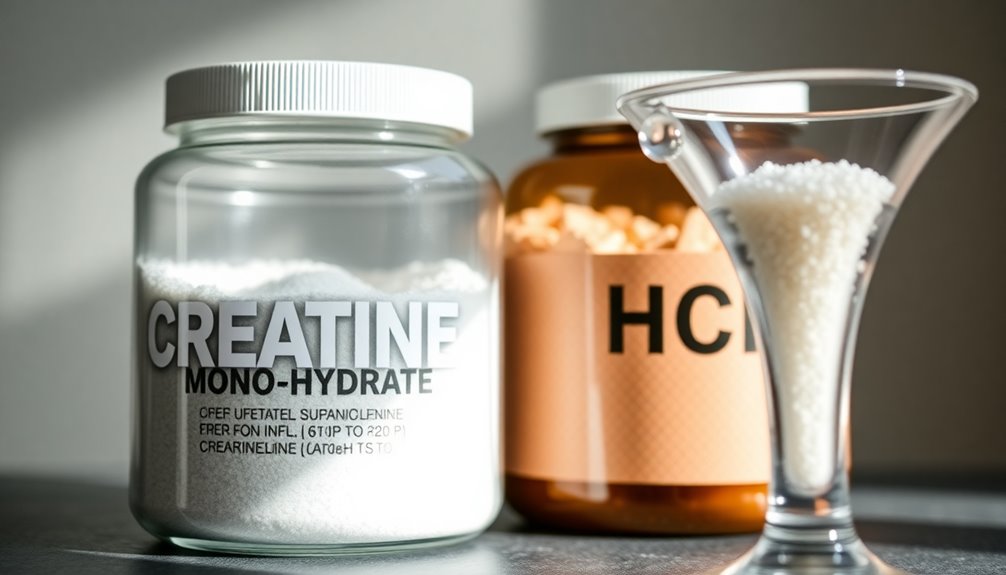
When you look at creatine hydrochloride (HCL), you’ll notice its unique chemical composition compared to creatine monohydrate.
This difference plays a vital role in how your body absorbs and utilizes it.
Understanding these factors can help you decide which form of creatine might be best for your fitness goals.
Chemical Composition Differences
Creatine hydrochloride (HCL) differs from creatine monohydrate not only in its chemical structure but also in how your body processes it.
HCL’s molecular structure includes a hydrochloride group, which enhances its solubility in water compared to monohydrate. This solubility difference means HCL can dissolve more easily in your bloodstream, potentially leading to quicker availability for muscle energy.
Since it requires less water for absorption, you might find HCL more convenient, especially if you’re sensitive to bloating.
In addition, this difference in solubility may allow for smaller doses while still delivering effective results.
Absorption and Bioavailability Factors
Understanding how your body absorbs creatine hydrochloride (HCL) can clarify why many athletes prefer it over other forms like monohydrate.
HCL boasts superior absorption mechanisms, allowing for quicker uptake into muscle cells. This means you may experience enhanced performance with less risk of gastrointestinal discomfort, a common issue with monohydrate.
- Higher solubility in water
- Lower dose required for effectiveness
- Reduced risk of bloating
- Improved bioavailability factors
These advantages make HCL a compelling option.
With its efficient absorption, you’re likely to see faster results, making your training sessions more productive.
Ultimately, choosing a creatine form that maximizes these factors can greatly impact your athletic performance and recovery.
Comparing Absorption Rates: Monohydrate vs. HCL
Although both creatine monohydrate and HCL are popular choices among fitness enthusiasts, their absorption rates can differ considerably.
Creatine HCL is often touted for its superior absorption efficiency, which some studies suggest might lead to quicker uptake in your muscles. This can be particularly beneficial if you’re looking to enhance your performance rapidly.
On the other hand, creatine monohydrate, while effective, may require higher hydration levels to optimize its absorption. If you don’t drink enough water, you mightn’t experience its full benefits.
Ultimately, your choice may depend on how well your body responds to each form and your specific fitness goals.
Potential Side Effects: What to Expect
When considering which form of creatine to supplement, it’s important to be aware of potential side effects that can arise. Both creatine monohydrate and HCL can cause issues, though experiences vary based on individual tolerances.
Here are some potential side effects you might encounter:
- Gastrointestinal discomfort
- Water retention or bloating
- Muscle cramping
- Potential interactions with medications
It’s essential to listen to your body and consult with a healthcare professional if you experience any adverse effects.
Remember, your individual tolerances play a significant role in how you respond to each form of creatine, so what works for one person may not work for you.
Stay informed and take care of your health as you supplement.
Performance Benefits of Creatine Monohydrate
Creatine monohydrate stands out as one of the most researched and effective supplements for enhancing athletic performance. When you take the right creatine dosage, you can expect significant improvements in strength and endurance.
Studies consistently show that it boosts your ability to perform high-intensity exercises, allowing you to push harder during workouts. You’ll notice enhanced recovery times, enabling you to train more frequently and effectively.
Additionally, creatine helps increase muscle mass by promoting water retention in your muscle cells, which can translate into better performance metrics. By incorporating creatine monohydrate into your routine, you’re setting yourself up for improved power output and overall athletic performance, making it a top choice for serious athletes.
Performance Benefits of Creatine HCL
While you may be familiar with creatine monohydrate, creatine HCL offers unique performance benefits that are worth considering. This form of creatine has gained popularity due to its potential for enhanced performance improvement and easier digestion.
Here are some key benefits you might appreciate:
- Rapid absorption: Creatine HCL is known for its quick uptake, providing faster results.
- Lower dosage requirements: You typically need a smaller dose compared to monohydrate, aligning with dosage recommendations.
- Reduced water retention: It minimizes bloating, which can be a concern with other forms.
- Improved endurance: Users often report better endurance during high-intensity workouts.
With these benefits in mind, creatine HCL could be a great addition to your training regimen.
Who Should Choose Which Form of Creatine?
Choosing the right form of creatine can greatly impact your training results. If you’re new to supplementation or prefer a straightforward approach, creatine monohydrate is likely your best bet. It’s well-researched, cost-effective, and effective for most individuals.
On the other hand, if you’re sensitive to stomach discomfort or need a more convenient option, creatine HCL might suit you better.
If stomach issues are a concern, consider trying creatine HCL for a more convenient experience.
For those focused on specific goals, consider your creatine dosage and supplementation timing. Creatine monohydrate usually requires a loading phase, while HCL can be taken without one, simplifying your routine.
Ultimately, your choice should align with your personal preferences, tolerance, and training objectives. Make sure to experiment and see what works best for you!
Conclusion: Making the Right Choice for Your Goals
Ultimately, the right choice between creatine monohydrate and HCL hinges on your unique goals and preferences. Consider these factors:
- Creatine dosage: Monohydrate typically requires higher doses for saturation, while HCL may be effective at lower doses.
- Supplement timing: Both forms can be taken pre- or post-workout, but timing might impact your results depending on your routine.
- Digestive tolerance: If you experience bloating with monohydrate, HCL might be a better fit.
- Cost and availability: Monohydrate is often more affordable and widely available than HCL.
Evaluate how each option aligns with your fitness objectives. By weighing these aspects, you’ll make an informed decision that supports your performance and recovery goals.
Conclusion
In choosing between creatine monohydrate and HCL, it really comes down to your personal goals and preferences. Did you know that about 70% of athletes report better performance with creatine monohydrate? If you’re looking for proven results, that might be the way to go. However, if you’re sensitive to stomach issues, HCL could be your best bet. Whichever you pick, both forms can help you reach your fitness goals—just find what works best for you!