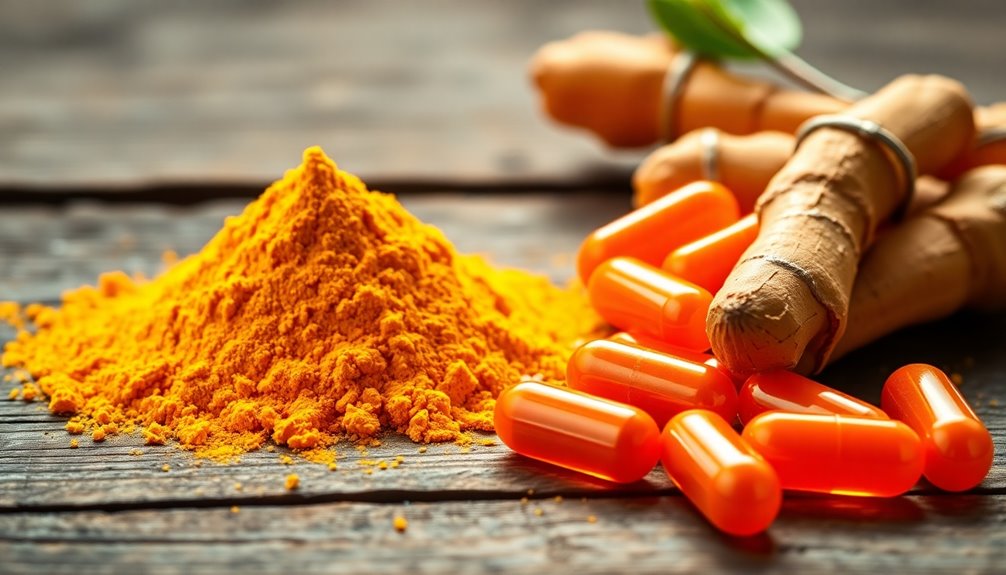
When deciding between curcumin and turmeric, it’s essential to evaluate your health goals. Turmeric is a whole spice with various nutrients, while curcumin is a concentrated extract known for its potent anti-inflammatory and antioxidant benefits. If you’re looking for general wellness and flavor in your meals, turmeric is great. For targeted health benefits and stronger effects, curcumin might be the better choice. There’s a lot more to unpack, so keep exploring to make an informed decision.
What Is Turmeric and Its Uses?
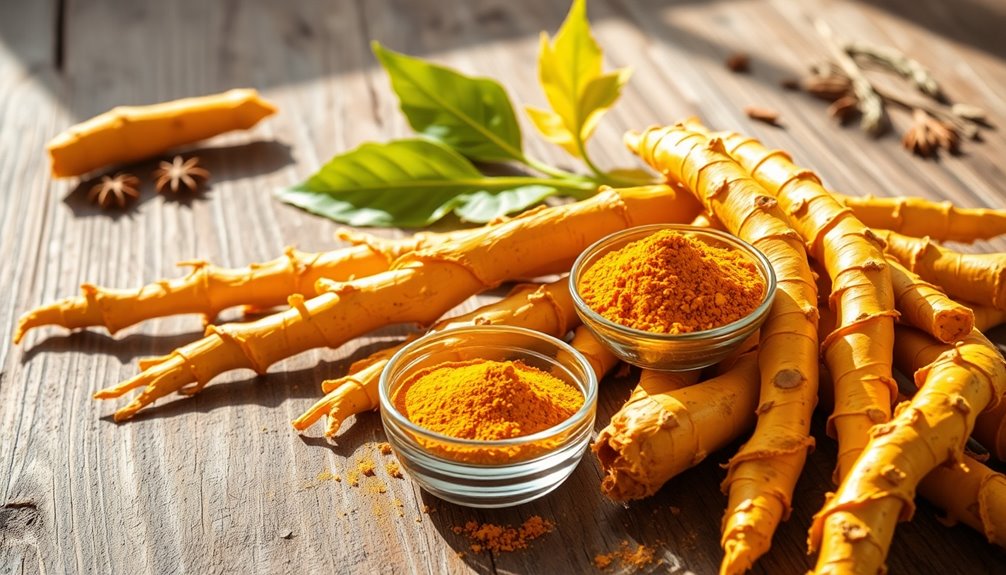
Turmeric, a vibrant yellow spice derived from the root of the Curcuma longa plant, has been a staple in cooking and traditional medicine for centuries. You can find its culinary uses in various dishes, from curries to soups, adding both flavor and color.
Beyond the kitchen, turmeric‘s medicinal properties have garnered attention for their potential health benefits. It’s often used in herbal remedies to alleviate inflammation, boost immunity, and improve digestion.
Incorporating turmeric into your daily routine can be as simple as adding it to your meals or sipping on turmeric tea.
With its rich history and versatility, turmeric serves as a powerful addition to both your culinary adventures and wellness journey. Embrace this spice for its taste and health advantages!
Understanding Curcumin: The Key Ingredient in Turmeric
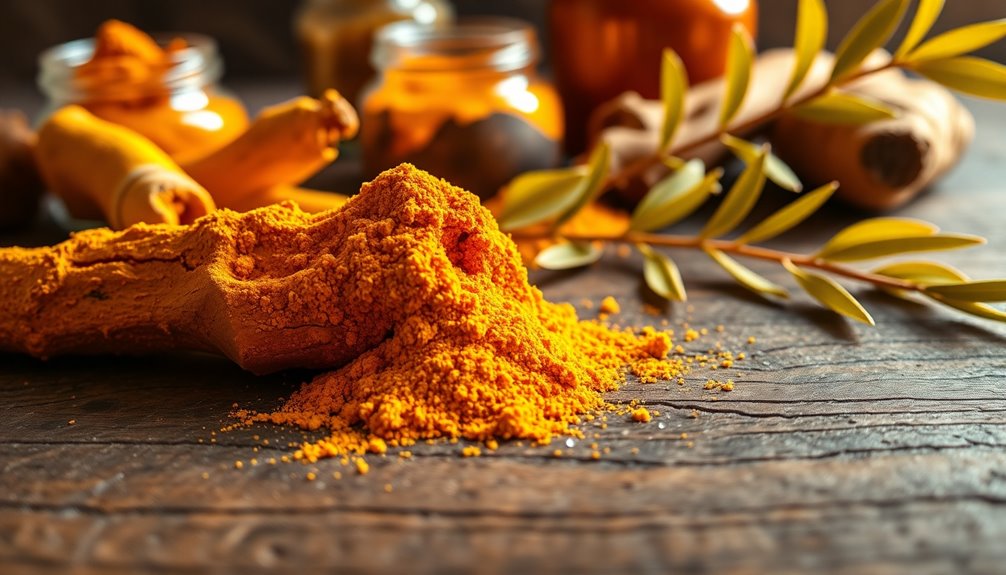
Curcumin is the powerhouse compound that gives turmeric its vibrant color and many of its health benefits.
Understanding how curcumin differs from turmeric can help you make better choices for your well-being.
Let’s explore what makes curcumin so special and how it can impact your health.
Curcumin’s Health Benefits
While many people enjoy turmeric for its vibrant color and flavor, it’s curcumin—the compound that gives turmeric its distinctive hue—that boasts a wealth of health benefits.
By focusing on curcumin sources, you can enhance your well-being in various ways. However, you should also consider curcumin absorption to maximize its effects.
Here are some key benefits you might experience:
- Acts as a powerful anti-inflammatory
- Supports joint health and mobility
- Boosts immune function
- Promotes heart health
- Enhances brain function
Incorporating curcumin into your diet, whether through supplements or turmeric-rich foods, can lead to a healthier lifestyle.
Just remember to pair it with black pepper or fats to improve curcumin absorption for best results.
Turmeric vs. Curcumin Differences
Understanding the distinction between turmeric and curcumin can considerably impact your health choices.
Turmeric originates from the Curcuma longa plant and is a vibrant yellow spice widely used in cooking and traditional medicine. It’s packed with various compounds, but curcumin is the most studied one for its health benefits.
When you think about curcumin, remember it’s the active ingredient extracted from turmeric. Curcumin extraction involves isolating this potent compound to harness its anti-inflammatory and antioxidant properties effectively.
While turmeric offers a range of benefits, curcumin’s concentrated form allows for higher dosages, making it a popular choice for those seeking specific health improvements.
Evaluating these differences helps you make informed decisions about what to take for your wellness journey.
The Health Benefits of Turmeric: More Than Just Flavor
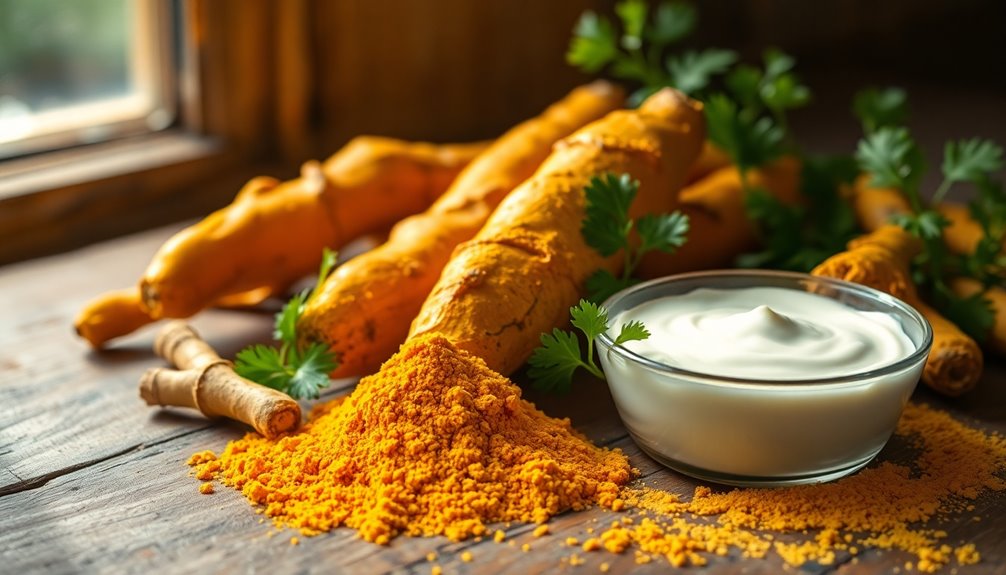
Turmeric, often celebrated for its vibrant color and distinct flavor, offers a treasure trove of health benefits that go beyond seasoning your favorite dishes.
When you incorporate turmeric into your diet, you’re not just enhancing culinary uses; you’re also tapping into its remarkable turmeric benefits.
Consider these advantages:
- Anti-inflammatory properties that can help reduce chronic pain.
- Antioxidant effects to combat free radicals in your body.
- Support for digestive health, aiding in digestion and gut function.
- Potential brain health benefits, promoting cognitive function.
- Boosted immune response, helping you stay healthy year-round.
Curcumin Benefits: Why Is It Gaining Popularity?
As you explore the world of natural health, you might find yourself intrigued by curcumin, the active compound in turmeric that’s gaining popularity for its potent health benefits.
Curcumin research has revealed its impressive anti-inflammatory and antioxidant properties, making it a hot topic among health enthusiasts. People are increasingly turning to curcumin for potential relief from chronic pain, improved digestion, and enhanced cognitive function.
Its ability to support overall wellness is driving curcumin popularity in supplement form, often marketed as a natural remedy. With ongoing studies highlighting its potential in disease prevention and management, more individuals are keen to incorporate curcumin into their daily routines.
You might just find it’s the boost you’ve been looking for!
How Do Curcumin and Turmeric Work in the Body?
Curcumin and turmeric work together in the body to deliver a range of health benefits that you might find surprising.
Curcumin and turmeric combine to provide surprising health benefits for your body.
These two powerful ingredients contain bioactive compounds that can positively impact your health. Here’s how they function:
- They reduce inflammation through their potent anti-inflammatory properties.
- They support joint health by alleviating pain and stiffness.
- They boost your immune system, helping you fend off illnesses.
- They enhance brain function, potentially reducing the risk of neurodegenerative diseases.
- They promote heart health by improving blood circulation and reducing cholesterol levels.
Turmeric vs. Curcumin: What’s the Difference?
When you compare turmeric and curcumin, you’ll find they’ve distinct chemical compositions.
Turmeric is the whole root, while curcumin is just one of its active compounds.
Understanding their differences can help you make better choices for your health benefits.
Chemical Composition Differences
While both turmeric and curcumin are often mentioned together, they’ve distinct chemical compositions that set them apart.
Turmeric is a whole root with a complex chemical structure, containing over 100 different compounds. Curcumin, on the other hand, is just one specific compound extracted from turmeric, making it a more concentrated source with unique molecular properties.
Here are some key differences:
- Turmeric: A spice containing curcumin, essential oils, and other compounds.
- Curcumin: A polyphenol known for its vibrant yellow color.
- Chemical Structure: Curcumin has a simple molecular structure compared to turmeric.
- Molecular Properties: Curcumin exhibits strong antioxidant properties.
- Applications: Turmeric is used in cooking; curcumin is often taken as a supplement.
Health Benefits Comparison
Understanding the health benefits of turmeric and curcumin can help you make informed choices about their use.
Turmeric contains a range of compounds, but curcumin is the most well-known for its potent effects. Both offer impressive anti-inflammatory properties, making them popular options for reducing pain and inflammation. However, curcumin’s concentrated form typically provides stronger results in this aspect.
Additionally, both turmeric and curcumin are rich in antioxidant effects, helping to combat oxidative stress and protect your cells from damage. If you’re looking for maximum health benefits, curcumin might be your best bet due to its higher concentration of beneficial compounds.
Ultimately, incorporating either into your routine can enhance your overall wellness.
What Are the Potential Side Effects of Turmeric and Curcumin?
What should you know about the potential side effects of turmeric and curcumin? While both are generally safe for most people, they can have some potential risks and side effects, especially if taken in high doses or for extended periods.
Here are a few things to keep in mind:
- Gastrointestinal issues like nausea or diarrhea
- Risk of bleeding, especially if you’re on blood thinners
- Allergic reactions in sensitive individuals
- Potential interference with certain medications
- Hormonal effects, which may affect those with hormone-sensitive conditions
Being aware of these side effects can help you make an informed decision about whether turmeric or curcumin is right for you.
Always consult a healthcare professional if you have concerns or experience any adverse reactions.
How to Choose the Right Supplement: Curcumin or Turmeric?
When choosing between curcumin and turmeric, it’s essential to understand their active ingredients and health benefits.
You should also consider the appropriate dosage and the different forms available.
Understanding Active Ingredients
Choosing between curcumin and turmeric can be tricky since both have unique benefits. Understanding their active compounds is essential for making an informed choice.
Curcumin is the primary active ingredient in turmeric, while turmeric contains a broader range of components. Here’s what you should consider:
- Curcumin has stronger anti-inflammatory properties.
- Turmeric offers a wider spectrum of antioxidants.
- Curcumin is often more concentrated in supplements.
- Turmeric may provide additional health impacts due to its other compounds.
Consider your personal health goals when choosing.
Health Benefits Comparison
Understanding the differences in health benefits between curcumin and turmeric can help you select the right supplement for your needs.
Curcumin, the active compound in turmeric, boasts stronger antioxidant effects and anti-inflammatory properties than turmeric itself. If you’re looking for a potent solution to combat oxidative stress and inflammation, curcumin might be the better choice.
On the other hand, turmeric is often easier to find and can offer a broader range of nutrients due to its whole-food form. If you prefer a lower dosage with mild benefits, turmeric could suit you well.
Ultimately, consider your health goals and how each option aligns with them to make an informed decision.
Dosage Considerations and Forms
As you consider the right supplement between curcumin and turmeric, it’s important to pay attention to the dosage and forms available.
Curcumin typically provides a higher concentration of beneficial compounds, while turmeric contains a lower amount.
Here are some key dosage recommendations and supplement forms to think about:
- Curcumin capsules: Standardized for potency, easy to swallow.
- Turmeric powder: Versatile for cooking or smoothies.
- Liquid extracts: Quick absorption, allows for flexible dosing.
- Curcumin with black pepper: Enhances absorption markedly.
- Turmeric tea: Offers a soothing, enjoyable way to consume.
Choosing the right form depends on your lifestyle and health goals, so make sure to weigh your options carefully!
How to Incorporate Turmeric and Curcumin Into Your Diet
Incorporating turmeric and curcumin into your diet can be both enjoyable and beneficial for your health.
Start by exploring simple turmeric recipes like golden milk, where you mix turmeric with warm milk and a touch of honey. You can also add turmeric to soups, stews, or rice dishes for a vibrant flavor boost.
For those who prefer convenience, consider curcumin supplements, which provide a concentrated dose without the need to cook. Just be sure to check the label for bioavailability, as some forms are more easily absorbed than others.
Remember to pair turmeric with black pepper to enhance its absorption.
With these tips, you’ll easily enjoy the health benefits of turmeric and curcumin every day.
Making an Informed Decision for Your Health Journey
With a growing interest in turmeric and curcumin for their health benefits, it’s important to evaluate how these ingredients fit into your overall wellness strategy.
Making informed decisions about your health choices can enhance your journey toward better well-being.
Consider these factors:
- Your specific health goals and needs
- The bioavailability of curcumin compared to turmeric
- Recommended dosages and forms (powder, supplement)
- Any potential interactions with medications
- Personal preferences and dietary restrictions
Conclusion
As you weigh your options between curcumin and turmeric, envision this: vibrant golden spice or concentrated powerhouse? Both hold remarkable health benefits, but the choice hinges on your needs. Imagine feeling energized and healthier as you discover what works best for you. Will you embrace the rich flavors of turmeric in your meals, or immerse yourself in the potent world of curcumin supplements? The decision is yours, and the journey to peak health awaits just around the corner.