To spot fake or overhyped supplement brands, watch for exaggerated claims like “miracle cure” and vague ingredient descriptions. Check if the brand offers detailed information and third-party testing certifications—this shows integrity. Look at independent reviews and how they handle feedback; reliable brands engage with customers. Be cautious of vague marketing terms and unclear claims. By staying vigilant, you can make informed choices and protect your health. You’ll discover even more tips to guarantee safety and quality.
Red Flags in Supplement Marketing Claims
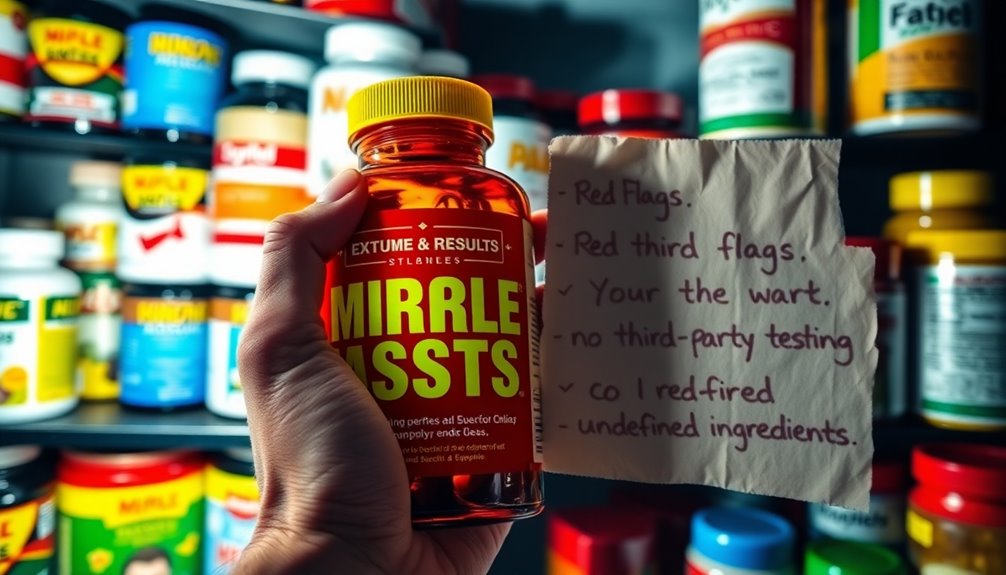
How can you tell if a supplement brand is exaggerating its claims? Look for common red flags in their marketing tactics.
If you see phrases like “miracle cure” or “guaranteed results,” it’s a warning sign. Brands often play on consumer psychology, using testimonials and flashy graphics to create an illusion of effectiveness.
Be cautious of products that promise quick fixes or extreme benefits without scientific backing. If a brand focuses more on hype than on detailed information about ingredients or research, it’s likely overstating its claims.
Always do your homework; check for third-party testing and credible endorsements.
When in doubt, trust brands that prioritize transparency and provide clear, factual information over sensational marketing. Your health deserves better than empty promises.
Understanding Ingredient Transparency
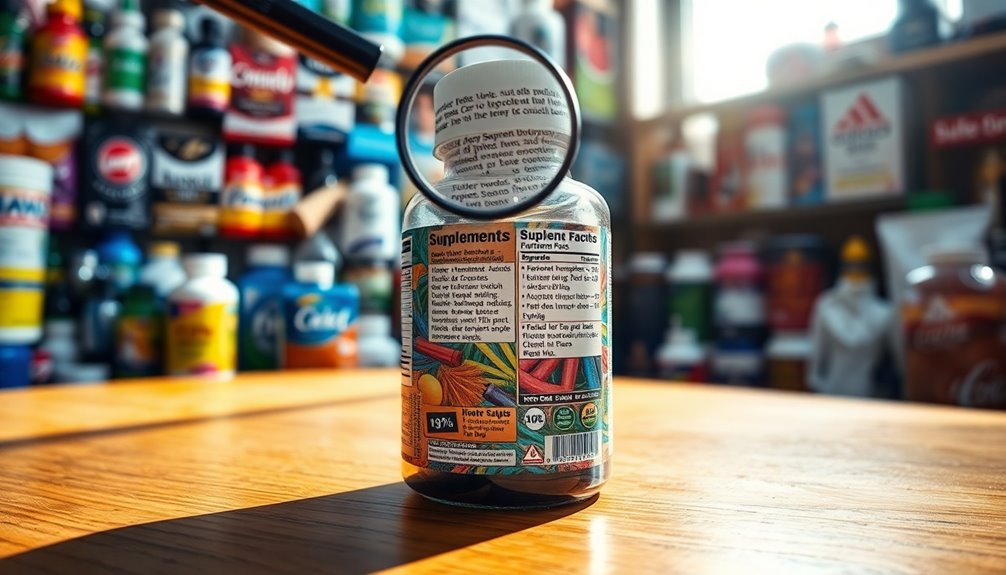
When you check supplement labels, you need to scrutinize every ingredient listed.
Look for products that undergo third-party testing to guarantee safety and quality. This transparency can help you spot brands that prioritize your health over profits.
Ingredient Label Scrutiny
Understanding ingredient transparency is essential for anyone looking to choose safe and effective supplements. Start by scrutinizing the ingredient label.
Check for clear information on ingredient sourcing—where the ingredients come from can reveal a lot about quality. Labels should specify whether they use natural or synthetic components.
Look for brands that provide detailed descriptions and avoid vague terms. Authenticity is key; if a label claims to contain a specific ingredient, verify it’s listed in the right amounts.
Be wary of proprietary blends that obscure individual ingredient quantities. If a brand isn’t open about its sourcing or label authenticity, it’s a red flag.
Your health deserves clear and honest information, so choose wisely!
Third-Party Testing Importance
While you might find a supplement brand boasting high-quality ingredients, it’s essential to confirm those claims are backed by third-party testing. This process guarantees quality assurance and verifies that the ingredients meet industry standards.
Look for lab certifications that indicate rigorous testing protocols were followed, confirming the product’s potency and purity. Third-party testing enhances supplement integrity, giving you confidence that what’s on the label matches what’s in the bottle.
When brands invest in independent testing, it shows their commitment to transparency and consumer confidence. Don’t just take their word for it; demand proof that supports their claims.
This way, you can make informed choices and avoid falling for fake or overhyped supplements.
The Role of Third-Party Testing
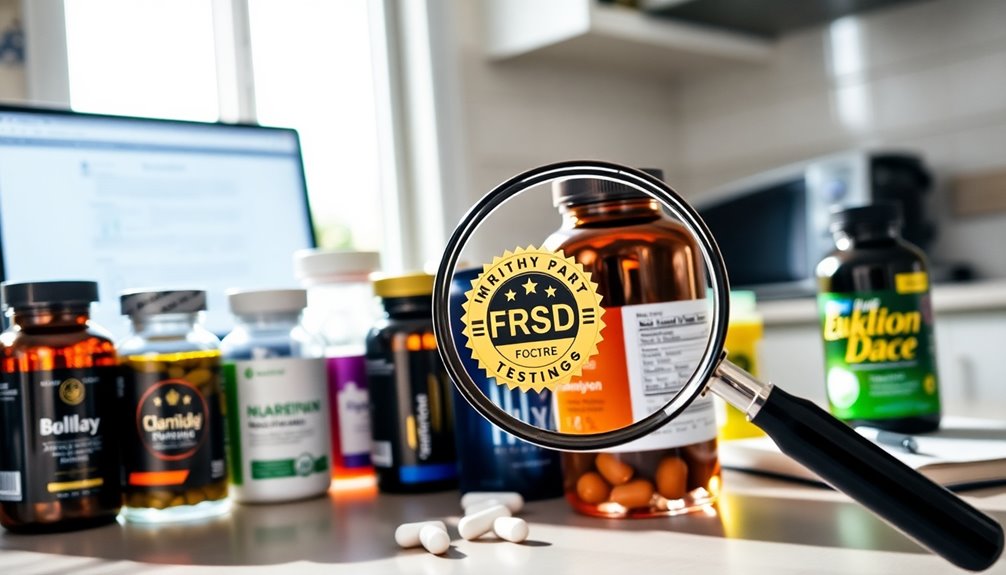
When it comes to supplements, third-party testing plays an essential role in ensuring product quality and safety.
You’ll want to look for certifications that indicate a product meets established standards. Knowing how to recognize trustworthy labs can help you make informed choices and avoid fake brands.
Importance of Transparency
Transparency is essential in the supplement industry, especially since consumers deserve to know exactly what they’re putting into their bodies. When brands openly share their ingredient sourcing, you can trust that they’re committed to quality.
Look for companies that disclose where their ingredients come from and how they’re processed; this reflects ethical practices that prioritize your health. Third-party testing adds another layer of assurance, confirming that the product contains what it claims without harmful contaminants.
If a brand hesitates to provide this information, it’s a red flag. By choosing transparent brands, you’re not just protecting your health; you’re also supporting ethical practices in the industry, encouraging better standards for everyone.
Always prioritize clarity and honesty in your supplement choices.
Certification Standards Explained
Third-party testing is a crucial step in guaranteeing the quality and safety of supplements. It verifies that products meet certain standards, making it easier for you to trust what you’re buying.
Different certification types indicate compliance with various safety and efficacy criteria established by regulatory bodies.
Here are some key points to reflect on:
- NSF International: Guarantees products are free from harmful levels of contaminants.
- USP Verified: Confirms that supplements contain the ingredients listed on the label in the declared potency and amounts.
- Informed-Sport: Ensures that products are tested for banned substances, making them safe for athletes.
Recognizing Trustworthy Labs
Choosing supplements certified by reputable organizations is only part of the equation; knowing which labs conduct the testing is equally important.
You should look for labs with proper lab accreditation and recognized lab certifications. These labs follow strict testing protocols that guarantee quality assurance and regulatory compliance. They also focus on ingredient sourcing and scrutinizing manufacturing practices, which adds to their research credibility.
When you see a supplement that’s been third-party tested by a trustworthy lab, you can feel confident about its purity and potency. Always check if the lab’s results are publicly available; transparency is key.
Ultimately, choosing supplements backed by reliable lab testing helps you avoid fake or overhyped brands.
Evaluating Brand Reputation and Reviews
When you’re sifting through supplement brands, evaluating their reputation and customer reviews is essential for making informed decisions. You want to guarantee the brand has credibility and positive consumer feedback.
Start by checking independent review sites and forums to gauge overall satisfaction. Look for:
- Transparency: Brands should openly share ingredient sources and manufacturing processes.
- Consistent Positive Reviews: Reliable brands will have a steady stream of favorable feedback from real customers.
- Response to Criticism: Brands that engage with negative reviews show they value customer concerns and are willing to improve.
Recognizing Celebrity Endorsements vs. Expert Opinions
How can you tell if a supplement’s endorsement is based on genuine expertise or just a celebrity’s popularity? First, consider the source. Celebrity credibility often relies on fame rather than scientific knowledge. A well-known actor may promote a product, but that doesn’t mean they understand its benefits or risks.
Next, look for expert qualifications. Are the endorsements coming from nutritionists, dietitians, or medical professionals? Their credentials matter. Genuine endorsements should include detailed explanations, not just catchy slogans.
Also, check if the expert has published research or has a solid background in the field. Ultimately, it’s crucial to differentiate between celebrity hype and informed advice to make better supplement choices for your health.
How to Research Effective Dosages?
What’s the best way to determine effective dosages for supplements? Start by looking into dosage guidelines established by reputable sources. Clinical studies often provide the most reliable information on what dosages are effective and safe.
Here are some steps to guide your research:
- Check peer-reviewed journals for clinical studies related to the supplement.
- Review dosage recommendations from health organizations and professional associations.
- Consult with healthcare professionals who can provide personalized advice based on your health needs.
Common Misleading Terms in Supplement Labeling
Have you ever noticed terms on supplement labels that sound appealing but might mislead you? Many brands use misleading adjectives like “natural,” “pure,” or “premium,” which can be vague and don’t guarantee effectiveness.
Undefined terms such as “proprietary blend” often hide the actual content and dosages, leaving you in the dark about what you’re consuming. Claims like “clinically tested” or “doctor recommended” can also be ambiguous, as they lack specifics about the study or endorsement.
Undefined terms like “proprietary blend” can obscure actual content and dosages, making it crucial to seek clarity in supplement labels.
Always scrutinize labels for these red flags, and don’t be swayed by fancy wording. By understanding these common pitfalls, you’ll make better-informed choices and avoid falling for marketing ploys that could compromise your health.
Stay vigilant and prioritize transparency in your supplement selection!
Conclusion
In the tangled web of supplement marketing, staying informed is your best defense. By tuning into red flags, seeking transparency, and prioritizing third-party testing, you can sidestep the pitfalls of overhyped brands. Remember, a well-researched choice is like a sturdy ship steering through stormy seas—it’s your lifeline to wellness. Trust your instincts, check reviews, and don’t let flashy claims cloud your judgment. With diligence, you’ll discover supplements that truly support your health journey.