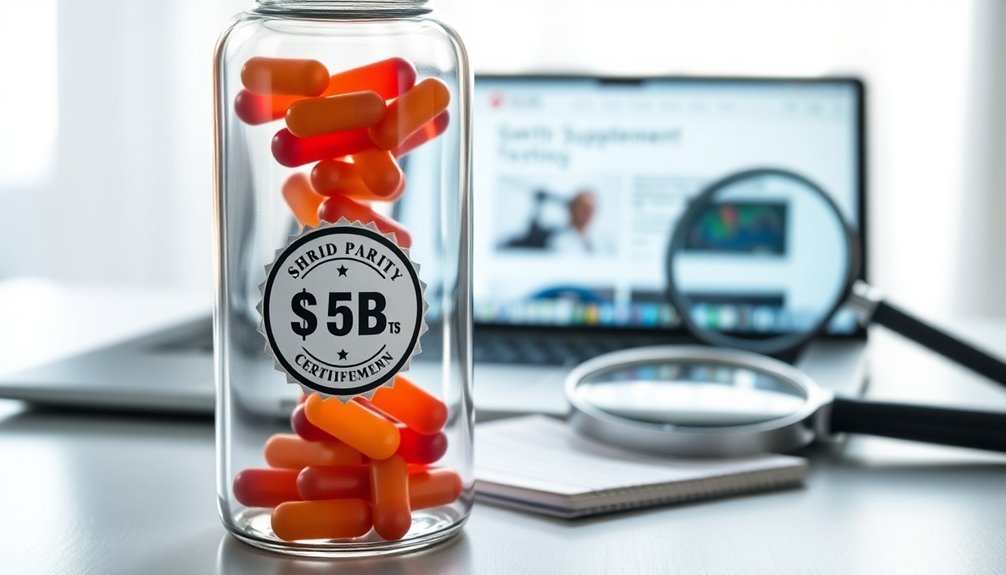
To verify supplement purity and third-party testing, start by researching brands known for transparency. Look for third-party certifications like NSF International or USP that confirm quality. Always check labels for ingredient sourcing and dosages. Don’t hesitate to ask brands about their testing methods and results. If something feels off, like unusual smells or textures, consider independent testing. Ensuring your supplements are safe is essential, and there’s more to uncover about this process.
Understanding Third-Party Testing: What It Is and Why It Matters
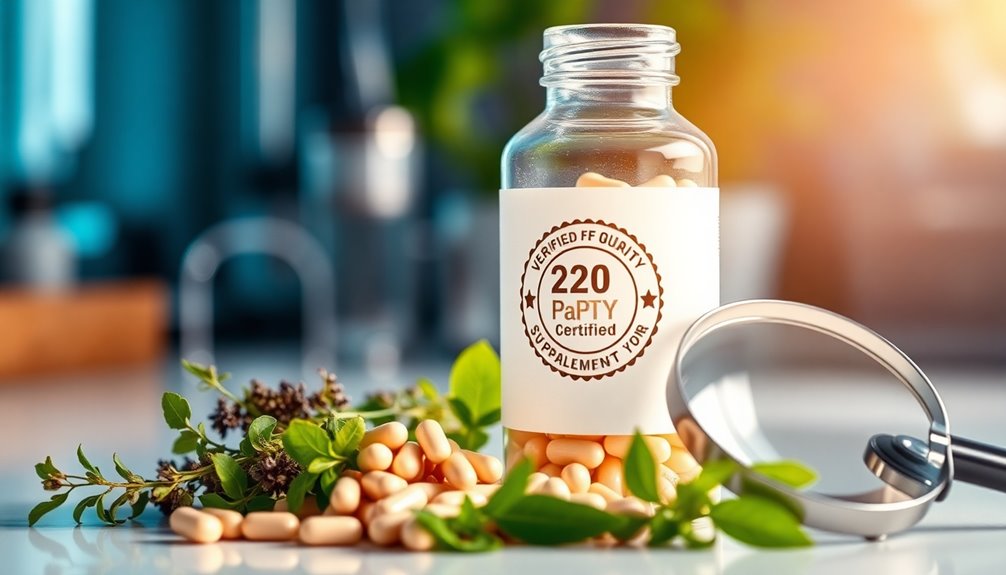
When it comes to verifying the purity of your supplements, understanding third-party testing is essential. Third-party testing involves an independent organization evaluating the product to confirm its quality and safety. This process enhances third-party credibility, assuring you that the supplement contains what it claims.
You’ll want to look for brands that adhere to rigorous testing standards, as this indicates they prioritize your health. These tests often check for contaminants and verify ingredient amounts, giving you peace of mind.
How to Identify Reputable Supplement Brands
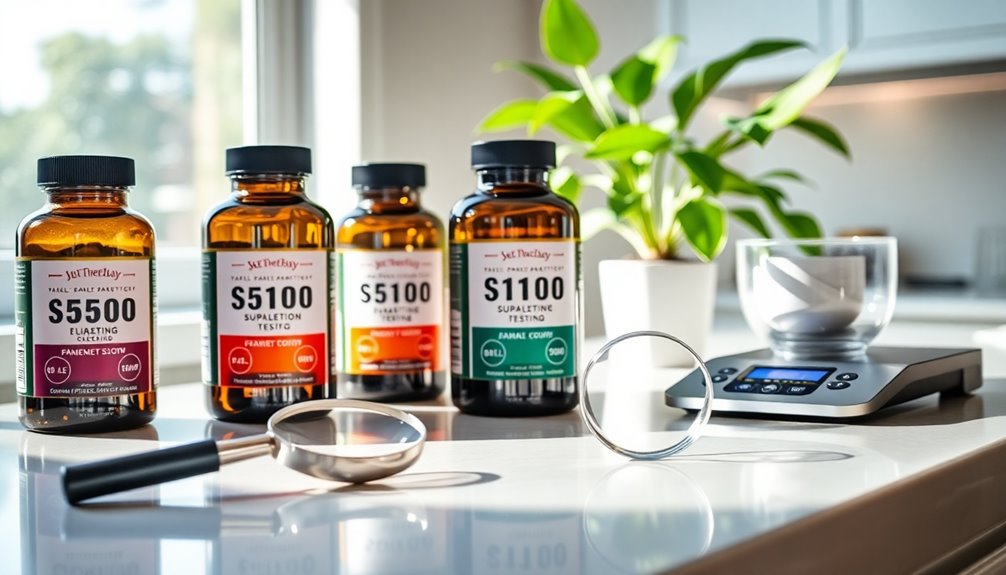
How can you spot reputable supplement brands in a crowded market? Start by researching their brand reputation. Look for companies that have positive reviews and long-standing trust within the community.
Check their website for transparency about ingredient sourcing; reputable brands should clearly disclose where their ingredients come from and how they’re tested. Certifications from third-party organizations can also be a good indicator of quality.
Additionally, examine the labels for specific details like dosages and any potential fillers. Engaging with customer service can provide insight into their commitment to quality and customer satisfaction.
Key Questions to Ask About Supplement Purity?
Identifying reputable supplement brands is just the start; next, you’ll want to dig into the purity of their products. Start by asking about their ingredient sourcing.
Where do they source their raw materials? Knowing the origin helps you assess quality.
Knowing the origin of raw materials is crucial for assessing the quality of supplements.
Also, inquire about their testing processes. Do they conduct third-party testing for contaminants? This is essential for minimizing contamination risks.
You should also ask about their production practices. Are they following Good Manufacturing Practices (GMP)?
Finally, check for transparency. Is the brand willing to share their test results?
Understanding these aspects will help you make informed choices about supplement purity, ensuring you’re investing in products that are both safe and effective.
Recognizing Quality Certifications and Labels
While traversing the supplement market, recognizing quality certifications and labels can make all the difference in ensuring you’re choosing pure and effective products.
Look for well-known quality indicators like NSF International, USP, or Informed-Sport. These certification bodies conduct rigorous testing to verify that supplements meet strict standards for purity and potency.
When you see their labels, you can trust that the product has undergone third-party testing, ensuring it’s free from harmful contaminants.
Don’t overlook seals that indicate adherence to Good Manufacturing Practices (GMP), as they reflect a commitment to quality in production.
What to Do If You Suspect Contaminated Supplements?
If you suspect your supplements might be contaminated, it’s essential to take immediate action to protect your health.
Start by identifying any red flags, such as unusual smells, colors, or textures. Stay vigilant and practice consumer awareness; research the brand’s reputation.
Contact the manufacturer to inquire about their testing methods and contamination sources. If you still feel uneasy, consider getting your supplements tested independently through a reputable lab.
Document any adverse effects you experience and consult a healthcare professional for guidance.
Ultimately, prioritize your well-being by discontinuing use and looking for certified products in the future.
Taking these steps will help you stay informed and safeguard your health against potential risks.
Conclusion
In your quest for pure supplements, remember that knowledge is your best ally. By understanding third-party testing, asking the right questions, and recognizing quality certifications, you can navigate the supplement jungle like a seasoned explorer. If you ever suspect contamination, don’t hesitate to take action—your health deserves nothing less than the best! So gear up, dive deep, and uncover the treasures of purity that await you in the vast ocean of supplements.