
Magnesium’s calming properties can drastically improve your relaxation and reduce anxiety. The best types for this purpose include Magnesium Glycinate for its high absorption and calming effects, and Magnesium Citrate, which promotes relaxation without drowsiness. You can incorporate these supplements into your routine, ideally taking 300-400 mg daily. Add magnesium-rich smoothies to your mornings or enjoy Epsom salt baths in the evening. If you want more insights on dosage and potential side effects, keep exploring!
Understanding Magnesium’s Role in Relaxation

While life can often feel overwhelming, understanding magnesium’s role in relaxation can help you find a sense of calm.
Magnesium benefits your body by regulating neurotransmitters that promote relaxation and reduce anxiety. By supporting your nervous system, it helps you handle stress more effectively.
Magnesium regulates neurotransmitters, promoting relaxation and reducing anxiety while supporting your nervous system to handle stress more effectively.
Incorporating relaxation techniques, like deep breathing or mindfulness, can enhance magnesium’s calming effects. When you focus on your breath or practice meditation, you’ll notice how magnesium aids your body in unwinding.
By combining these techniques with adequate magnesium intake, you can create a powerful routine for stress relief. Remember, it’s not just about the supplements; it’s about fostering a lifestyle that embraces calm and tranquility.
Prioritize magnesium, and watch your relaxation levels soar!
The Best Types of Magnesium Supplements for Relaxation

Choosing the right magnesium supplement can make a significant difference in your relaxation routine. Different magnesium forms have varying absorption rates, so it’s essential to pick one that suits your needs.
Here are four top choices:
- Magnesium Glycinate: Known for its high absorption and calming effects, it’s perfect for easing anxiety.
- Magnesium Citrate: This form is great for digestion and promotes relaxation without causing drowsiness.
- Magnesium Threonate: Ideal for cognitive function, it helps improve mental clarity while relieving stress.
- Magnesium Malate: Offers energy support and muscle relaxation, helping to relieve tension after a long day.
Finding the right one can truly enhance your relaxation experience, so choose wisely!
How to Choose the Right Magnesium Supplement for You?
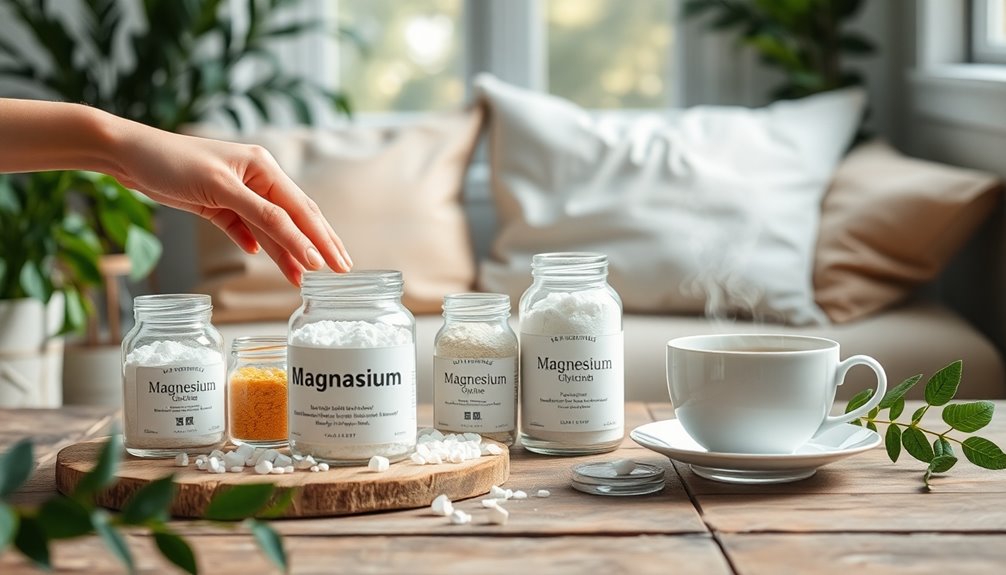
How can you determine which magnesium supplement best fits your needs? Start by considering the magnesium sources available, such as magnesium citrate, glycinate, or oxide, each having unique benefits.
If you’re looking for relaxation, magnesium glycinate is often recommended for its calming effects.
Next, pay attention to dosage recommendations; most adults require 300-400 mg daily, but individual needs can vary. It’s wise to consult with a healthcare professional to find the right dosage for your specific situation.
Additionally, consider your lifestyle and dietary habits; if you consume magnesium-rich foods, you might need a lower supplement dosage.
Tips for Incorporating Magnesium Into Your Daily Routine
Incorporating magnesium into your daily routine can be simple and enjoyable.
Start your mornings with a magnesium-rich smoothie or wind down with an Epsom salt bath in the evening.
Plus, paying attention to when you take your supplements can enhance their benefits.
Morning Magnesium Smoothies
Are you looking for a delicious way to boost your magnesium intake in the morning? Morning smoothies are a fantastic option for enjoying magnesium benefits while kickstarting your day.
Here are four easy ingredients you can blend into your morning routine:
- Spinach: Packed with magnesium and other nutrients, it’s a great base.
- Banana: Not only tasty, but it also adds creaminess and natural sweetness.
- Almonds: Toss in almond butter or almond milk for a rich source of magnesium.
- Cacao powder: Indulge in the rich flavor and enjoy its magnesium boost.
With these ingredients, you can create a vibrant smoothie that elevates your mood and supports your health—making your mornings not just better, but also magnesium-rich!
Evening Epsom Salt Baths
If you’re looking to unwind after a busy day, consider incorporating evening Epsom salt baths into your routine.
Epsom salt benefits include reducing stress and promoting muscle relaxation, making it an excellent addition to your relaxation techniques. Start by filling your tub with warm water and adding about two cups of Epsom salt. Soak for at least 15-20 minutes to allow your body to absorb the magnesium.
To enhance your experience, consider dimming the lights and adding calming scents like lavender. You’ll find that the soothing warmth combined with the magnesium can help ease your mind and body.
Make this a regular practice, and you might notice improved sleep and overall well-being.
Supplement Timing Tips
To maximize the benefits of magnesium supplements, timing can play a crucial role in your daily routine. By using effective timing strategies, you’ll promote ideal absorption and relaxation. Here are some tips to keep in mind:
- Evening Dose: Take magnesium in the evening to enhance relaxation and improve sleep quality.
- With Meals: Pair magnesium with meals to boost absorption and minimize digestive discomfort.
- Hydration: Stay hydrated throughout the day; water helps your body absorb magnesium effectively.
- Consistency: Establish a daily routine; consistency guarantees your body receives magnesium regularly for lasting benefits.
Incorporating these timing strategies can make a significant difference in how you feel, helping you relax and unwind more easily.
Potential Side Effects and Considerations With Magnesium Use
While magnesium is often praised for its relaxing properties, it’s important to be aware of potential side effects and considerations before incorporating it into your routine.
One major concern is magnesium overdose, which can lead to serious health issues like low blood pressure and irregular heartbeat. You might also experience digestive issues, such as diarrhea or stomach cramps, if you take too much.
Additionally, magnesium can interact with certain medications, including antibiotics and diuretics, which may affect their efficacy. If you have kidney health concerns, be cautious, as impaired kidneys struggle to eliminate excess magnesium, increasing the risk of toxicity.
Always consider these factors to guarantee your magnesium supplementation is safe and beneficial for you.
When to Consult a Healthcare Professional Regarding Magnesium?
When should you consider reaching out to a healthcare professional about magnesium? If you experience any magnesium deficiency symptoms, it’s essential to consult a healthcare provider.
Here are some situations where you should seek help:
- Persistent fatigue – If you feel tired all the time, it might be a sign of magnesium deficiency.
- Muscle cramps – Frequent cramps or spasms can indicate that you need more magnesium.
- Mood changes – If you’re feeling unusually anxious or depressed, low magnesium levels could be a factor.
- Sleep disturbances – Struggling to relax or sleep well? Magnesium plays a critical role in sleep regulation.
Don’t hesitate to seek a healthcare provider consultation; your well-being is important!
Conclusion
Incorporating magnesium into your daily routine can be a game-changer for relaxation, like a soothing balm for a restless mind. With various types available, choosing the right one for you is essential. Remember to listen to your body and adjust your intake as needed. As you begin this journey to tranquility, don’t hesitate to consult a healthcare professional if you have questions or concerns. Embrace the calm that magnesium can bring to your life!