When it comes to antioxidants, matcha outshines green tea extract. Matcha contains considerably higher levels of antioxidants, particularly catechins like EGCG, because it uses whole tea leaves. This means you get a more potent health boost with matcha compared to the often lower concentrations found in green tea extract. If you’re looking for maximum antioxidant benefits, matcha is the way to go. Find out what other health advantages each option offers next.
What Are Matcha and Green Tea Extract?
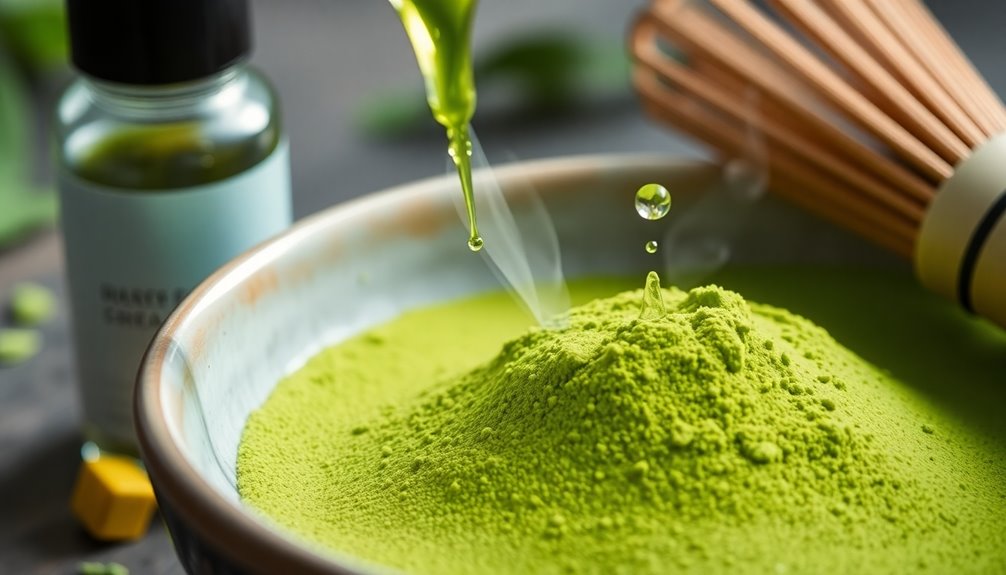
Matcha and green tea extract are two popular forms of green tea, each offering unique benefits and flavors.
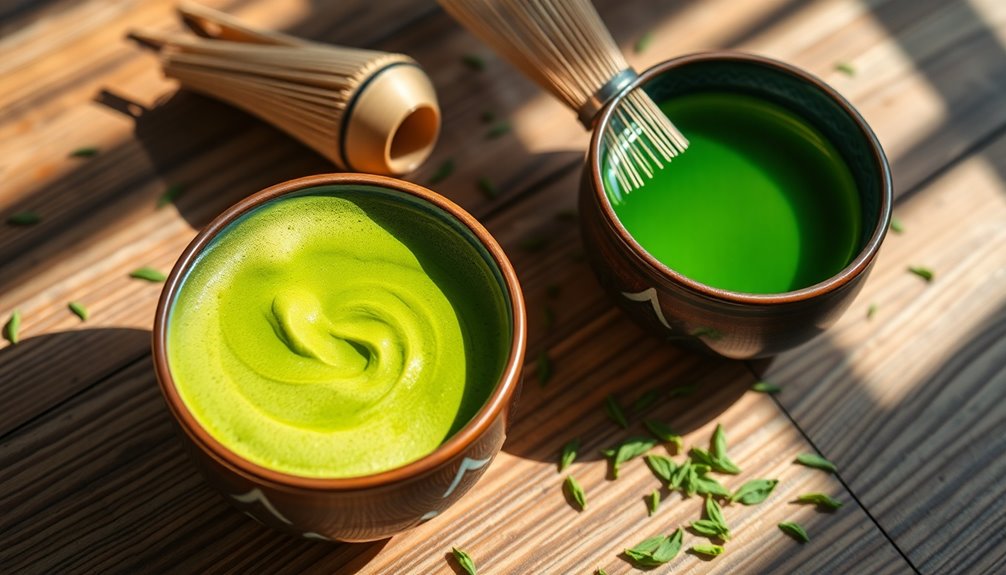
When you enjoy matcha, you’re consuming finely ground green tea leaves, which means you get a potent source of nutrients and antioxidants. The matcha benefits include increased energy, improved focus, and enhanced metabolism. It’s also rich in L-theanine, promoting relaxation without drowsiness.
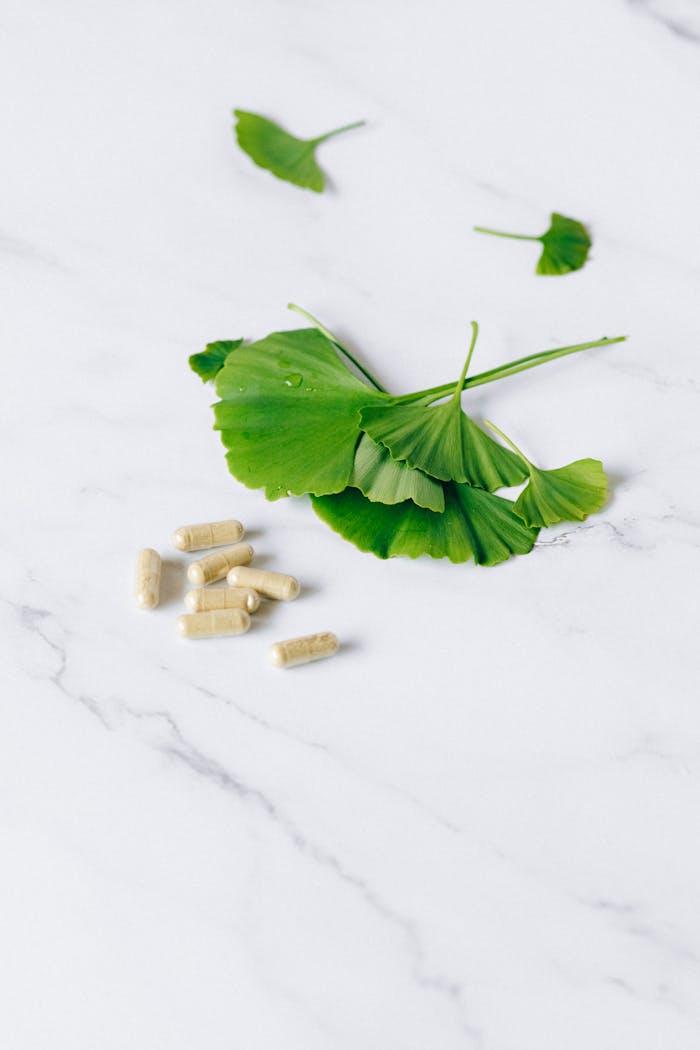
On the other hand, green tea extract is more concentrated, making it easier to incorporate into supplements or skincare products. It retains many health benefits of traditional green tea, including promoting heart health and aiding weight loss.
Green tea extract offers a concentrated source of benefits, perfect for supplements and skincare, supporting heart health and weight management.
Both options provide you with an excellent way to enjoy the advantages of green tea, so consider which suits your lifestyle best.
How Are Antioxidants Measured in These Teas?
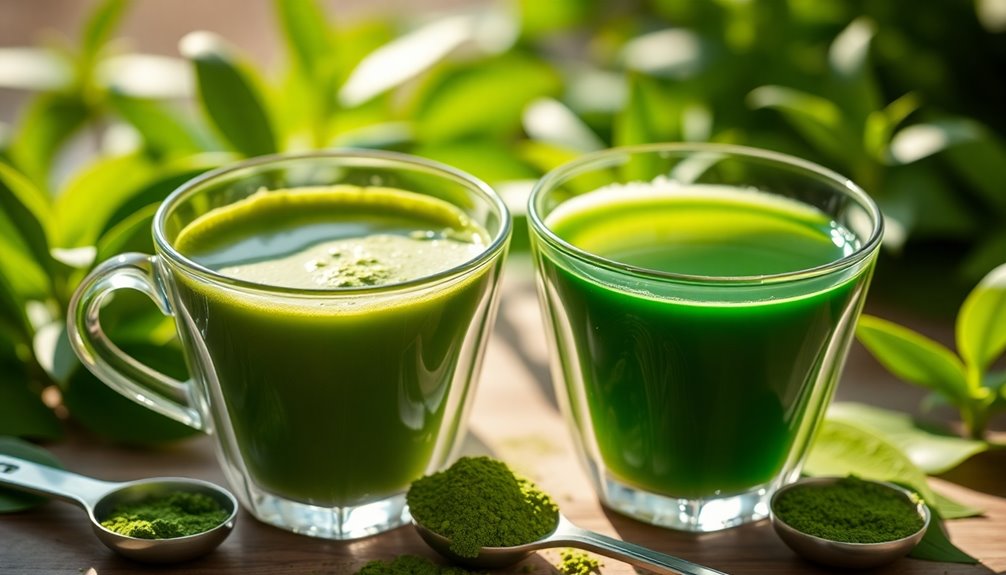
Antioxidants play a significant role in the health benefits of both matcha and green tea extract.
To understand their potency, various antioxidant measurement techniques are used. Here are some common testing methods:
- ORAC (Oxygen Radical Absorbance Capacity): Measures the ability to absorb free radicals.
- DPPH (2,2-Diphenyl-1-picrylhydrazyl): Assesses free radical scavenging activity.
- FRAP (Ferric Reducing Antioxidant Power): Evaluates the antioxidant’s ability to reduce ferric to ferrous ions.
- TEAC (Trolox Equivalent Antioxidant Capacity): Compares the antioxidant capacity to Trolox, a vitamin E analog.
- HPLC (High-Performance Liquid Chromatography): Separates and quantifies individual antioxidant compounds.
These methods provide insights into the antioxidant potential of matcha and green tea extract, helping you make informed choices.
Comparing the Antioxidant Content of Matcha and Green Tea Extract
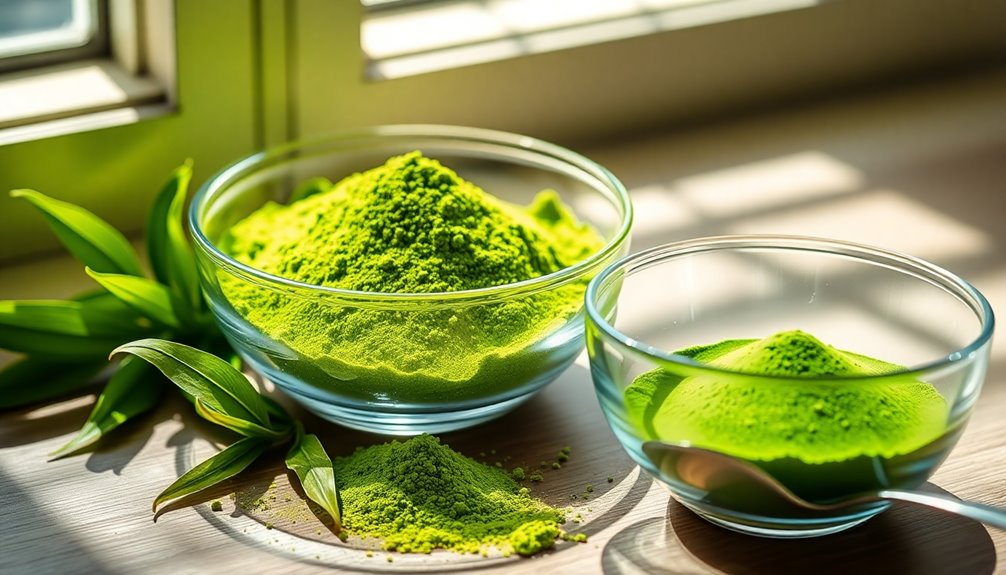
When considering the health benefits of these popular beverages, you’ll find that matcha generally boasts higher antioxidant content compared to green tea extract.
This antioxidant comparison reveals that matcha contains more catechins, particularly EGCG, which are linked to numerous health benefits. Since matcha is made from whole tea leaves, you consume more of these beneficial compounds than you’d with green tea extract, which often has lower concentrations of antioxidants.
The health implications are significant; higher antioxidant levels can contribute to better protection against oxidative stress and inflammation in your body. By choosing matcha, you might enhance your overall wellness, making it a powerful addition to your routine compared to the less potent green tea extract.
What Other Health Benefits Do Matcha and Green Tea Extract Offer?
Beyond their impressive antioxidant profiles, both matcha and green tea extract offer a range of health benefits that can enhance your well-being.
You’ll find that incorporating these into your routine can lead to noticeable improvements in various aspects of your health:
- Provides an energy boost without the jitters
- Supports weight loss by increasing metabolism
- Enhances mental clarity and focus
- Promotes heart health and reduces cholesterol levels
- Helps reduce stress and improve mood
Which Should You Choose for Your Health Goals?
How do you decide between matcha and green tea extract for your health goals?
It really depends on what you’re aiming for. If you’re looking for a boost in energy and focus, matcha might be your go-to. Its unique blend of caffeine and L-theanine can enhance mental clarity.
On the other hand, if you’re after concentrated health benefits, green tea extract packs a powerful antioxidant punch in a smaller dose, making it convenient for daily supplementation.
Consider your personal goals—whether you need an energy lift during workouts or a quick antioxidant boost in your routine.
Both options offer impressive health benefits, so choose one that aligns best with your lifestyle and objectives for ideal results.
Conclusion
In the end, choosing between matcha and green tea extract really depends on your personal health goals. It’s fascinating how both options can enhance your well-being in different ways. Imagine sipping a warm cup of matcha while feeling its calming effects or boosting your energy with a green tea extract supplement. Whichever you pick, you’re not just savoring a beverage; you’re embracing a lifestyle rich in antioxidants and health benefits. Your journey to wellness starts with that simple choice!