Probiotics and prebiotics both play distinct but complementary roles in maintaining gut health. Probiotics are beneficial bacteria that support digestion and boost immunity, while prebiotics are fibers that feed these good bacteria, enhancing their function. If you’re experiencing digestive issues or a weakened immune system, you might benefit from both. Consuming a balanced diet that includes fermented foods and fiber-rich options can maximize their effectiveness. There’s more to discover about how they work together for your health.
What Are Probiotics and How Do They Work?
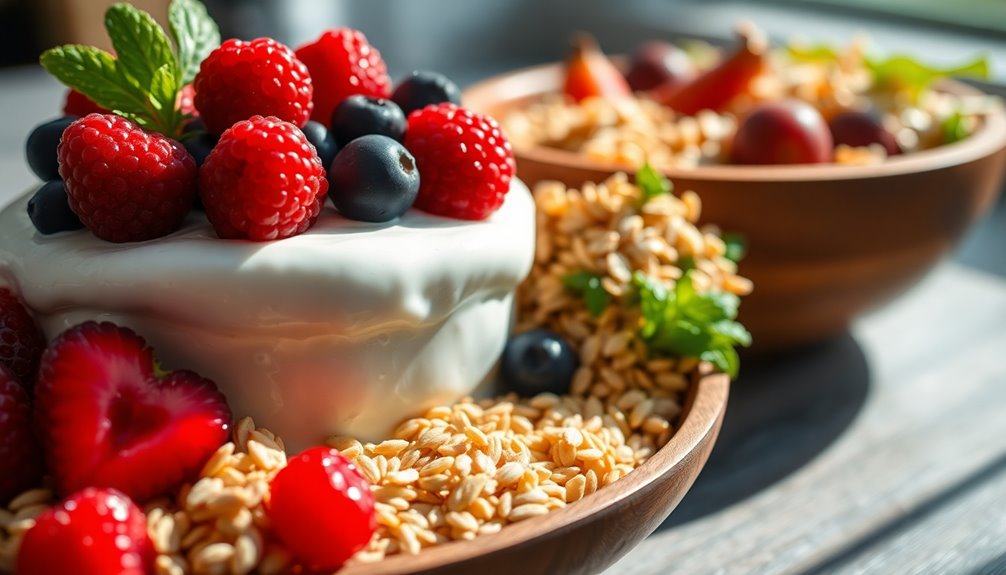
Probiotics are live microorganisms, often referred to as “good bacteria,” that provide health benefits when consumed in adequate amounts. They play an essential role in maintaining a healthy gut microbiome, which is important for overall well-being.
When you ingest probiotics, they exert various probiotic mechanisms, such as balancing the gut flora and inhibiting harmful bacteria. This process not only supports digestion but also strengthens your immune system.
Understanding Prebiotics and Their Role in Gut Health

Prebiotics are non-digestible fibers that feed the beneficial bacteria in your gut.
You can find them in foods like garlic, onions, and bananas.
Definition of Prebiotics
While many people focus on probiotics for gut health, prebiotics play an important role in supporting your digestive system. Prebiotics are non-digestible fibers found in certain foods that nourish the beneficial bacteria in your gut.
By consuming prebiotic sources, like garlic, onions, and bananas, you help promote the growth of these good bacteria. This, in turn, enhances your gut flora and contributes to better digestion.
The prebiotic functions include improving gut barrier integrity, boosting mineral absorption, and even supporting immune health. Incorporating prebiotics into your diet is a simple yet effective way to enhance your overall well-being.
Sources of Prebiotics
Numerous foods can provide you with essential prebiotics to support your gut health. One of the best sources is bananas, particularly when they’re still a bit green. They contain a type of fiber called inulin, which helps nourish the beneficial bacteria in your gut.
Garlic is another fantastic option; it’s not only flavorful but packed with prebiotic properties. Including garlic in your meals can enhance the growth of healthy gut flora.
Other great sources include onions, asparagus, and whole grains. By incorporating these foods into your diet, you’ll help your gut thrive and maintain a balanced microbiome.
Benefits for Gut Health
A thriving gut is essential for your overall health, and prebiotics play an important role in achieving that balance. These non-digestible fibers serve as food for the beneficial bacteria in your gut microbiome.
By nourishing these good bacteria, prebiotics help maintain a healthy digestive balance, which can improve digestion, enhance nutrient absorption, and support your immune system. When your gut microbiome thrives, you’re less likely to experience digestive issues like bloating or constipation.
Additionally, a well-balanced gut can contribute to better mental health, as emerging research highlights the gut-brain connection. Including prebiotics in your diet can be a simple yet effective way to boost your gut health and overall well-being.
The Unique Benefits of Probiotics for Digestive Health
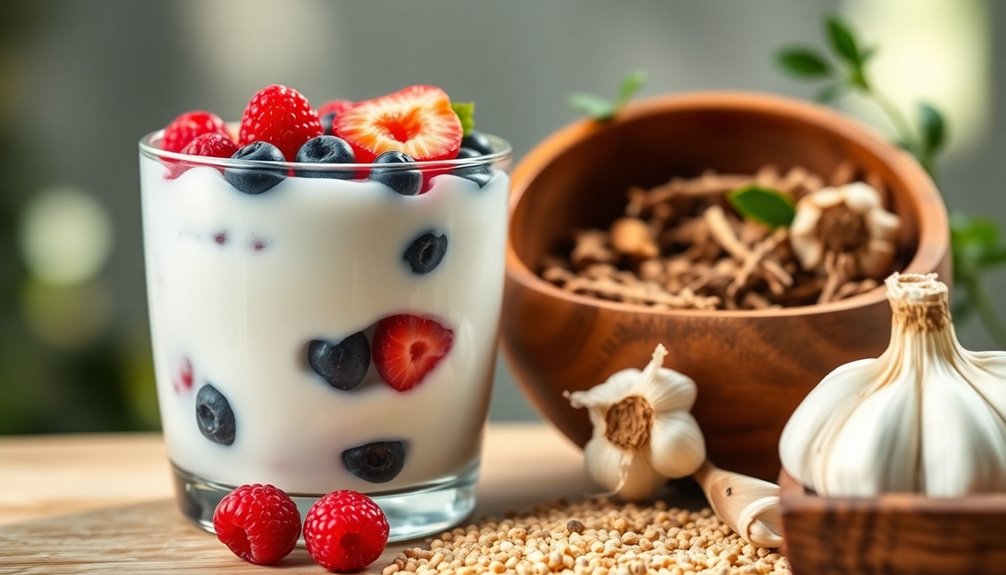
Probiotics offer remarkable benefits for your digestive health, making them an essential addition to your diet. These live microorganisms, often referred to as beneficial bacteria, help maintain a balanced gut microbiome.
When you incorporate probiotics into your daily routine, you’re fostering an environment that supports digestion and nutrient absorption. They can alleviate issues like bloating, gas, and diarrhea by restoring harmony in your gut.
Additionally, probiotics play a vital role in preventing the growth of harmful bacteria that can disrupt your digestive system. By enhancing your gut health, you’re not just improving digestion; you’re also boosting your overall well-being.
How Do Prebiotics Support and Enhance Probiotic Function?
While probiotics are crucial for gut health, prebiotics play an important role in enhancing their effectiveness.
Prebiotics serve as food for probiotics, allowing them to thrive and multiply in your gut. Through a process called prebiotic fermentation, these fibers are broken down by beneficial bacteria, producing short-chain fatty acids that contribute to gut health.
This interaction creates a powerful synbiotic synergy, where the combination of prebiotics and probiotics maximizes their health benefits. By including prebiotics in your diet, you’re not just supporting your gut flora; you’re also ensuring that probiotics can function at their best.
Signs You Might Need More Probiotics in Your Diet
Ever wondered if your gut health could use a boost? If you’re experiencing digestive issues like bloating, gas, or irregular bowel movements, it might be time to think about adding more probiotics to your diet.
Frequent illnesses or infections can also signal that your immune system needs support, as probiotics play an essential role in immune function.
Frequent illnesses may indicate your immune system needs a boost; probiotics are vital for supporting immune function.
If you’ve recently taken antibiotics, your gut flora might be out of balance, making probiotic sources like yogurt, kefir, or sauerkraut beneficial.
Alternatively, you might find probiotic supplements a convenient option to restore your gut health.
Keep an eye out for these signs, and don’t hesitate to explore ways to enrich your diet with probiotics for a healthier gut!
Indicators That You Could Benefit From Additional Prebiotics
Could your gut be craving more prebiotics? If you’re experiencing bloating, irregular bowel movements, or low energy, it might be time to reflect on adding more prebiotic foods to your diet.
These foods, like bananas, onions, and garlic, help nourish the beneficial bacteria in your gut, promoting better digestive balance. If you’ve recently taken antibiotics, your gut flora may need a boost, too; prebiotics can help restore that balance.
Additionally, if you’re not consuming a variety of fruits and vegetables, it’s likely you’re missing out on essential prebiotic fibers.
Listen to your body—if you’ve got cravings for fiber-rich foods, it could be a sign that your gut needs extra support for ideal health.
Should You Take Both Probiotics and Prebiotics?
Considering both probiotics and prebiotics can enhance your gut health, it’s worth exploring how they work together.
Probiotics introduce beneficial bacteria, while prebiotics feed those bacteria, creating a balanced environment.
Understanding Probiotics Benefits
Probiotics offer a range of health benefits that can greatly enhance your well-being, especially when paired with prebiotics. By incorporating specific probiotic strains into your diet, you can improve digestion and boost your immune system.
These beneficial bacteria help break down food more effectively, working alongside digestive enzymes to guarantee your body absorbs nutrients efficiently. Additionally, probiotics may alleviate gastrointestinal issues, such as bloating and constipation, promoting a healthier gut environment.
You might also experience increased energy levels and improved mental clarity as a result of better gut health. Ultimately, taking probiotics can be a powerful step toward enhancing your overall wellness, making it worthwhile to reflect on adding them to your daily routine.
Exploring Prebiotics Role
While both probiotics and prebiotics play essential roles in gut health, understanding how they work together can help you make informed choices about your nutrition.
Prebiotic fibers act as food for beneficial bacteria in your gut microbiome, promoting their growth and activity. By incorporating prebiotics into your diet, you can enhance the effectiveness of probiotics and support overall gut health.
Consider adding these prebiotic-rich foods to your meals:
- Garlic and onions
- Bananas and apples
- Whole grains like oats
Taking both probiotics and prebiotics can create a thriving environment for your gut microbiome, ultimately leading to better digestion and immune function.
Balancing Both For Health
Incorporating both probiotics and prebiotics into your diet can markedly enhance your gut health. Probiotics introduce beneficial bacteria to your gut microbiome, while prebiotics serve as food for these good bacteria.
This dietary balance is essential for maintaining a thriving gut environment. By consuming a variety of fermented foods like yogurt, kefir, and sauerkraut, along with fiber-rich foods like bananas, onions, and garlic, you’ll support both aspects of gut health.
This synergy not only boosts digestion but also strengthens your immune system and improves overall well-being. So, consider making both probiotics and prebiotics a staple in your daily meals.
Your gut microbiome will thank you, leading to better health outcomes in the long run.
Tips for Incorporating Probiotics and Prebiotics Into Your Daily Routine
To boost your gut health effectively, you can easily add both probiotics and prebiotics to your daily routine.
Start with some simple meal planning and dietary adjustments to incorporate these beneficial elements seamlessly:
- Choose fermented foods: Add yogurt, kefir, sauerkraut, or kimchi to your meals for a probiotic boost.
- Include fiber-rich foods: Incorporate bananas, onions, garlic, and whole grains to provide prebiotics that nourish your gut bacteria.
- Snacks and smoothies: Blend prebiotic-rich fruits and veggies into your smoothies or snack on nuts and seeds with added probiotics.
Conclusion
In the battle for gut health, probiotics and prebiotics are your dynamic duo, each playing an essential role. While probiotics introduce beneficial bacteria, prebiotics fuel them, creating a thriving gut environment. By incorporating both into your diet, you’re not just maintaining balance; you’re cultivating a flourishing ecosystem. So, whether you choose yogurt or fiber-rich foods, remember that together they’re a powerhouse for your digestive health. Don’t miss out on the magic of this gut-friendly partnership!