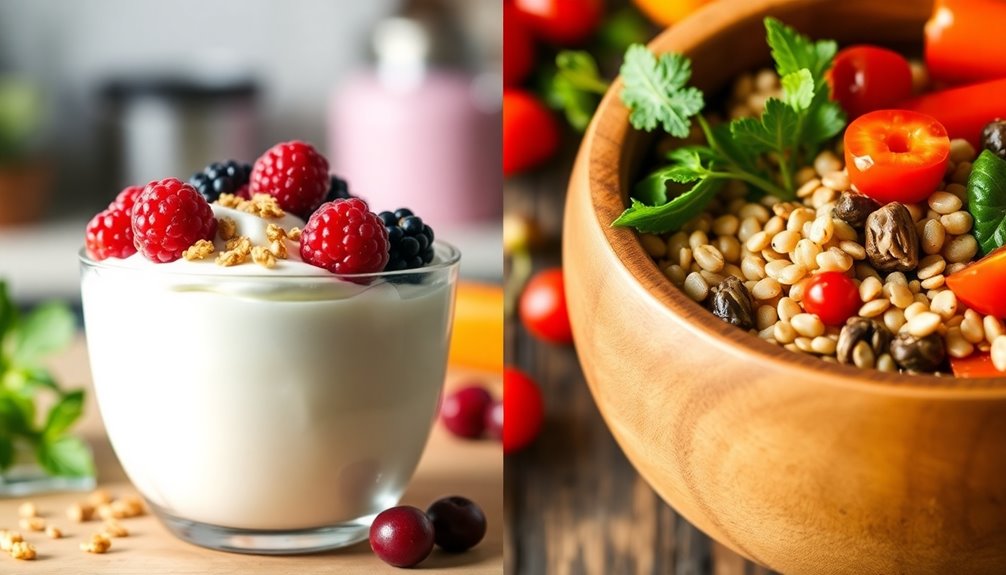
Probiotics are live bacteria that boost your gut health, while prebiotics are non-digestible fibers that nourish these beneficial microbes. Probiotics help balance your gut microbiota and improve digestion, while prebiotics promote a thriving environment for these good bacteria. Both play essential roles in your digestive wellness. Side effects can occur with each, so it’s important to choose wisely. There’s much more to uncover about how they work together for your overall health.
What Are Probiotics and Their Benefits?
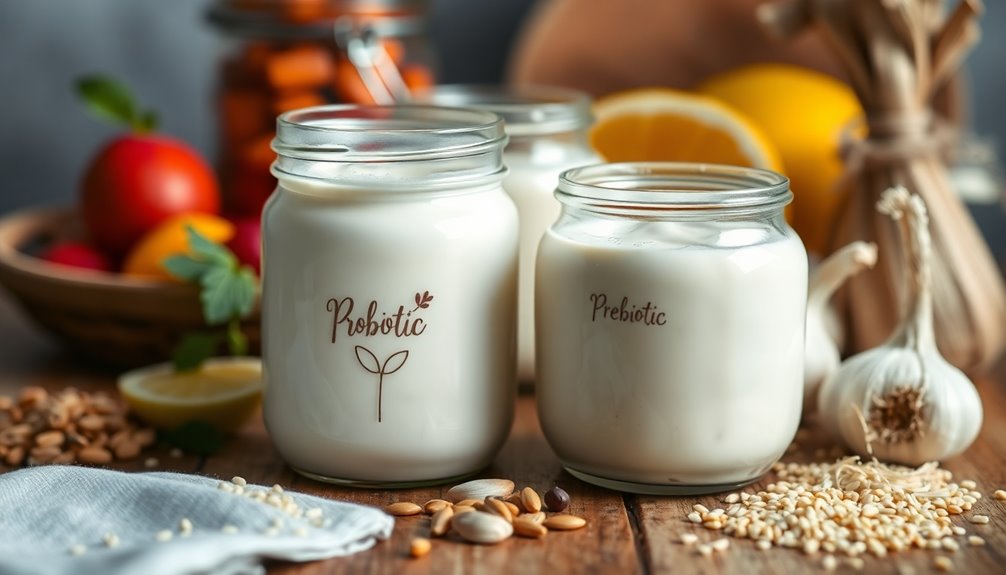
Probiotics are live microorganisms that can offer a range of health benefits, especially for your digestive system. These friendly bacteria help balance your gut microbiota, promoting a healthier environment in your intestines.
Different probiotic strains, like Lactobacillus and Bifidobacterium, each have unique benefits, such as reducing bloating or improving lactose digestion. When you include probiotics in your diet, whether through supplements or fermented foods, you support the growth of beneficial bacteria.
This balance can enhance nutrient absorption, boost your immune system, and even improve your mood. By prioritizing probiotics, you’re taking an essential step toward better digestive health and overall well-being.
Understanding Prebiotics and How They Work
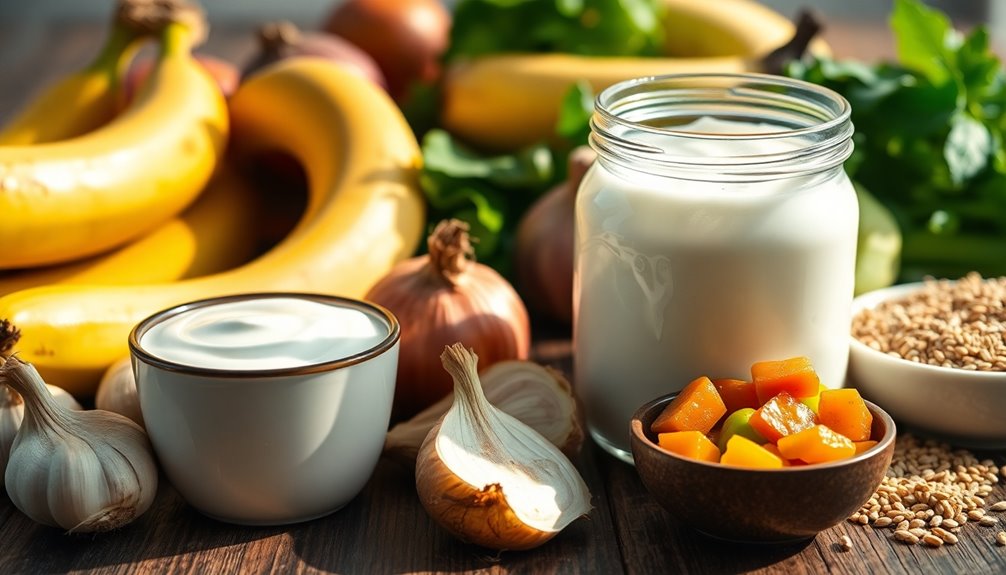
Prebiotics play an essential role in supporting your gut health by serving as food for beneficial bacteria. These non-digestible fibers stimulate the growth and activity of your gut microbiome, promoting a balanced environment.
When you consume prebiotics, they undergo prebiotic fermentation in your intestines, breaking down into short-chain fatty acids that nourish your gut lining and enhance immune function.
Common sources of prebiotics include foods like garlic, onions, bananas, and whole grains. By incorporating these into your diet, you help your beneficial bacteria thrive, which can improve digestion and reduce inflammation.
The Role of Probiotics in Gut Health

Probiotics play an essential role in maintaining your gut health by supporting a balanced microbiome.
You’ll find various types of probiotics in foods and supplements, each offering unique benefits.
Understanding these options can help you make informed choices for your digestive well-being.
Benefits of Probiotics
When it comes to maintaining a healthy gut, incorporating beneficial bacteria can make a significant difference. Probiotics play an essential role in supporting your gut microbiome, promoting digestive wellness and enhancing nutrient absorption.
By balancing gut bacteria, they can also help reduce inflammation, which is critical for overall health. Additionally, probiotics offer immune support, keeping you better equipped to fight off illnesses.
You might even notice improvements in your mood, as a healthy gut can positively influence mental well-being. Plus, they can contribute to skin health and assist with weight management.
With these benefits, adding probiotics to your routine can lead to a happier, healthier you.
Types of Probiotics
Understanding the different types of probiotics can empower you to make informed choices for your gut health. Probiotics come in various strains, each offering unique benefits.
Lactic acid bacteria, found in yogurt types and fermented foods, play an essential role in maintaining balanced gut flora. These beneficial bacteria support digestive health and enhance immune support.
Common probiotic strains include Lactobacillus and Bifidobacterium, which can help with issues like bloating and irregularity. By incorporating these probiotics into your diet, you can foster a healthier gut environment.
Whether you prefer yogurt, kefir, or supplements, knowing the types of probiotics available will help you choose products that best meet your health needs. Make probiotics a part of your daily routine!
Sources of Probiotics
Incorporating probiotics into your diet is key to enhancing gut health. You can find them in various sources.
Fermented foods like yogurt varieties and kefir made with kefir grains are excellent dairy options. If you prefer non-dairy sources, try fermented vegetables or kombucha, which offers unique kombucha benefits.
Probiotic supplements, including probiotic capsules, can also help boost your gut flora. Many health claims surround these products, so it’s important to choose those backed by research.
How Do Prebiotics Support Probiotics?
Prebiotics play an essential role in supporting probiotics by enhancing their growth and activity in your gut.
By providing the right kind of fuel, they help these beneficial bacteria thrive, which in turn boosts your overall gut health.
Understanding this relationship can empower you to make better choices for your digestive wellness.
Enhancing Probiotic Growth
While many people focus on the benefits of probiotics for gut health, it’s important to recognize that prebiotics play an essential role in enhancing their effectiveness.
Prebiotics are non-digestible fibers that serve as food for probiotics, promoting their growth and activity. When you consume prebiotics, they stimulate probiotic fermentation in your gut, creating an environment where beneficial bacteria can thrive.
This process helps balance your gut flora, leading to improved digestion and overall wellness. By including prebiotic-rich foods like garlic, onions, and bananas in your diet, you support the growth of those helpful probiotics.
Together, they work synergistically to optimize your gut health, ensuring you get the most out of your probiotic efforts.
Fueling Gut Health
Supporting the growth of probiotics is just one piece of the gut health puzzle. Prebiotics play an essential role by acting as food for these beneficial bacteria in your gut microbiome.
By incorporating fiber sources like fruits, vegetables, and whole grains into your dietary habits, you enhance digestive balance and promote gut diversity. Fermented foods also help, but without prebiotics, probiotics can struggle to thrive.
This synergy not only boosts immune support but also contributes to overall health optimization. When you prioritize both probiotics and prebiotics, you’re taking a proactive step towards a healthier gut.
Key Differences Between Probiotics and Prebiotics
Understanding the key differences between probiotics and prebiotics can greatly enhance your gut health.
Probiotics are live bacteria, often referred to as probiotic strains, that help maintain a balanced gut microbiome. They can improve digestion and boost your immune system.
On the other hand, prebiotics are non-digestible fibers that serve as food for these beneficial bacteria. Various prebiotic types, like inulin and oligosaccharides, help nourish probiotics, promoting their growth and activity in your gut.
While probiotics directly add to your gut flora, prebiotics create an environment where these bacteria can thrive.
Food Sources Rich in Probiotics
If you’re looking to boost your gut health, incorporating foods rich in probiotics into your diet is a great place to start.
These fermented foods can greatly enhance your gut flora and overall wellness. Here are some tasty options you might consider:
Fermented foods are a delicious way to boost your gut flora and enhance overall wellness.
- Yogurt varieties: Look for those with live cultures for maximum benefit.
- Kefir options: This tangy, fermented drink is packed with probiotics and digestive enzymes.
- Kombucha: Enjoy its fizzy goodness while reaping kombucha benefits for your digestion.
If you prefer convenience, probiotic supplements or probiotic capsules are available as well.
For those who opt for dairy alternatives, there are plant-based options that also provide health benefits.
Embrace these foods to support your gut health!
Best Foods for Prebiotic Intake
Incorporating prebiotic-rich foods into your diet can considerably enhance your gut health. Focus on fiber-rich foods like bananas, onions, garlic, and asparagus, which nourish beneficial gut bacteria.
Legumes, such as lentils and chickpeas, are also excellent choices, providing both fiber and protein. Whole grains like oats and barley can promote a thriving gut environment too.
To make it easier, try some gut-friendly recipes that feature these ingredients. For instance, a hearty lentil soup or a savory garlic and asparagus stir-fry can be delicious ways to boost your prebiotic intake.
How to Incorporate Both Into Your Diet
While it might seem challenging at first, blending probiotics and prebiotics into your daily meals can be simple and enjoyable. Start with some meal planning to facilitate a balanced intake. Here are a few ideas to get you going:
- Breakfast choices: Add yogurt (probiotic) and oatmeal (prebiotic) to your morning routine.
- Snack options: Try hummus (prebiotic) with kefir (probiotic) for a tasty dip.
- Smoothie additions: Blend banana (prebiotic) with a scoop of probiotic-rich yogurt for a delicious drink.
For lunch ideas, consider a salad topped with fermented veggies.
Dinner recipes can include miso soup or a stir-fry with garlic and onions.
Don’t forget hydration tips—stay hydrated to support gut health!
Potential Side Effects of Probiotics
While probiotics can offer many benefits, they might also come with some common side effects, like bloating or gas.
It’s important to remember that everyone’s body reacts differently, so you might experience varying levels of sensitivity.
Understanding these potential issues can help you make informed choices about your probiotic use.
Common Side Effects
Although probiotics are generally considered safe for most people, they can cause some side effects. You might experience digestive discomfort as your body adjusts. It’s important to pay attention to your dosage considerations, as taking too much can lead to more severe issues.
Here are some common side effects to be aware of:
- Mild bloating or gas
- Allergic reactions in sensitive individuals
- Temporary changes in bowel movements
While many people seek symptom relief through probiotics, individual responses can vary greatly. Long-term effects are still being studied, so keep in mind potential interaction risks with other medications.
Always consult a healthcare professional if you’re unsure about incorporating probiotics into your routine.
Individual Sensitivity Variations
Individual responses to probiotics can vary considerably, often due to personal health factors and gut microbiome composition. Your individual reactions might depend on dietary influences, like what you eat regularly.
Genetic factors also play a significant role—some people metabolize probiotics differently. Age differences can affect how well your body absorbs these supplements, while existing health conditions may lead to more pronounced side effects.
Lifestyle impacts, such as stress levels and physical activity, can further modify your experience with probiotics. If you notice discomfort, it could be due to your unique gut microbiome or absorption rates.
Always consult a healthcare professional to find the best approach tailored to your individual needs and circumstances.
Are There Risks With Prebiotics?
Prebiotics can offer numerous health benefits, but they aren’t without risks for everyone. While they’re generally safe, some individuals might experience adverse effects, especially if taken in high amounts.
Here are a few potential risks to keep in mind:
- Digestive discomfort: Consuming excessive prebiotic sources can lead to bloating and gas.
- Allergic reactions: Some people may react negatively to specific prebiotic foods or supplements.
- Imbalance: Too high a prebiotic dosage could disrupt your gut flora, leading to more harm than good.
If you’re thinking about adding prebiotics to your diet, it’s important to start small and pay attention to how your body reacts.
Always consult with a healthcare professional for personalized advice tailored to your needs.
How to Choose the Right Probiotics for You
When considering your gut health, choosing the right probiotics can be just as important as understanding prebiotics. Start by identifying specific probiotic strains that align with your health conditions—like IBS or immune support.
Follow dosage guidelines for ideal effectiveness, and consider age and lifestyle factors, such as your dietary preferences and activity level. Tracking your symptoms can help you assess which probiotics work best for you.
Always prioritize product quality; look for brands that provide transparency about their ingredients and sourcing.
Finally, seek expert recommendations to navigate the vast options available. By taking these steps, you can support your gut microbiome effectively and enhance your overall well-being.
The Synergistic Effect of Probiotics and Prebiotics on Health
While many people focus on either probiotics or prebiotics for gut health, combining the two can create a powerful synergy that enhances their benefits. This synergy leads to impressive synergistic benefits, promoting overall wellness and optimizing your digestive balance.
- Probiotics help replenish healthy gut bacteria.
- Prebiotics serve as food for these beneficial bacteria.
- Together, they can improve nutrient absorption.
When you incorporate both, you not only support your gut flora but also foster an environment where they can thrive.
This balance can lead to better digestion, enhanced immune function, and even improved mood.
Conclusion
In conclusion, pairing probiotics and prebiotics can pave the path to powerful gut health. By understanding their unique roles, you can make informed choices that boost your wellbeing. Whether you opt for the beneficial bacteria of probiotics or the fiber-filled fuel of prebiotics, both play pivotal parts in your digestive journey. So, seize the synergy and savor the stomach-strengthening support they offer. Your gut will thank you for the thoughtful, tailored approach to nutrition!