3rd-party testing is essential for your supplement safety and effectiveness. It verifies that what’s on the label matches what’s in the bottle, ensuring you get the right ingredients in the right amounts. Additionally, it screens for harmful contaminants, giving you peace of mind. With various certifications available, understanding this testing can guide your choices and boost your confidence in purchases. Learn how these insights can impact your wellness journey and help you choose wisely.
What Is 3rd-Party Testing and Why Does It Matter?
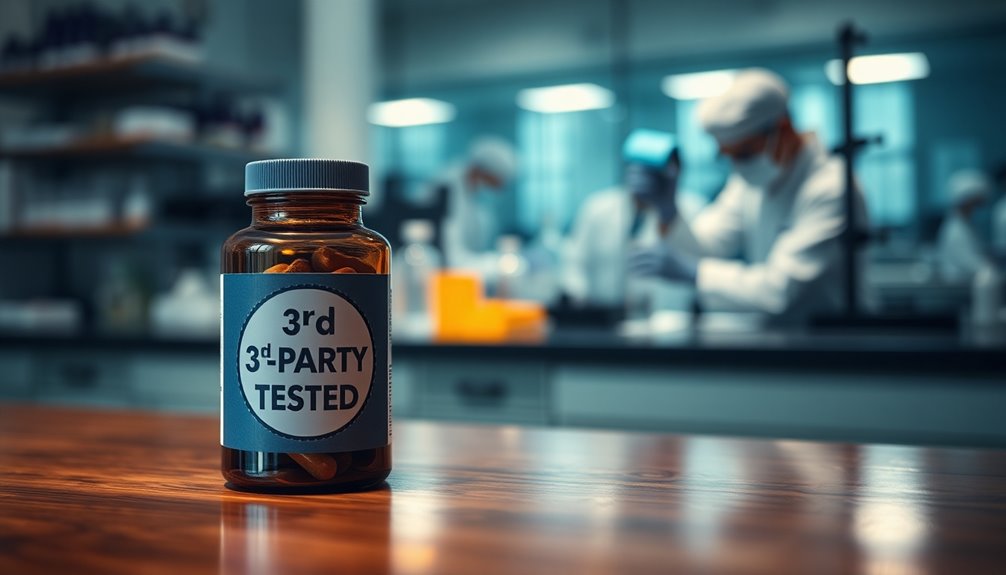
Third-party testing is a process where an independent organization evaluates dietary supplements to verify their safety, quality, and potency. Understanding this process is significant for you as a consumer.
The importance factors behind third-party testing include confirming that what’s on the label actually matches the product inside. This minimizes risks associated with contaminants and guarantees you receive the intended benefits.
Third-party testing ensures label accuracy, reduces contamination risks, and guarantees you receive the benefits you expect.
Furthermore, reputable organizations adhere to strict testing standards that assess various aspects of a supplement, from ingredient sourcing to manufacturing practices.
When you choose supplements that have undergone third-party testing, you’re making an informed decision that prioritizes your health and safety. This extra layer of verification can give you peace of mind as you aim to reach your wellness goals.
How 3rd-Party Testing Ensures Ingredient Accuracy
When it comes to supplements, ingredient accuracy is vital for guaranteeing you get the benefits you expect. 3rd-party testing plays a key role in verifying that the contents of each product align with its label claims.
By conducting thorough ingredient verification, these independent organizations ascertain that what you’re consuming matches what’s advertised. This process not only confirms the presence of the stated ingredients but also checks their potency, providing you with confidence in your purchase.
Quality assurance is a significant aspect of this testing, as it helps identify discrepancies that could impact your health and wellness. Ultimately, 3rd-party testing empowers you to make informed decisions and trust the supplements you choose to support your goals.
The Role of 3rd-Party Testing in Contaminant Detection

Ascertaining your supplements are free from harmful contaminants is just as essential as verifying ingredient accuracy.
3rd-party testing plays an important role in this process by meticulously screening products for unwanted substances like heavy metals, pesticides, and microbial contamination. By identifying potential contaminant sources, such as poor manufacturing practices or contaminated raw materials, these tests help safeguard your health.
Various testing methods, including chromatography and mass spectrometry, are employed to detect even trace amounts of harmful substances. When you choose supplements that undergo rigorous 3rd-party testing, you’re making a commitment to your safety and well-being.
Don’t compromise on quality; ascertain that your supplements aren’t just effective but also safe for consumption.
Understanding the Different Types of 3rd-Party Certifications
When choosing supplements, understanding the different types of 3rd-party certifications is essential.
These certifications not only highlight transparency but also enhance the trustworthiness and reliability of the products you’re considering.
Let’s explore how these factors can impact your supplement choices.
Types Of Certifications Explained
Understanding the various types of third-party certifications can greatly enhance your confidence in the supplements you choose. Different certification types indicate adherence to specific testing standards, ensuring quality and safety.
For instance, certifications like NSF International and ConsumerLab focus on ingredient accuracy and contaminant testing. Meanwhile, the Non-GMO Project verifies that products are free from genetically modified organisms.
If you’re looking for organic options, USDA Organic certification guarantees compliance with organic farming standards. Each certification has its own rigorous testing process, so it’s essential to look for these labels when selecting supplements.
Importance Of Transparency
Transparency in supplement labeling is essential for making informed decisions about your health.
When brands prioritize transparency, you gain valuable insights that enhance consumer education and trust. Understanding the different types of 3rd-party certifications can reveal significant transparency benefits, ensuring you know exactly what you’re putting into your body.
- Guarantees product quality and safety
- Confirms ingredient accuracy and potency
- Reduces the risk of harmful contaminants
- Builds brand credibility and trustworthiness
Trustworthiness And Reliability Factors
While many supplement brands claim quality and safety, not all certifications are created equal. To gauge a product’s trustworthiness, you should look for third-party testing certifications like NSF, USP, or Informed-Sport.
These organizations employ rigorous reliability measures to guarantee that supplements contain what they claim without harmful contaminants. Trust factors include transparency in testing processes and the frequency of audits performed on manufacturers.
Certifications that emphasize both ingredient integrity and manufacturing practices provide you with confidence in your choices. Always remember that a trustworthy label should be more than just a pretty design; it should reflect rigorous testing standards that safeguard your health and wellness.
Choose wisely, and prioritize supplements with credible third-party certifications.
How to Identify 3rd-Party Tested Supplements
How can you be certain that the supplements you’re considering are truly safe and effective? Identifying 3rd-party tested supplements is vital for your health.
Start by checking the supplement labels for specific certifications. Look for:
- NSF International: Confirms products meet strict standards for public health.
- U.S. Pharmacopeia (USP): Verifies quality and potency.
- ConsumerLab: Tests products for purity and ingredient accuracy.
- Banned Substances Control Group (BSCG): Guarantees no harmful substances are present.
These certifications indicate that an independent organization has evaluated the supplement, confirming its safety and effectiveness.
What Are the Limitations of 3rd-Party Testing in the Supplement Industry?
While 3rd-party testing is valuable, it has limitations you should be aware of.
The scope of testing can be limited, meaning not all potential issues are addressed.
Additionally, variability in testing standards can lead to inconsistencies in results across different labs.
Limited Scope Of Testing
Although third-party testing adds a layer of credibility to supplements, it comes with significant limitations that consumers should be aware of. The scope of this testing can often be quite limited, affecting its overall testing effectiveness.
Here are some key limitations:
- Targeted Analysis: Tests may only check for specific ingredients or contaminants, missing others.
- Batch Variability: Not all batches are tested, leading to potential inconsistencies in quality.
- False Security: A pass on tests doesn’t guarantee overall product safety or efficacy.
- Cost Constraints: Some companies may opt for cheaper tests that don’t cover all necessary aspects.
Understanding these limitations helps you make more informed choices about the supplements you consume.
Variability In Standards
When considering third-party testing for supplements, it’s important to recognize the variability in standards that can impact the reliability of these evaluations.
Different testing laboratories may have distinct methodologies and criteria, leading to inconsistencies in results. Variability factors such as the equipment used, the expertise of the technicians, and the specific protocols can all influence outcomes, making it challenging to compare products across brands.
Additionally, not all third-party organizations uphold the same rigorous testing standards, which can further complicate the trustworthiness of the results.
To guarantee you’re making informed choices, look for certifications from reputable organizations that adhere to high-quality testing practices. This way, you can better assess the efficacy and safety of the supplements you choose.
Why Does 3rd-Party Testing Build Consumer Trust?
Third-party testing builds consumer trust because it provides an unbiased assessment of a supplement’s quality and efficacy.
Third-party testing enhances consumer confidence by delivering an impartial evaluation of a supplement’s quality and effectiveness.
When you see a supplement with third-party certification, you can feel more secure about your purchase. This testing enhances consumer confidence and guarantees supplement integrity.
Here’s how it helps:
- Confirms that the product contains what it claims.
- Validates the absence of harmful contaminants.
- Guarantees the supplement meets established quality standards.
- Offers transparency, allowing you to make informed choices.
How to Use 3rd-Party Testing Information for Informed Choices
Understanding third-party testing information can greatly enhance your decision-making process when selecting supplements. By checking for certifications from reputable organizations, you boost your consumer awareness and guarantee the product meets quality standards.
Look for details on ingredient authenticity, potency, and absence of harmful contaminants. This information can help you make informed decisions based on scientific evidence rather than marketing claims.
Pay attention to the results and reports provided by third-party testers, as they often highlight specific strengths or weaknesses of a supplement. Compare products within the same category to find the best fit for your needs.
Ultimately, leveraging third-party testing information empowers you to choose supplements that are safe, effective, and aligned with your health goals.
What Is the Future of 3rd-Party Testing in Dietary Supplements?
As consumers become more health-conscious, the future of third-party testing in dietary supplements looks promising, with increasing demand for transparency and quality assurance.
You can expect significant advancements driven by emerging technologies and regulatory changes that prioritize consumer safety.
- Enhanced testing methods using AI and machine learning
- Stricter regulations ensuring compliance and accountability
- Increased collaboration between manufacturers and testing organizations
- Greater consumer awareness and education on supplement quality
These developments will likely lead to more reliable products on the market.
You’ll benefit from improved access to testing results, empowering you to make informed choices.
Conclusion
In a universe overflowing with supplement options, 3rd-party testing isn’t just important—it’s absolutely essential! It’s like having a superhero cape for your health, ensuring every ingredient is accurate and free from contaminants. By choosing 3rd-party tested supplements, you’re not just making an informed decision; you’re stepping into a domain of trust and quality that elevates your wellness journey to legendary heights. Embrace this powerful ally, and your body will thank you for it!