Understanding bioavailability is key to maximizing your supplements’ benefits. It affects how well your body absorbs nutrients, so choosing high-bioavailability options is essential. Factors like your digestive health, hydration, and even food pairings influence absorption. Formulation and delivery methods, along with proper dosing, can enhance effectiveness too. Be mindful of common mistakes that may limit benefits. Keep exploring to discover more tips for optimizing your supplement routine and making the most of every nutrient you take.
What Is Bioavailability and Why Does It Matter?

When it comes to supplements, understanding bioavailability is essential because it determines how much of a nutrient actually gets absorbed into your body.
Bioavailability refers to the proportion of a nutrient that enters your bloodstream after ingestion, influencing its effectiveness. Different absorption mechanisms affect how well your body utilizes these nutrients.
Bioavailability is the key to nutrient absorption, significantly impacting how effectively your body utilizes what you consume.
For instance, certain vitamins and minerals rely on specific nutrient transport systems to move through your digestive tract. If a supplement has low bioavailability, you mightn’t reap the full benefits, leaving your body wanting.
This makes it vital to choose supplements with high bioavailability, ensuring that the nutrients you’re taking actually contribute to your health and well-being.
After all, it’s not just about taking supplements; it’s about absorbing them efficiently.
Factors That Affect Nutrient Absorption
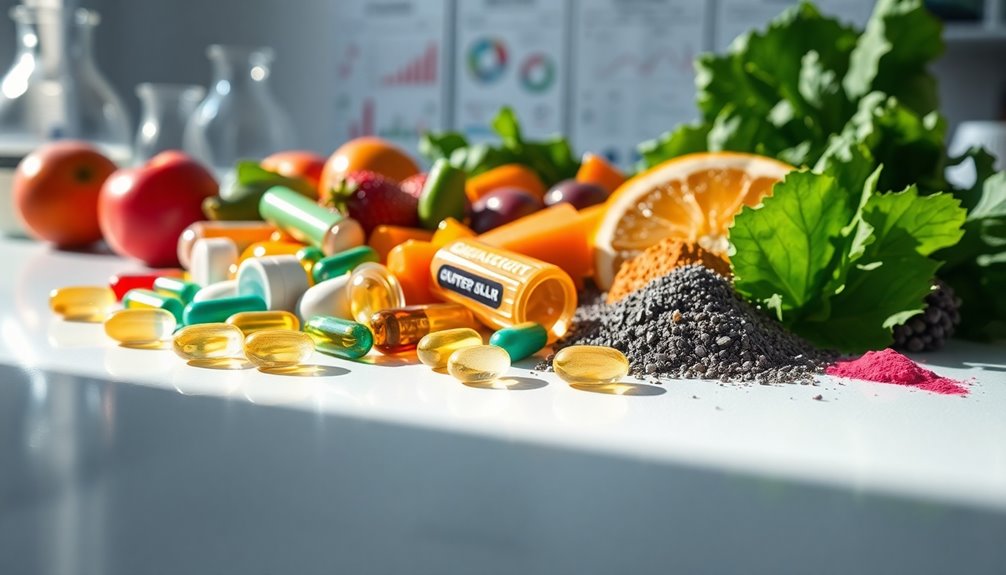
Understanding the factors that affect nutrient absorption is essential for maximizing the benefits of your supplements. Several elements can influence how well your body utilizes these nutrients:
- Digestive Health: A healthy gut microbiome and good digestive function help break down nutrients, reducing absorption barriers.
- Hydration Levels: Staying well-hydrated aids digestion and enhances the transport of nutrients to cells.
- Nutrient Forms and Food Preparation: The form of the supplement and how you prepare your food can affect mineral interactions and overall absorption.
Age factors and lifestyle choices also play a role in nutrient absorption.
How Formulation Impacts Bioavailability

The formulation of a supplement plays an essential role in determining its bioavailability, as the ingredients, delivery method, and additives can considerably influence how well your body absorbs the nutrients.
Different formulation types, like capsules versus liquid forms, affect absorption rates. High ingredient quality and effective nutrient combinations can enhance efficacy, while absorption enhancers further improve uptake.
Capsule materials and enteric coatings help protect sensitive ingredients, ensuring they reach the intestines intact. Additionally, particle size can impact how quickly nutrients are released.
Stability factors also matter; if a supplement degrades quickly, its bioavailability decreases.
Finally, flavoring agents can make supplements more palatable, encouraging consistent use, which ultimately benefits absorption and overall effectiveness.
The Role of Dosage in Supplement Effectiveness
While many factors influence the effectiveness of supplements, dosage plays a pivotal role in ensuring you receive the intended benefits. Getting the dosage right can enhance bioavailability and maximize results. Here’s what you should consider:
- Optimal Dosing: Finding the right amount for your needs is essential. Too little may not provide benefits, while too much can lead to adverse effects.
- Dosage Frequency: Taking supplements consistently at the recommended intervals helps maintain stable levels in your system, enhancing absorption.
- Form of Supplement: The type of supplement you choose can also impact how well your body utilizes the dosage, so consider this when selecting products.
Individual Differences: Genetics and Gut Health
Individual differences in genetics and gut health greatly influence how your body absorbs and utilizes supplements. Genetic variations can affect enzyme production, impacting nutrient metabolism and absorption. For instance, some people may metabolize nutrients more efficiently due to their unique genetic makeup, while others might struggle.
Your gut microbiome also plays an essential role; a diverse and balanced microbiome can enhance nutrient absorption, while an imbalanced one may hinder it. If you’ve got a healthy gut, you’re likely to get more benefits from your supplements.
Understanding these individual differences can help you choose the right supplements and optimize their effectiveness. Pay attention to how your body responds to different products, and consider consulting a healthcare professional for personalized advice.
Timing: When to Take Your Supplements for Best Results?
When you take your supplements can make a big difference in their effectiveness.
You’ll want to contemplate whether morning or evening is best for you, along with timing them around your workouts and meals.
Morning vs. Evening Intake
Have you ever wondered if the timing of your supplement intake really makes a difference? Taking supplements in the morning or evening can impact your energy levels, sleep quality, and overall health.
Here are some factors to take into account:
- Morning Benefits: Morning intake often boosts energy levels and enhances absorption rates, aligning with your body’s hormonal influences.
- Evening Effects: Evening supplements can improve digestive health and support better sleep quality, especially if they’re designed for relaxation.
- Routine Preferences: Your personal routine plays an essential role; consistency helps optimize the benefits of your supplements.
Ultimately, experimenting with timing can help you discover what works best for you, ensuring you maximize the potential of your supplements.
Pre-Workout Timing Tips
Finding the right timing for your pre-workout supplements can greatly enhance your performance and results. To maximize pre-workout energy, aim to take your supplements about 30 to 60 minutes before you hit the gym. This window allows your body enough time for ideal supplement absorption, ensuring you feel the effects when you need them most.
Consider caffeine-based supplements, as they can boost alertness and stamina. If you’re using amino acids or creatine, sticking to the same timing can enhance muscle recovery and performance.
Pay attention to how your body responds, and adjust accordingly. Consistency is key—taking your supplements at the same time daily helps establish a routine that supports your fitness goals.
Meal Pairing Considerations
To optimize the benefits of your supplements, pairing them with the right meals can make a significant difference. Consider these meal pairing tips:
- Meal Composition: Combine your supplements with meals rich in healthy fats or protein to enhance nutrient absorption.
- Culinary Techniques: Use cooking methods that preserve nutrient diversity, like steaming or sautéing, to maintain food textures and flavors.
- Meal Timing: Align your supplements with meals, keeping in mind dietary restrictions and food temperature, to support digestive health.
Food Interactions: What to Pair With Your Supplements?
When you’re taking supplements, pairing them with the right foods can boost their effectiveness.
Timing matters, too; certain nutrients work better together at specific times.
Understanding nutrient synergy helps you maximize the benefits of what you’re consuming.
Best Food Pairings
Have you ever wondered how your meals can enhance the effectiveness of your supplements? Food compatibility plays an essential role in nutrient absorption.
Pairing the right foods with your supplements can maximize their benefits. Here are three ideal combinations to take into account:
- Fatty Fish with Vitamin D: Omega-3 fatty acids boost absorption.
- Citrus Fruits with Iron: Vitamin C enhances iron uptake.
- Nuts and Seeds with Vitamin E: Healthy fats improve absorption.
Timing Matters
Pairing the right foods with your supplements can boost their effectiveness, but timing also plays a notable role in how well your body absorbs these nutrients.
Implementing smart timing strategies guarantees you’re maximizing absorption during prime windows. For example, taking fat-soluble vitamins with a meal rich in healthy fats enhances their uptake.
Adjusting your routine to align with daily rhythms can also lead to peak effectiveness. Consistency habits, like sticking to a specific dosing frequency, help your body adapt to the nutrients.
Consider your schedule and make routine adjustments to refine your supplement timing. By understanding these factors, you can greatly improve the benefits you gain from your supplements, turning them into powerful allies for your health.
Nutrient Synergy
To maximize the effectiveness of your supplements, consider how certain foods can enhance nutrient absorption. Nutrient interactions can create synergistic effects, making your supplements even more beneficial.
Pairing specific foods with your vitamins and minerals can lead to better absorption and mineral balance. Here are three combinations to try:
- Vitamin C and Iron: Citrus fruits boost iron absorption from plant sources.
- Healthy Fats and Vitamins A, D, E, K: Avocados and nuts enhance the absorption of these fat-soluble vitamins.
- Calcium and Vitamin D: Dairy products or fortified alternatives improve calcium absorption, supporting bone health.
The Science Behind Different Delivery Methods
While many people focus on the nutrients themselves, the delivery method of supplements plays an essential role in how effectively your body absorbs them. Different delivery methods can greatly impact absorption rates.
Capsules offer advantages like easy swallowing and precise dosing, while powders provide benefits like customizable serving sizes and rapid absorption. Liquid efficacy is often higher due to immediate availability.
Tablets can vary in performance, especially with time-release formulas designed for prolonged nutrient delivery. Innovative techniques like nano technology enhance absorption, while emulsified nutrients and microencapsulation techniques protect delicate compounds and improve bioavailability.
Understanding these delivery methods helps you choose the right supplements for peak health, ensuring you get the most from your investment.
Common Mistakes That Decrease Bioavailability
Even if you choose high-quality supplements, several common mistakes can greatly hinder their bioavailability. Here are three key pitfalls to avoid:
Even high-quality supplements can fall short if common mistakes hinder their bioavailability. Avoid key pitfalls for optimal absorption.
1. Ignoring Supplement Forms: Not all forms are created equal. Some may be harder for your body to absorb than others.
2. Neglecting Digestive Health****: Poor digestive health can impair absorption.
Consider using absorption enhancers or addressing mineral interactions to optimize nutrient uptake.
3. Improper Timing Strategies: Taking supplements at the wrong time can lead to nutrient competition with food sources.
Make sure you align your intake with your diet for better results.
Additionally, be mindful of storage conditions. Improperly stored supplements can degrade, further reducing their effectiveness.
Tips for Choosing High-Bioavailability Supplements
When it comes to maximizing the benefits of your supplements, choosing the right ones makes all the difference. Start by looking for products with quality ingredients and third-party testing to guarantee purity and potency.
Consider absorption enhancers, which can improve how well your body utilizes the nutrients. Capsule types, liquid forms, and powder supplements each have unique advantages; choose what suits your lifestyle best. If you prefer vegan sources, check for those as well.
Mineral complexes often provide better bioavailability, while digestive enzymes can aid absorption. Finally, assess shelf stability; supplements should remain effective over time.
Conclusion
In summary, understanding bioavailability can dramatically enhance your supplement regimen. Did you know that up to 90% of certain nutrients can go unused if not properly absorbed? By considering factors like formulation, dosage, and food interactions, you can maximize the effectiveness of what you take. Remember, choosing high-bioavailability supplements is key to releasing their full potential, helping you achieve better health outcomes and get the most out of your investment in wellness.